Cataloging Data Centers along I-10
- Regional Overview: I-10 Corridor
- Development Trends in Texas and Florida
- Urban Comparison
- Case Studies & Anomalous Data Centers
- Sources
Regional Overview: I-10 Corridor
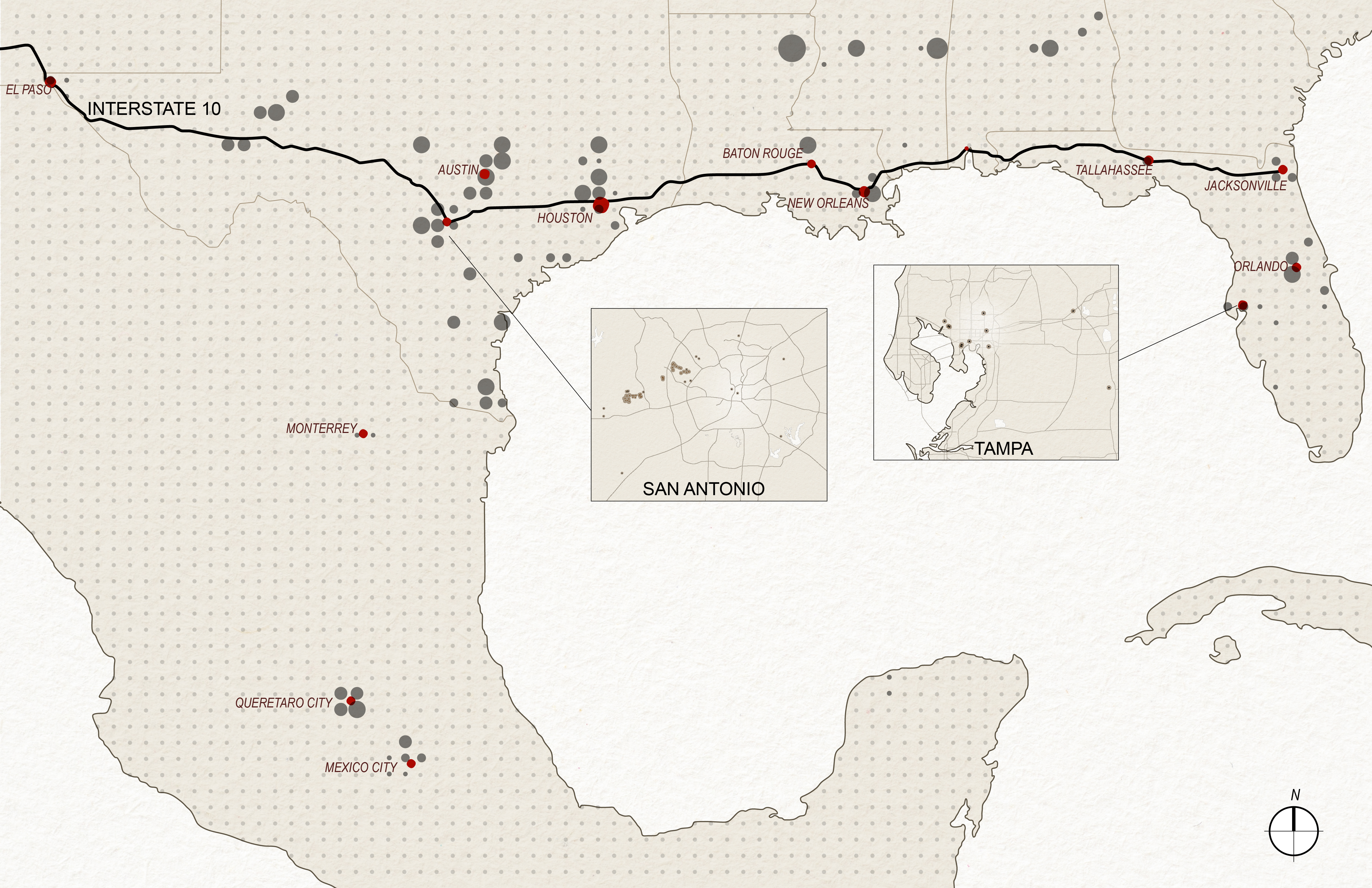
Data centers are one of the most rapidly emerging building typologies in North America. These facilities store data servers and equipment necessary for supporting digital services and cloud computing, varying greatly in size, placement, and construction. This wiki provides visual and data-driven information to highlight the decision-making factors for these variations, focusing specifically on their development along the I-10 corridor and the broader Gulf Coast, including Mexico. This book begins with the broader region’s role in U.S. data infrastructure, with more detailed state and city-level analyses in the chapters that follow. The opening map offers the widest geographic view, detailing how these facilities are distributed across multiple states at various scales.
At this large scale, the corridor itself appears more arbitrary than decisive. Pertaining to size and placement, distinct patterns only emerge when the data is viewed in more localized regions. Site placement is often dependent on factors specific to each city/state, causing a range of patterns from city to city. Centers do, however, tend to cluster around major metropolitan areas and along major interstate and fiber routes, with Interstate 10 acting as one of multiple backbones for regional connectivity. Texas currently hosts the greatest concentration and overall capacity, while Florida follows at a distance; Louisiana, Mississippi, and Alabama show a lighter and more scattered presence.
The dotted grid highlights location and average facility size, with larger dots signifying areas that contain larger data centers ( > 100,000 sqft on average) and smaller dots signifying smaller centers ( < 20,000 sqft). Later chapters examine the conditions that shape these differences, including state energy markets, corporate strategies, and case studies of unique sites, shifting from this broad regional overview toward the smaller scope of individual states and cities.
Development Trends in Texas and Florida
Growth of Data Centers, 2000-Present
Current Stage of Data Centers in Texas |
|
Current Stage of Data Centers in Florida |
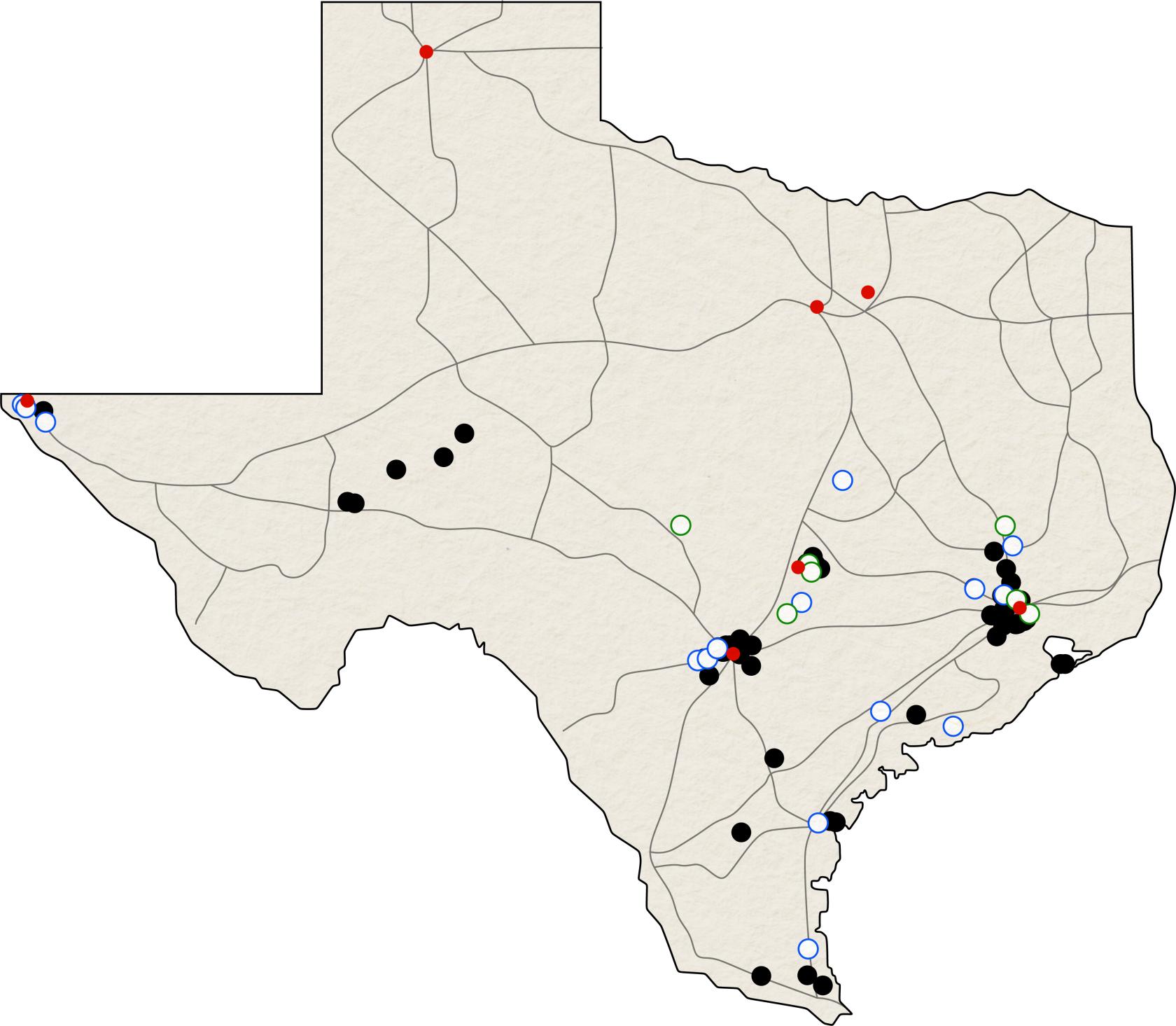
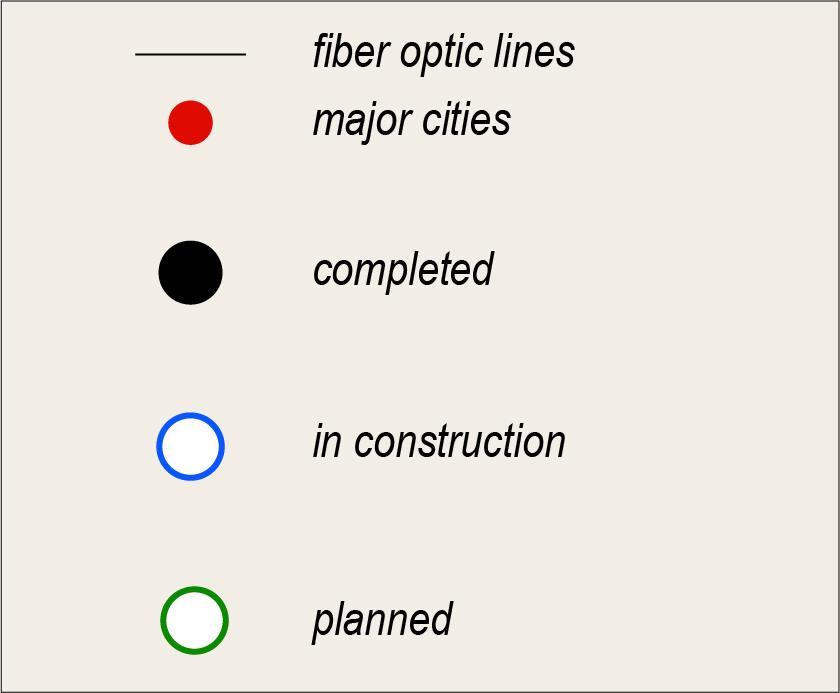
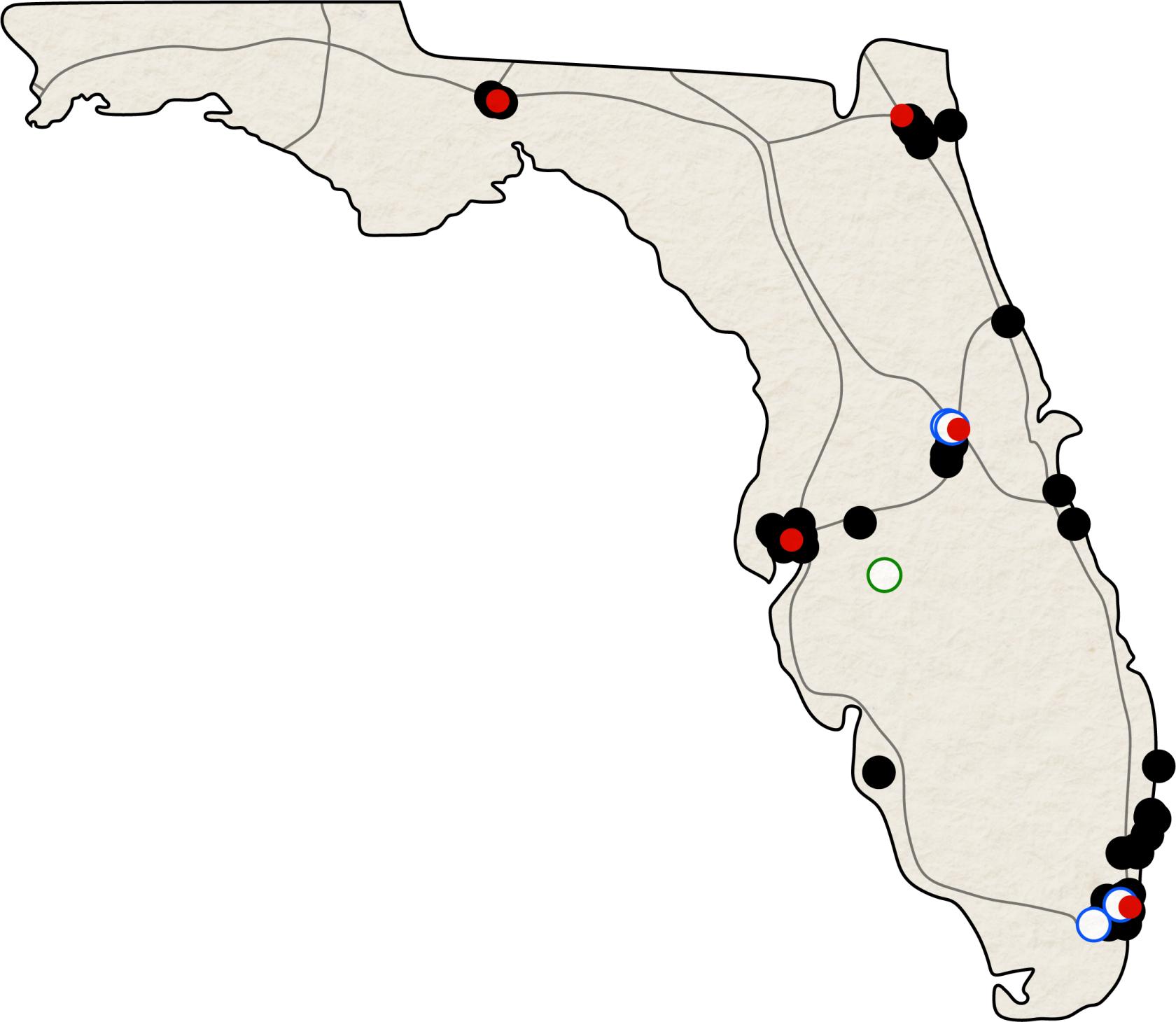
The development of data centers along the I-10 corridor, particularly in Texas and Florida, has increased significantly since the early 2000s. Initially, data centers were concentrated in major cities like Houston and Miami due to easy access to fiber optic infrastructure and proximity to large populations. While some early data centers appeared in the 1990s, significant growth along the I-10 corridor began around 2010, with a sharp rise after 2015 due to increasing demand from cloud computing, streaming services, and AI technologies.
Texas has become a national leader in data center construction, with a low-cost, deregulated energy market and an abundance of affordable land. In 2023 and 2024 alone, over 460 megawatts of capacity were under development in Central Texas, making it the second-largest data center market in the United States. Florida, while not matching Texas in scale, is rapidly expanding due to strong connectivity to Latin America through subsea cables, high population density, and high demand in cities like Miami, Orlando, and Tampa.
Both Texas and Florida offer strategic advantages, mostly for power infrastructure and international data flow. Louisiana, Mississippi, and Alabama have seen less drastic growth. Looking forward, 2025 through 2030 is expected to see continued expansion as AI workloads and tech developments spike the demand. Sustainability and green energy access will also shape site selection. Areas near the coast, particularly south and central Texas and southeast Florida, will remain hot spots.
Significant Company Footprints
Prevalent Companies’ Data Centers in Texas |
|
Prevalent Companies’ Data Centers in Florida |
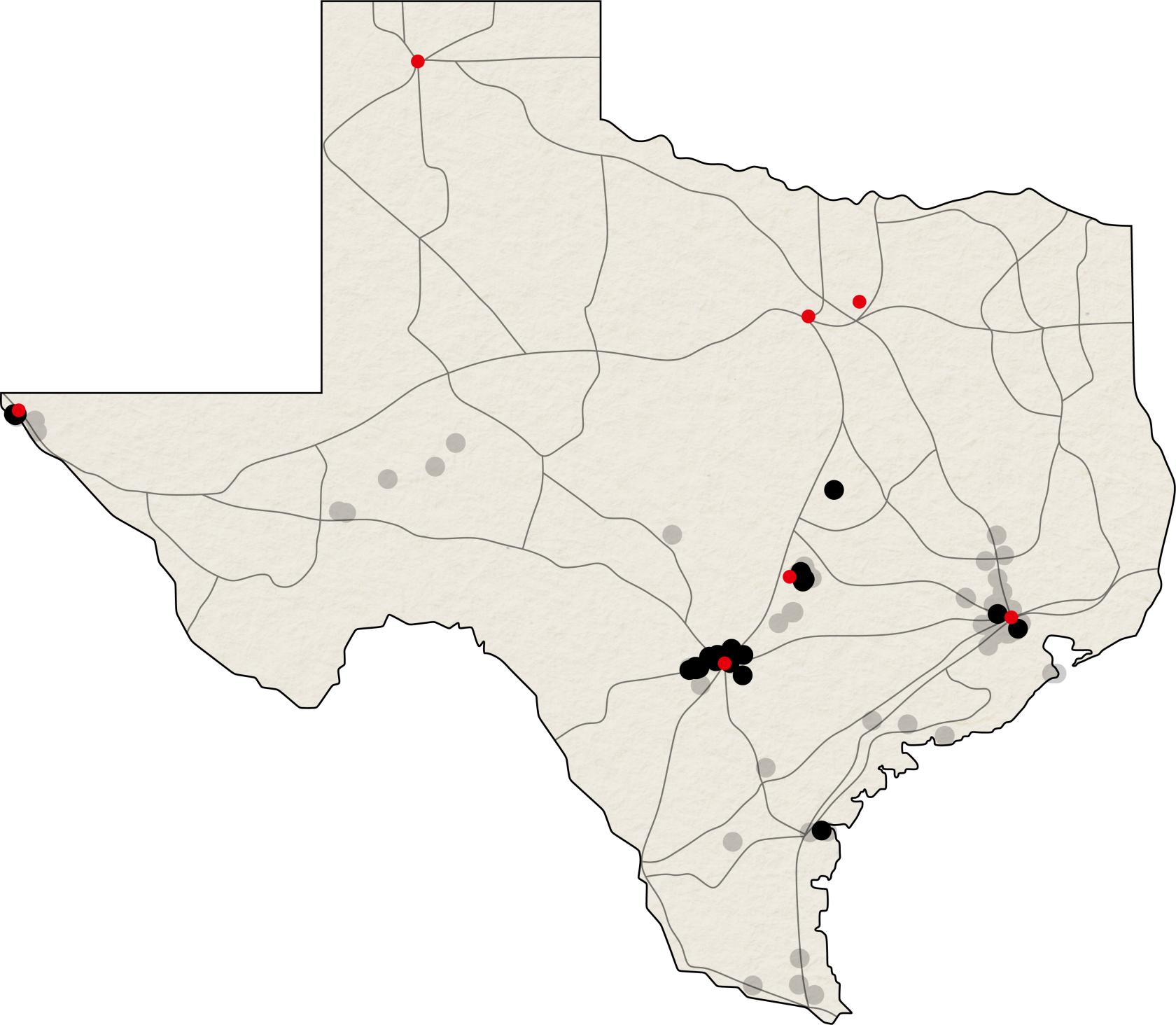
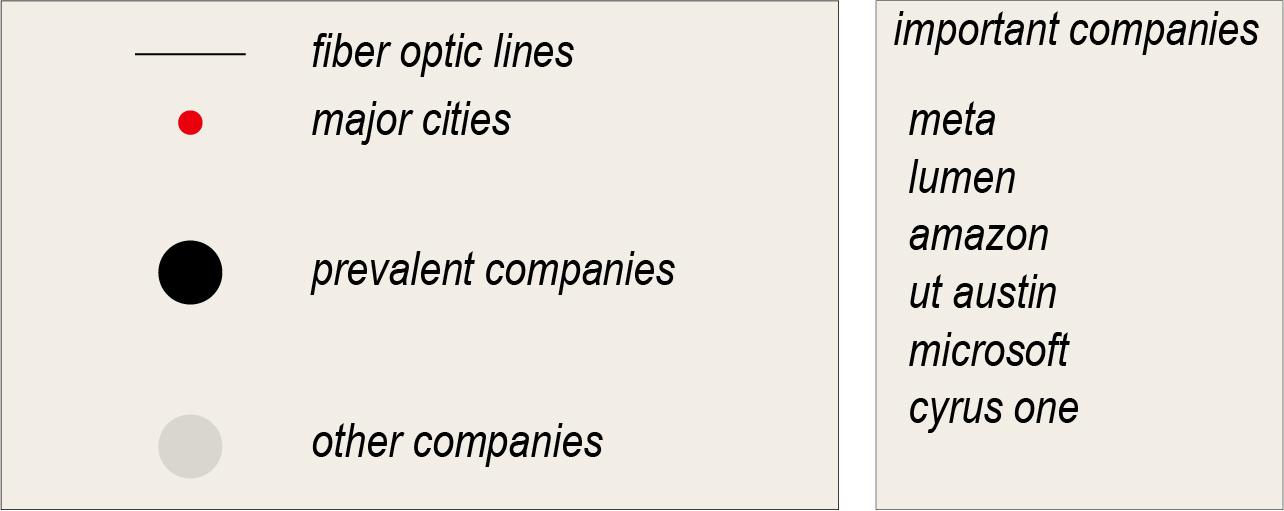
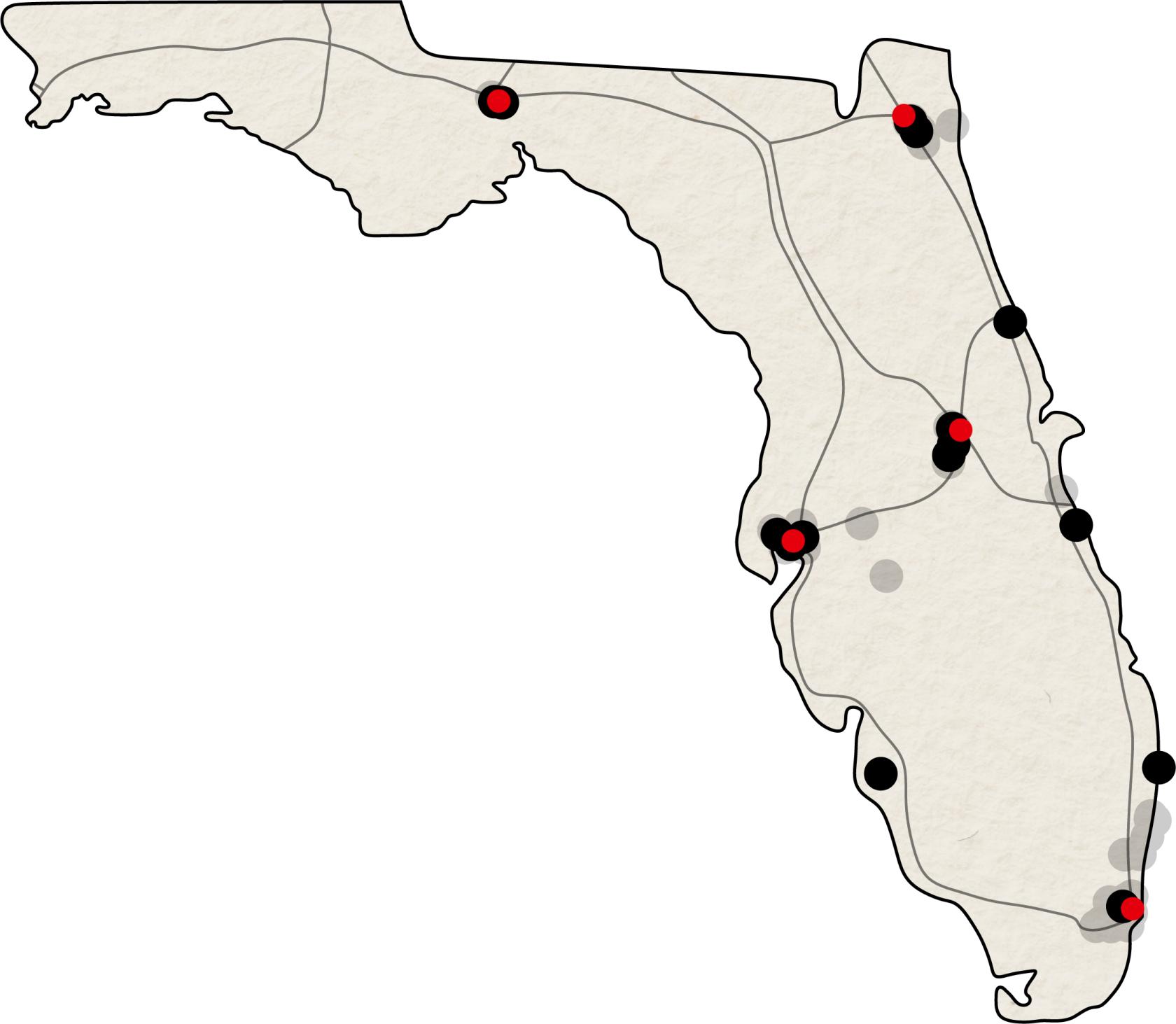
Major companies have carefully chosen spots in Texas and Florida for data center development due to their favorable energy markets, infrastructure, and business environments. Among the big companies we have found: Meta, Microsoft, Amazon, CyrusOne, Lumen, and the University of Texas, each contributing to the region’s emergence as a “data center hub”.
Meta plans to build a massive hyperscale data center outside the Fort Worth, Texas area, driven by affordable power and abundance of land. The company has invested in many solar energy projects across Texas in support of their data needs, and this data center campus will be a multi-million-dollar project. Microsoft plans to invest millions in data center expansions in the San Antonio area, as well as Amazon in the Dallas area. CyrusOne is a company based in Texas that partners with big energy groups like Calpine, which facilitates their growth in large-scale data centers across the states. Finally, Florida is an interesting spot to analyze considering that 100% of the “big companies” that make their data center locations are solely made up from Lumen Technologies. Lumen is a company that provides high-speed network services and it has around 20 data centers currently operating in Florida.
Urban Comparison
San Antonio vs. Tampa–Orlando: Patterns of Placement
Data Centers of San Antonio, Tx |
Data Centers of Tampa & Orlando, Fl |
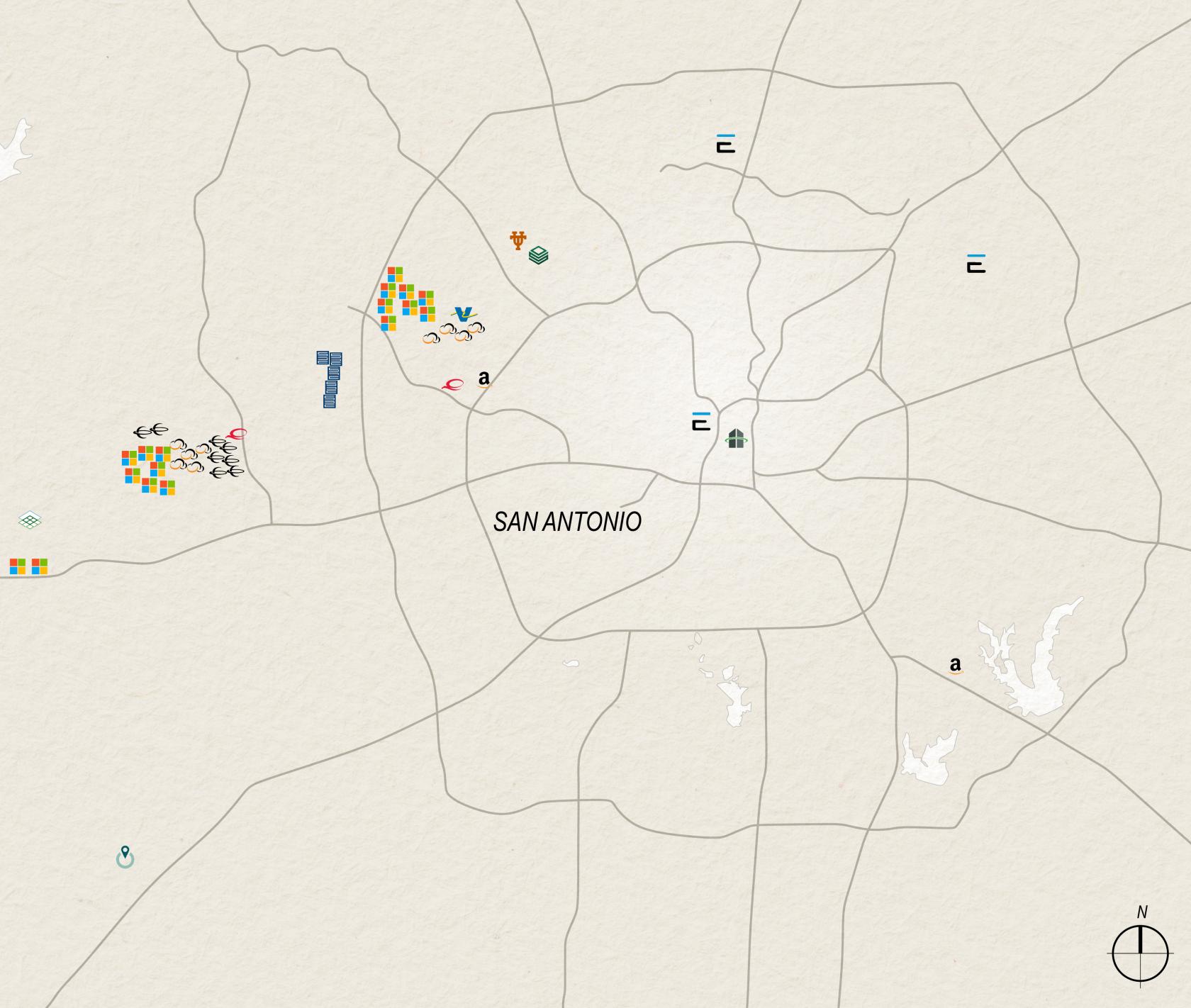
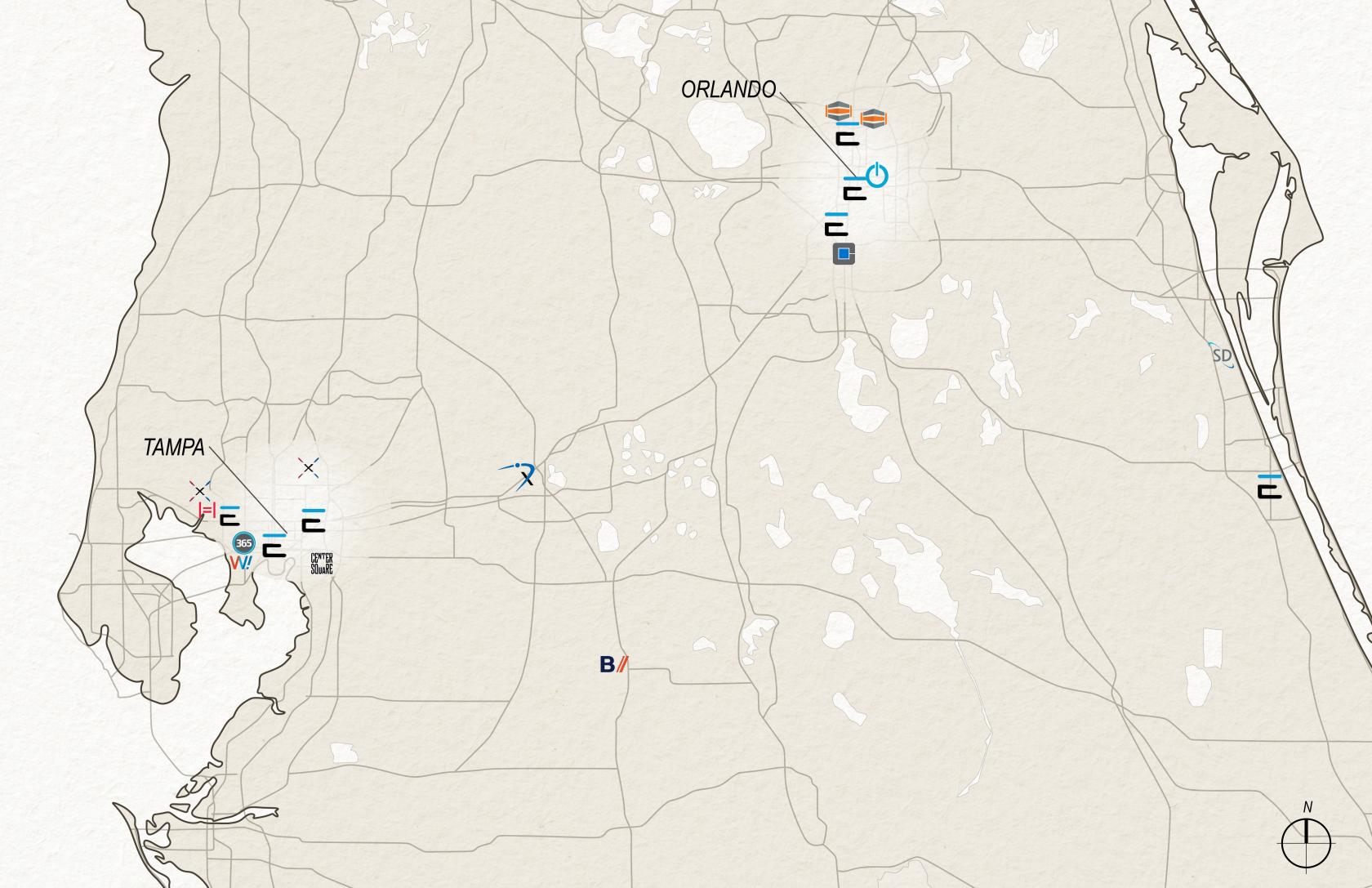
Taking a closer look at the maps of data centers in San Antonio, Texas and Tampa/Orlando, Florida, two distinct patterns of development emerge. For San Antonio, data centers are clustered tightly together, with some major companies cramping the development of 3-7 individual data centers within one block. These clusters are concentrated primarily on the city's outskirts in order to make room for such large campuses. Specific placements in San Antonio appear to be based on energy infrastructure and proximity to major highways like Highway 151 and around the Loop 1604 corridor. High-voltage transmission lines and large substations (junction points where the flow of electricity within the grid is adjusted/controlled) are often found nearby. These clear patterns of development reflect coordinated planning on behalf of the data companies and an abundance of inexpensive land and power in this region.
In contrast, the data centers in the Tampa-Orlando region are fewer and far between. Facilities are dispersed near city centers, typically smaller and sited in a mix of commercial zones and telecom hubs, as opposed to the concentrated industrial parks of Texas. This scattered pattern reflects a market in Florida that is more oriented toward network services and regional demand, rather than the large cloud operations seen in Texas.
These significant differences in data center development highlight how local conditions strongly influence placement strategies. Texas’s abundant land and deregulated, low-cost energy market lend the state to the development of massive campuses. On the other hand, Florida’s higher land costs and storm-related building codes favor smaller facilities and incremental expansion. Taken together, the two maps illustrate a broader contrast between San Antonio’s concentrated, large-scale development and Florida’s more dispersed connectivity-driven approach.
Case Studies & Anomalous Data Centers
Adaptive Reuse & Hyperscale
Data centers come in many distinct types, from deep underground bunkers to shimmering glass towers to sprawling greenfield campuses. The Westland Bunker in Montgomery, Texas, Equinix Infomart in Dallas, and Meta’s planned hyperscale campus in northern Louisiana each represent distinct architectural approaches to housing and cooling modern tech infrastructure, and they illustrate the trade-offs between adaptive reuse and purpose-built design.
Westland Bunker, Montgomery, Tx |
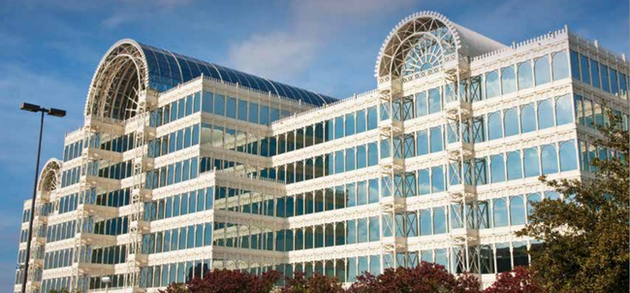
Equinix Infomart, Dallas, Tx |
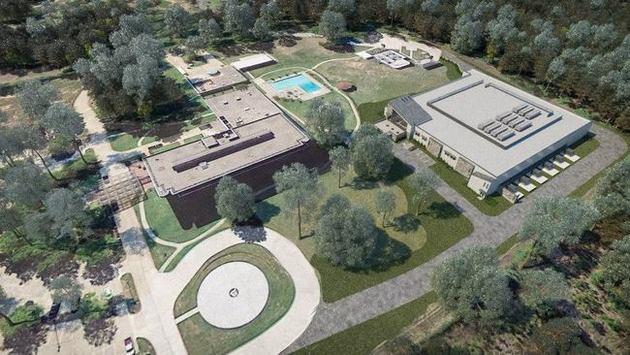
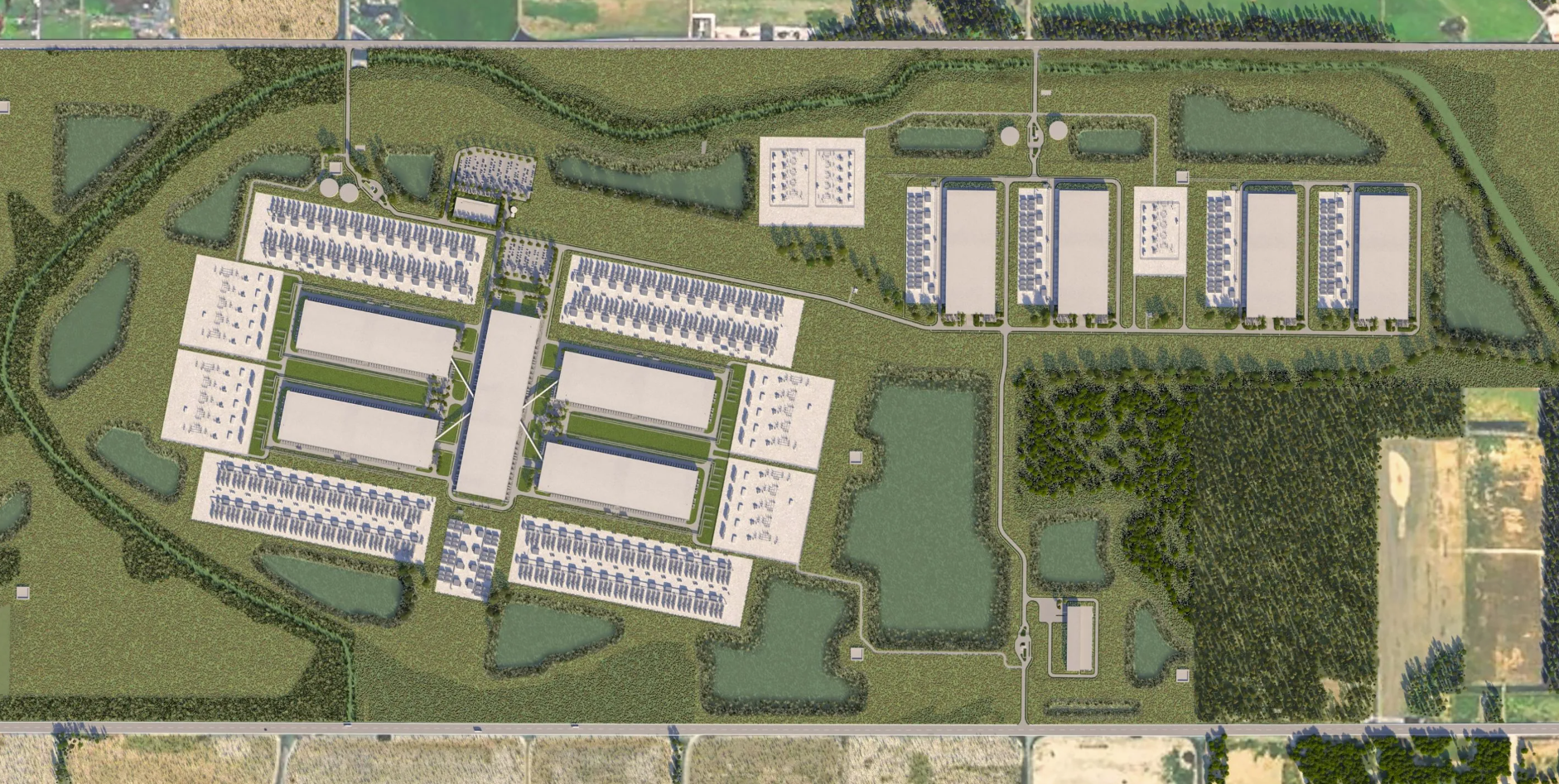
Meta Hyperion Campus, Richland Parish, Louisiana |
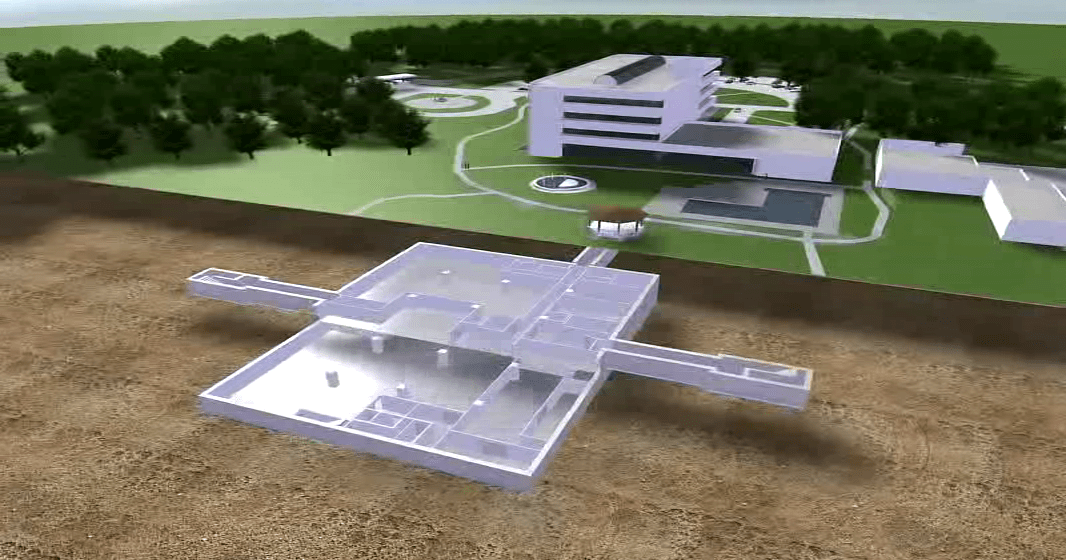
The Westland Bunker is a striking example of adaptive reuse. It was constructed in the 1980s as a nuclear bomb shelter and has been transformed into a fortified data center with approximately 38,000 square feet of underground server space. Its subterranean nature offers natural thermal buffering, while earth insulation reduces temperature fluctuation and protects against weather extremes. The Westland Bunker raises the question of effectiveness in extreme situations such as floods, which are common in Texas. The facility can manage heat loads with relatively high energy efficiency. However, its nature introduces limitations in safety and also scalability and layout flexibility.
Similarly, the Equinix Infomart in Dallas reflects another form of adaptive reuse. Built in 1985 as a trade center, the 1.6 million square foot structure now hosts multiple data center tenants. Unlike the bunker, the Infomart is above ground and features a glass facade, which is thermally challenging. Glass increases solar heat gain, demanding more robust cooling systems which in turn is expensive and harms the environment. Equinix has addressed this through modular data hall construction and chilled water systems, but energy consumption for cooling remains a concern in a building not originally designed for this purpose.
In contrast to the previous examples, Meta’s upcoming billion-dollar hyperscale data center in northern Louisiana is a brand new campus covering 4 million square feet, purposefully built for data. This development allows full optimization of layout, airflow, cooling, and energy infrastructure from the ground up. Designed to support AI workloads, the site will likely include advanced cooling technologies, while also aiming for LEED Gold certification and full renewable energy matching. This kind of scale and control offers maximum efficiency and long-term flexibility.
Sources
Links
- https://baxtel.com/map?lat=33.3098903854392&lng=-72.2040212660367&distance=3679133.0032526064
- https://www.usnews.com/news/best-states/texas/articles/2025-01-24/data-centers-are-booming-in-texas-what-does-that-mean-for-the-grid
- https://www.datacenters.com/providers/lumen/locations/united-states/florida
- https://www.cnbc.com/2025/06/25/meta-massive-data-center-louisiana-cost-jobs-energy-use.html
- https://www.yourconroenews.com/neighborhood/moco/news/article/montgomery-bomb-shelter-data-center-19620302.php
- https://www.datacenterdynamics.com/en/news/equinix-plans-180m-expansion-to-dallas-infomart-data-center/