Case Studies
Introduction of Facilities and Size Comparisons
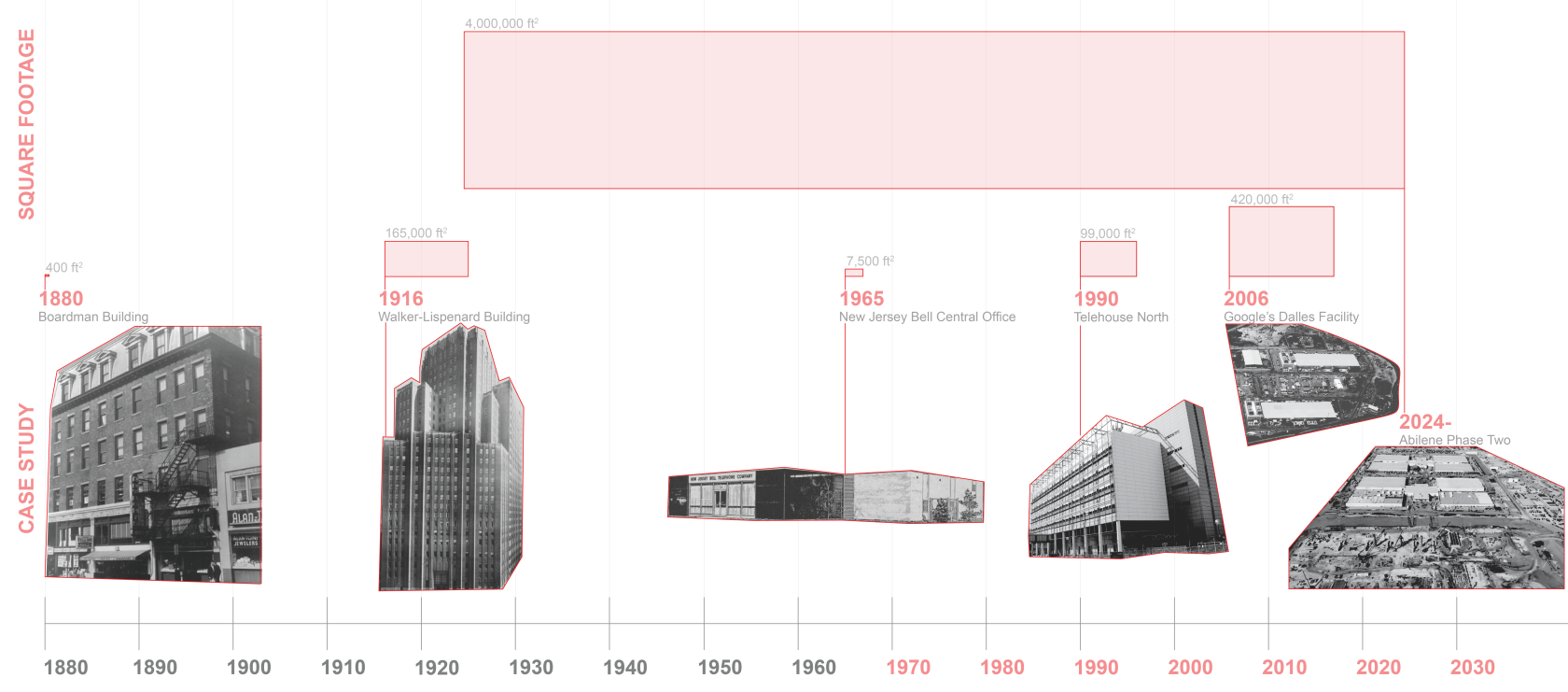
Conclusion: The drastic increase in square footage between the switch from Data Centers to Hyperscale AI Data Centers constitutes a worrying shift in scale. With later examples such as the Dalles Facility and the Abilene, TX facility operating more as campuses, these buildings are gain a larger and larger impact on city landscapes. |
Power Comparisons

We compared the amount of power that each facility outputs in a day against the amount a typical US household uses in a year. The power output started out miniscule, only providing enough power for one of today's smartphones, but gradually rose until the advent of hyperscale data centers. At this point, the scale jumps greatly from the ability to power one house to nearly ten. At the farthest end of the timeline, today's Data Centers that fuel AI are able to power 8 blocks (around 112 houses) for a full year.
Conclusion: The technological developments post the advent of the Internet allowed for massive jumps of scale in how much energy data centers are able to output daily. |
Speed & Access
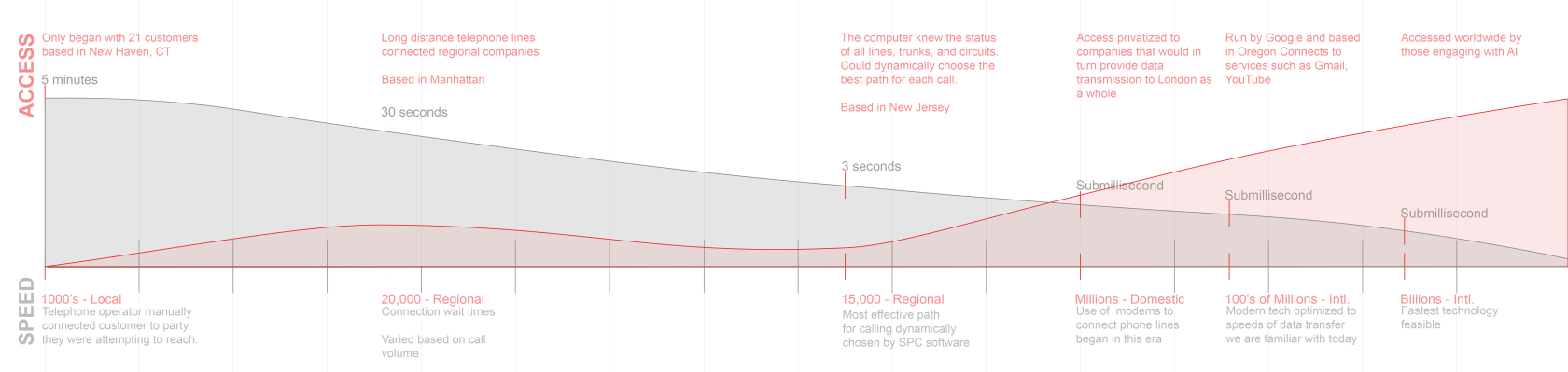
We plotted speed and access against each other as a means of showing the inverse relationship between the two concepts. As access to technology and internet traffic grows, the speed of software not only keeps up, but also continues decreasing. The speed of data transmission is now at a staggering sub millisecond pace. This relationship begins to speak to Moore's Law, a theory critical to understanding the pace of technological development.