Water Consumption
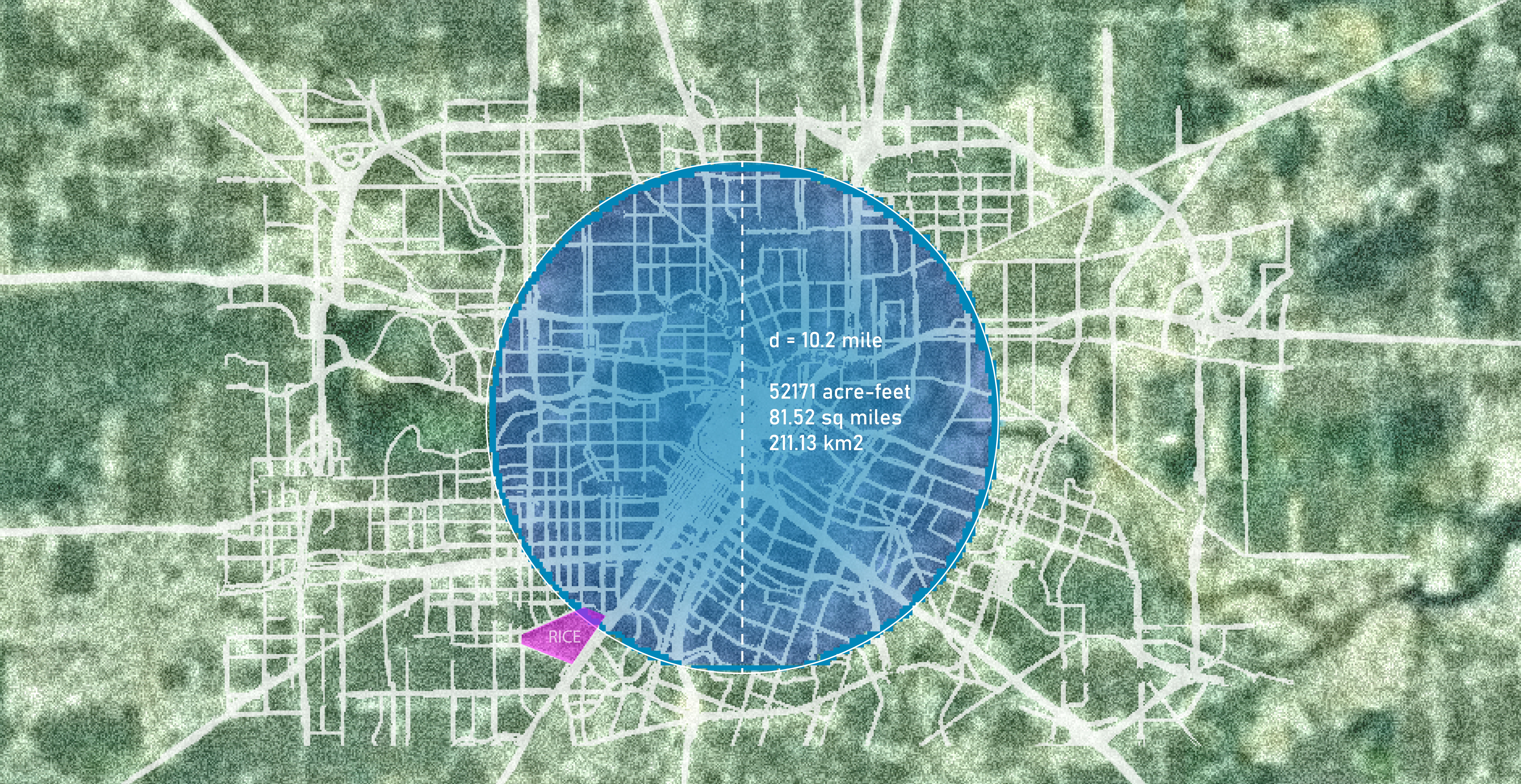
In 2023 alone, US data centers consumed an estimated 17 billion gallons of water. That's 52,171 acre-feet of water, enough to cover a 10.2-mile-wide circle in a foot of water!
![trajectory map [Converted].png](https://hydraulogistics.at/uploads/images/gallery/2025-09/scaled-1680-/trajectory-map-converted.png)
Recent years have witnessed a shift in the U.S. data center size, with the top panel showing how the percentage of servers housed in hyperscale and large colocation centers has grown steadily since 2014, while small/medium colocation facilities have remained relatively stable.
The middle panel illustrates the corresponding annual average PUE. As hyperscale and colocation sites expanded, PUE declined from 1.6 in 2014 to just above 1.4 by 2023. This indicates that facilities are using less overhead energy per unit of IT load, which is more efficient. The shaded trajectory area suggests future projections, with hyperscale operators pushing PUE closer to 1.2 or lower in coming years.
The bottom panel highlights the annual average WUE. While energy efficiency has improved, WUE has gradually risen from 0.36 L/kWh in 2014 to 0.38 L/kWh in 2023. This reflects the trade-off: hyperscale and colocation sites often rely on evaporative cooling methods (cooling towers, adiabatic systems) that use water more intensively. In effect, operators are substituting water resources to reduce electricity demand, achieving lower PUE but at the expense of higher water consumption.