Data Bank Data Services, Dallas, TX
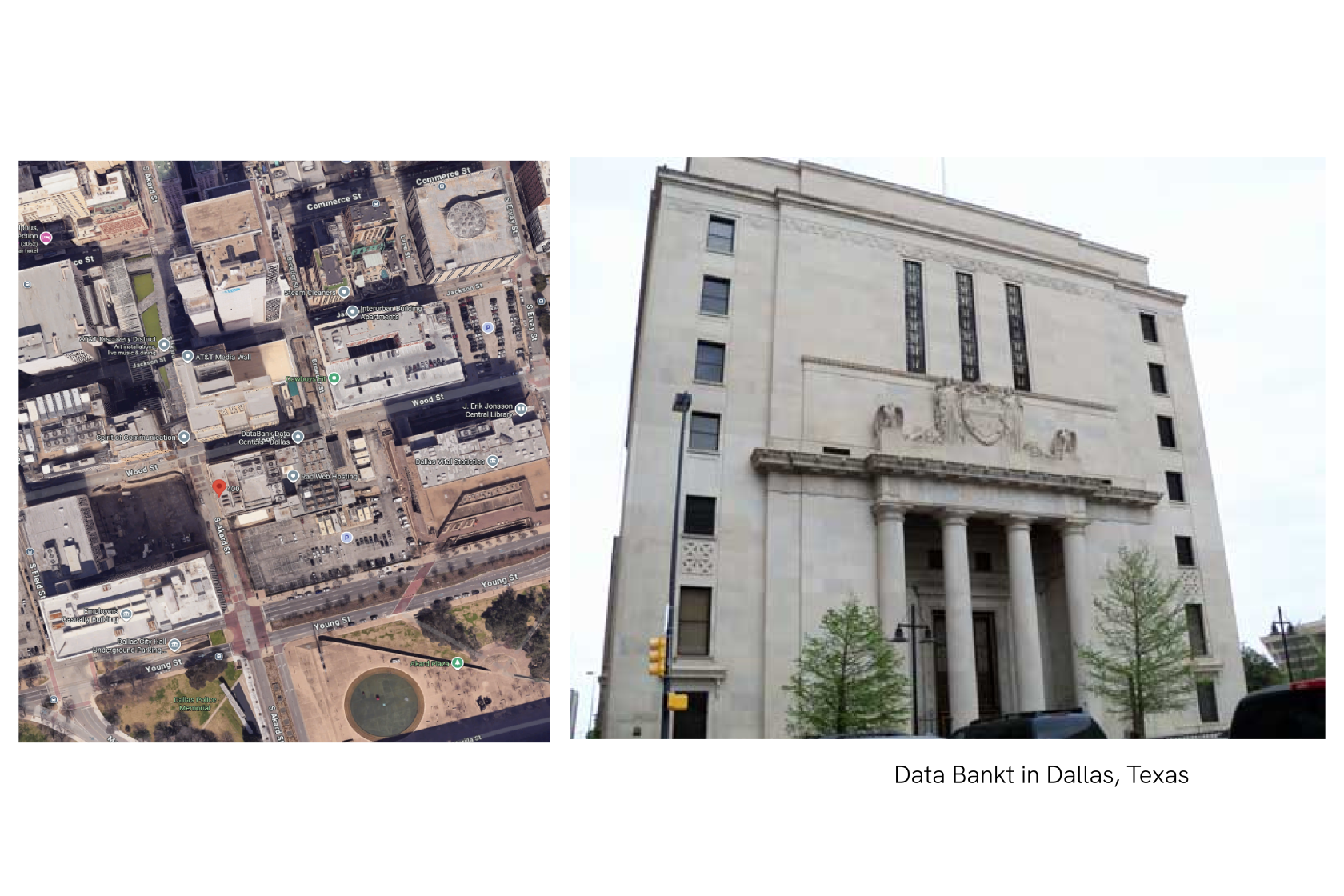
Often, enterprise or colocation centers, sophisticates hide within the facade of an older building, typically with a more classical facade.
These older buildings are often institutional or infrastructural, like banks and telephone towers, which no longer require the same amount of real estate. By maintaining the building's classical facade, the data center can exist in a major city without creating an eyesore or clashing with the architectural style of a neighborhood. This can ease the permitting process and garner local community support, which is often a hurdle for new construction. The very nature of the disguise provides an added layer of physical security. An unassuming, historical facade does not immediately suggest the presence of a high-value, high-tech data center, which can deter potential threats. This subtle approach is a form of passive security, where the building's outward appearance hides the nature of its contents.
Former banks are common sites, often massive, with strong, reinforced structures designed to protect valuable assets. Their thick walls, secure vaults, and sturdy foundations are ideal for housing sensitive IT equipment and providing enhanced physical security. The basements of these buildings, in particular, offer a cool, stable environment and the structural integrity needed to support the heavy weight of servers and cooling systems.
Telephone towers are also well-suited for data centers due to their historical role in network infrastructure. They were built to house switching equipment and often have existing fiber optic and copper cable connectivity. Their location is also a major advantage, as they are typically situated in urban centers with robust network access, making them prime spots for low-latency edge computing. The buildings often have ample vertical space and strong floor loads to accommodate dense racks of equipment.
No comments to display
No comments to display