Edge Data Centers
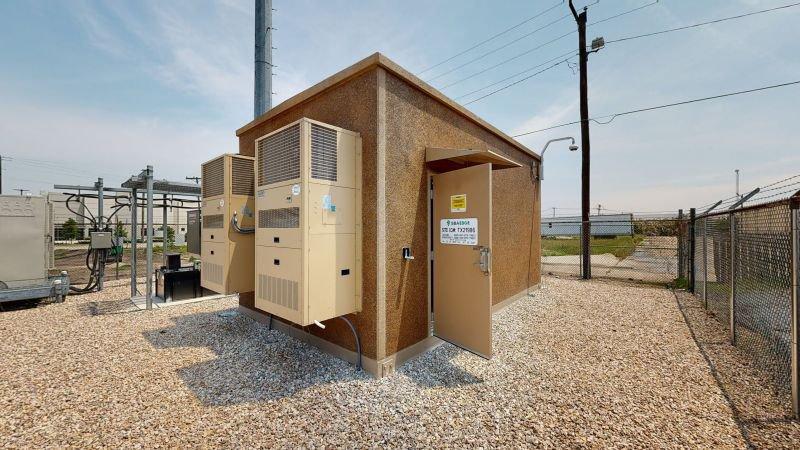
Edge data center in Arlington, Texas
Edge Data Centers
An edge data center is aA small-scale data center situated at the "edge" of a network, physically closer to where data is generated and consumed. The primary goal is to minimize the distance data has to travel, thereby reducing latency—the delay between a request and a response. This is crucial for applications that require near-instantaneous processing, like autonomous vehicles, real-time analytics, and content delivery networks (CDNs). Edge data centers don't replace large, centralized data centers; rather, they work in conjunction with them, processing time-sensitive data locally while sending less critical information back to the core data center or cloud for long-term storage and analysis.
- Location & Infrastructure: Smaller facilities located near end users or data sources.
- Power & Cooling: Lower capacities; often rely on smaller, energy-efficient cooling solutions.
- Security:
Security:Physical security appropriate for smaller facilities, often with remote monitoring. - Connectivity:
Connectivity:Local, high-speed networks to reduce latency. - Purpose: Support latency-sensitive applications, IoT, and local data processing.
- Deployment: Modular and scalable; quick setup and expansion
- Proximity: Located closer to users and devices.
- Low Latency: Designed for applications that can't tolerate delays.
- Smaller Footprint: Typically smaller than traditional data centers, often a single rack or a few racks.
- Distributed Network: They are part of a larger, distributed network, not a standalone entity.