Case Studies
Marseille, France
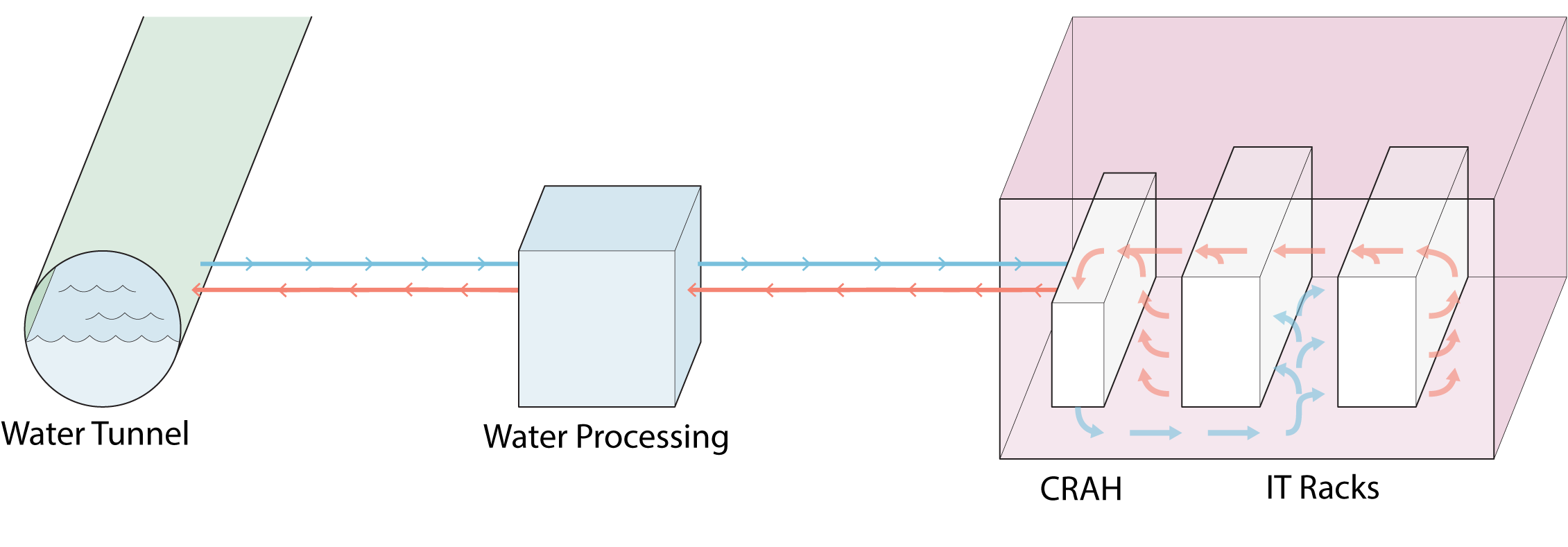
In Marseille, France, a European data center company called Interxion uses a form of liquid-based free cooling to decrease the energy required to cool its data centers. The facilities pipe water from 'La Galierie de la Mer,' a tunnel that runs from inland mining towns into the Mediterranean Sea near Marseille. The tunnel, which was built from 1885 to 1907 to pump wastewater from mining, carries water that naturally maintains a temperature of around 15C year-round. Although the water still needs to be filtered before it can be used for cooling the data centers, its naturally cool temperature eliminates the need for the energy-intensive process of chilling the water.
Interxion estimates that this method will save up to 18,400,000 kWh per year, or the equivalent of 795 tons of CO2, improving the Marseille data center's power usage effectiveness to 1.11, compared to the average PUE of 1.38 for traditional liquid cooling data centers. The company is also exploring the possibility of feeding the hot water output into the local urban heating network so it can be used to heat homes and offices. By repurposing what is essentially considered wastewater instead of competing for potable water, minimizing energy consumption through free cooling, and exploring ways to benefit the local community through heat export, Interxion's Marseille data centers represent an attempt to create more responsible, harmonious data infrastructure.
Mesa, Arizona
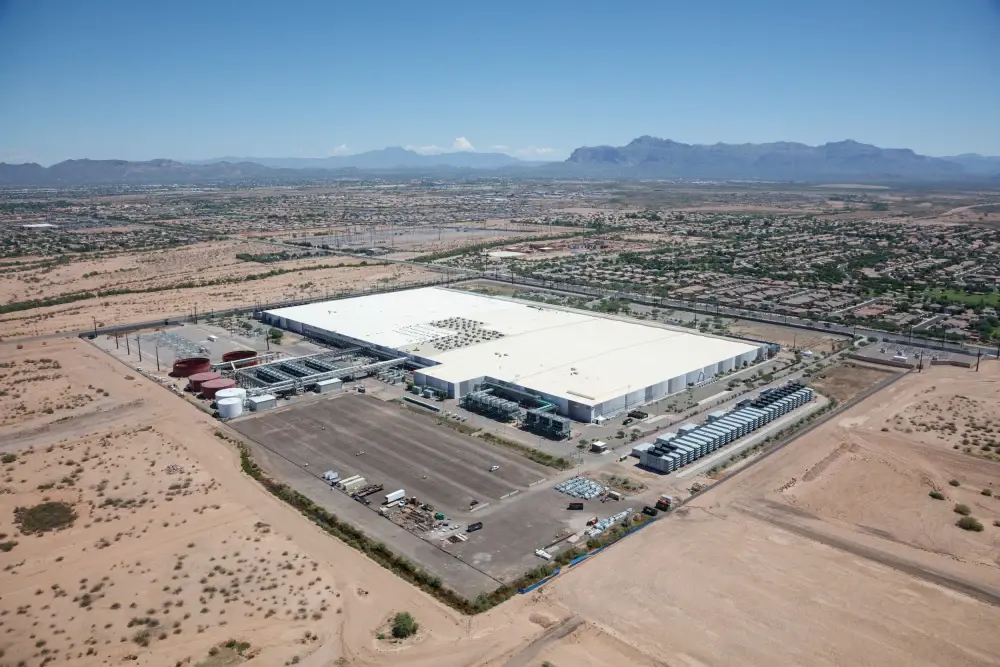
Image: Apple's data center in Mesa, Arizona
In 2021, the City Council of Mesa, Arizona approved the construction of a new hyperscale data center that would require 1.25 million gallons of water per day, exacerbating the concerns of Mesa residents growing increasingly frustrated by the exorbitant water use of hyperscale data centers in their already drought-stricken community.
Mesa, and the Phoenix metropolitan area as a whole, has been in a state of long-term drought since the 1990s, and has most of its water supplied from over 200 miles away through a canal pumping system. Because data centers mostly use potable water, they are in direct competition with local communities for drinking water. Despite this, most data centers, including Apple's data center in Mesa, use water-intensive cooling methods like evaporative cooling because of the higher price of energy relative to water.
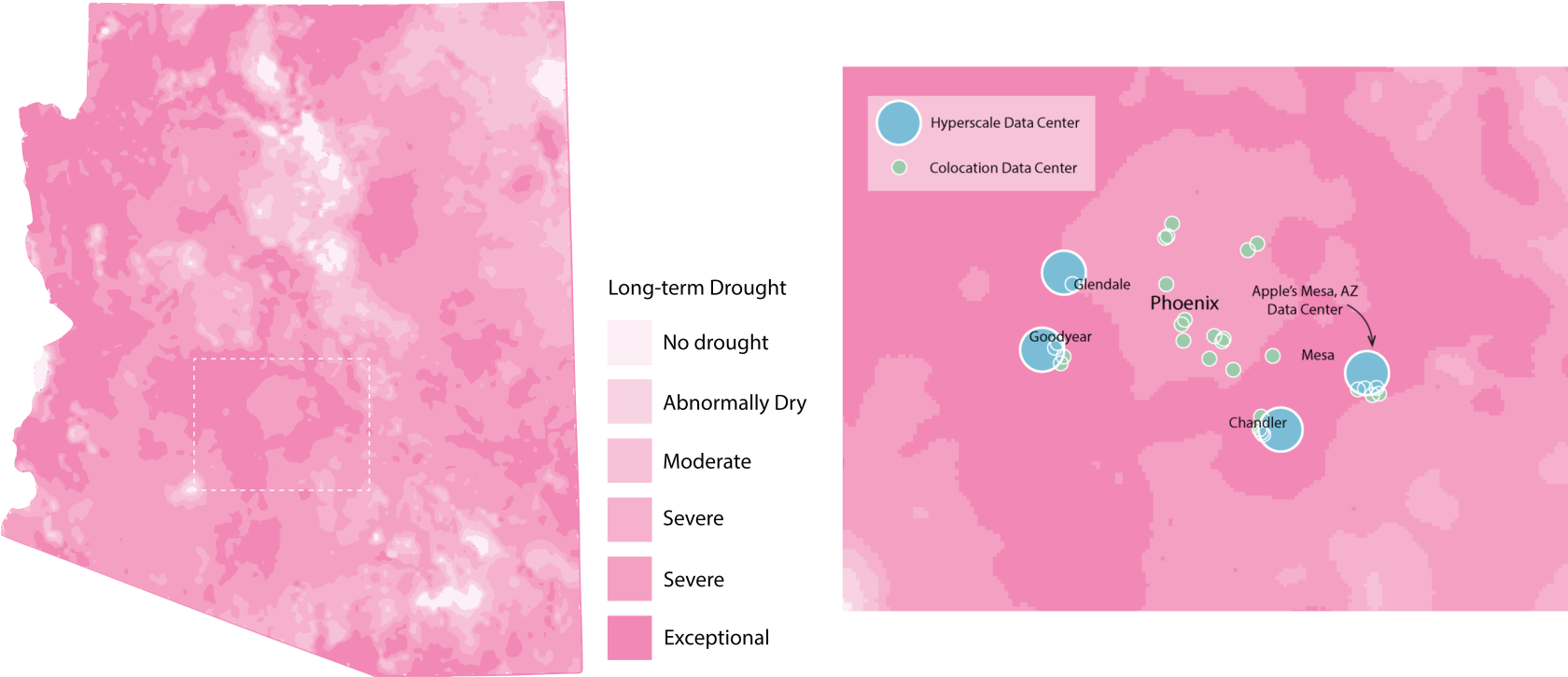
Apple's data center in Mesa is just one of many data centers in the drought-stricken Phoenix metropolitan area. Locations for data centers generally depend on factors like proximity to customers and infrastructure, land and electricity prices, and tax incentives, and many data center companies are attracted to water-scarce regions in the western United States like Arizona due to the availability of solar and wind energy, despite the lack of water. In fact, an estimated one-fifth of data centers, mostly in the West, source their water from moderately to highly stressed watersheds.
Chicago, Illinois
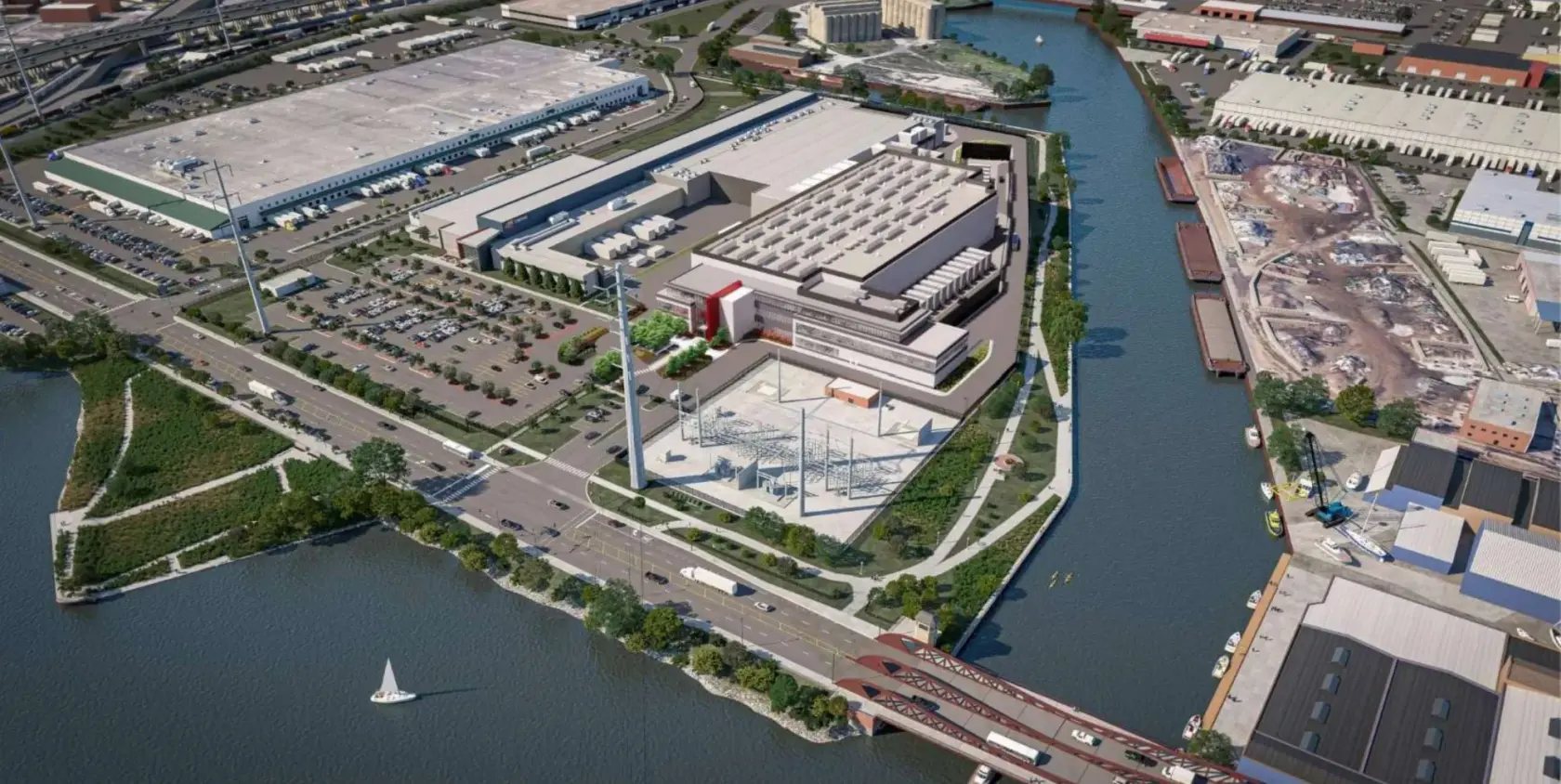
Image: QTS is seeking to build a second data center at the property located at 2800 S. Ashland Ave. in McKinley Park. (By Lake Michigan)
Chicago’s proximity to Lake Michigan and the Great Lakes basin makes it appear water-abundant, but new pressures from data centers powering AI have raised concerns about the long-term sustainability of these resources. The Great Lakes hold about 20% of the planet’s surface freshwater and supply drinking water to more than 40 million people in the region. Yet, they are a finite resource, replenished at a rate of only about 1% of their total volume per year.
According to the Alliance for the Great Lakes, data centers that support AI workloads can consume more than 365 million gallons of water annually, equivalent to the usage of 12,000 American households. Illinois already hosts over 187 operating data centers, and industry expansion is accelerating. Most of these facilities use evaporative cooling, in which more than half of the intake water is lost as vapor. This consumptive use represents a permanent removal from the water cycle, making it particularly concerning in a region whose lakes and aquifers replenish only slowly.
Beyond physical depletion, the lack of transparency reinforces the problem. Because many data centers are tied into municipal water systems, there is no direct requirement for companies to disclose water usage. Therefore, this creates what policy experts describe as a 'black box' around actual consumption, leaving authorities as well as the local communities with little oversight.