Data Centers in Hot, Dry Climates
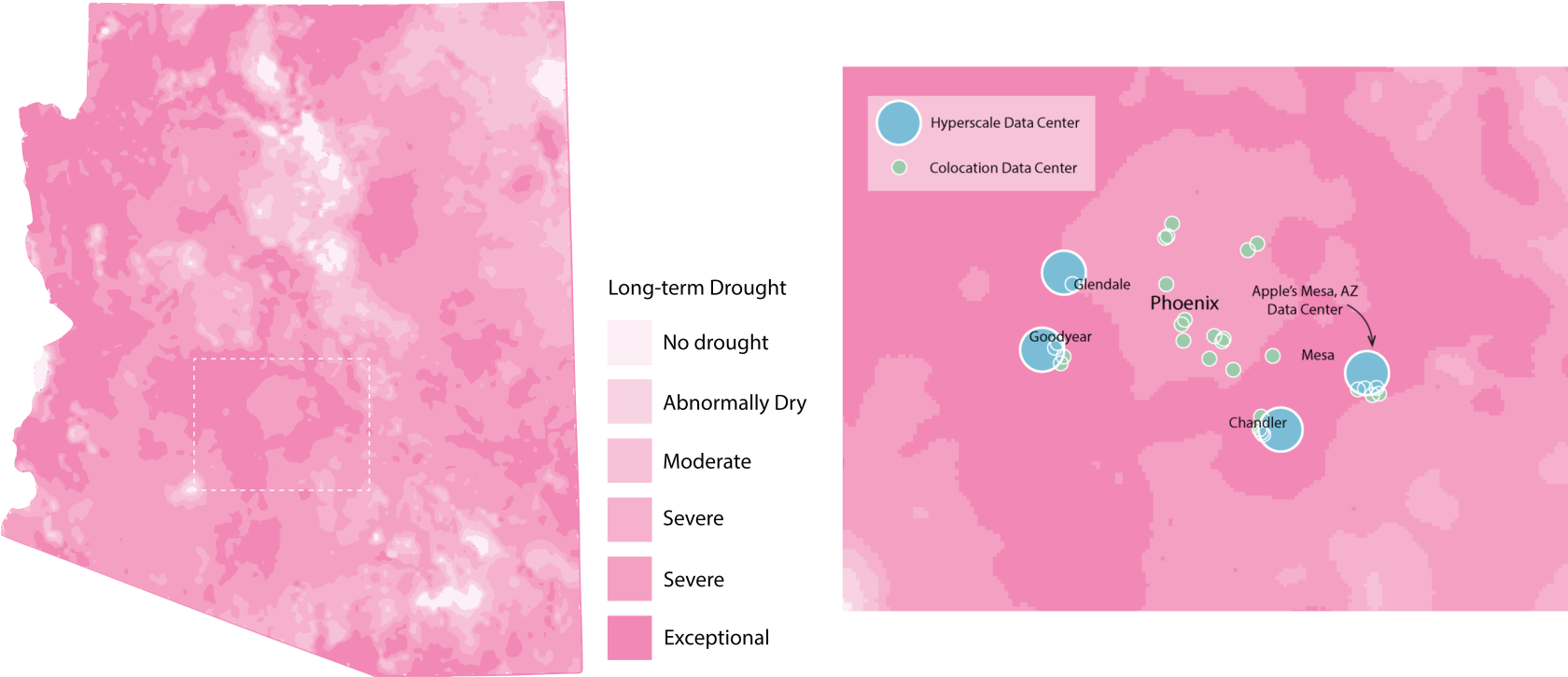
In hot, dry climates, the high water demand from data centers can put immense pressure on the local water supply, exacerbating the effects of drought conditions. Because data centers mostly use potable water, this puts them in direct competition with local communities for drinking water. Nonetheless, major tech companies continue to plan, build, and operate hyperscale data centers in hot, dry areas, with seemingly little regard for their impact on residents and the local environment. Locations for data centers generally depend on factors like proximity to customers and infrastructure, land and electricity prices, and tax incentives, and many data center companies are attracted to water-scarce regions in the western United States like Arizona due to the availability of solar and wind energy, despite the lack of water. In fact, an estimated one-fifth of data centers, mostly in the West, source their water from moderately to highly stressed watersheds.
For example, there are several hyperscale data centers in the Phoenix metropolitan area, where water has to be supplied from over 200 miles away due to long-term drought. Despite this, Apple's data center in Mesa, Arizona uses evaporative cooling (which is associated with high water consumption) because of the high price of energy relative to water.
No comments to display
No comments to display