Chicago, Illinois
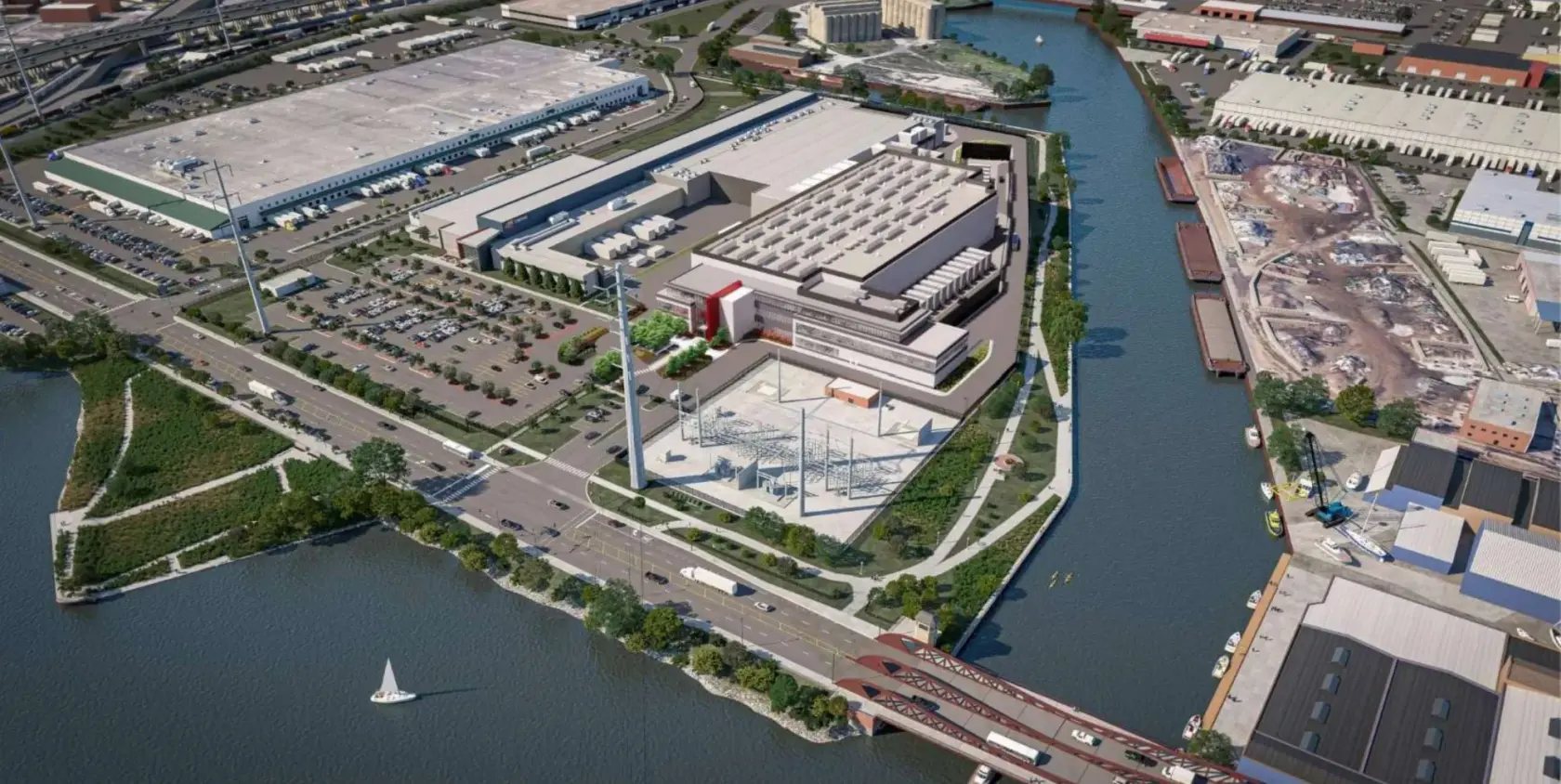
Image: QTS is seeking to build a second data center at the property located at 2800 S. Ashland Ave. in McKinley Park. (By Lake Michigan)
Chicago’s proximity to Lake Michigan and the Great Lakes basin makes it appear water-abundant, but new pressures from data centers powering AI have raised concerns about the long-term sustainability of these resources. The Great Lakes hold about 20% of the planet’s surface freshwater and supply drinking water to more than 40 million people in the region. Yet, they are a finite resource, replenished at a rate of only about 1% of their total volume per year.
According to the Alliance for the Great Lakes, data centers that support AI workloads can consume more than 365 million gallons of water annually, equivalent to the usage of 12,000 American households. Illinois already hosts over 187 operating data centers, and industry expansion is accelerating. Most of these facilities use evaporative cooling, in which more than half of the intake water is lost as vapor. This consumptive use represents a permanent removal from the water cycle, making it particularly concerning in a region whose lakes and aquifers replenish only slowly.
Beyond physical depletion, the lack of transparency reinforces the problem. Because many data centers are tied into municipal water systems, there is no direct requirement for companies to disclose water usage. Therefore, this creates what policy experts describe as a 'black box' around actual consumption, leaving authorities as well as the local communities with little oversight.
No comments to display
No comments to display