History of Telecommunication
We explore the prevailing technologies that developed from late 1800's to the present: an always-on, connected world.
- History
- Innovations
- Overview of Innovations
- Material of Data and Optimization of Cables
- Satellite & GPS
- Internet Technologies
- Case Studies
- Sources
History
Graphic
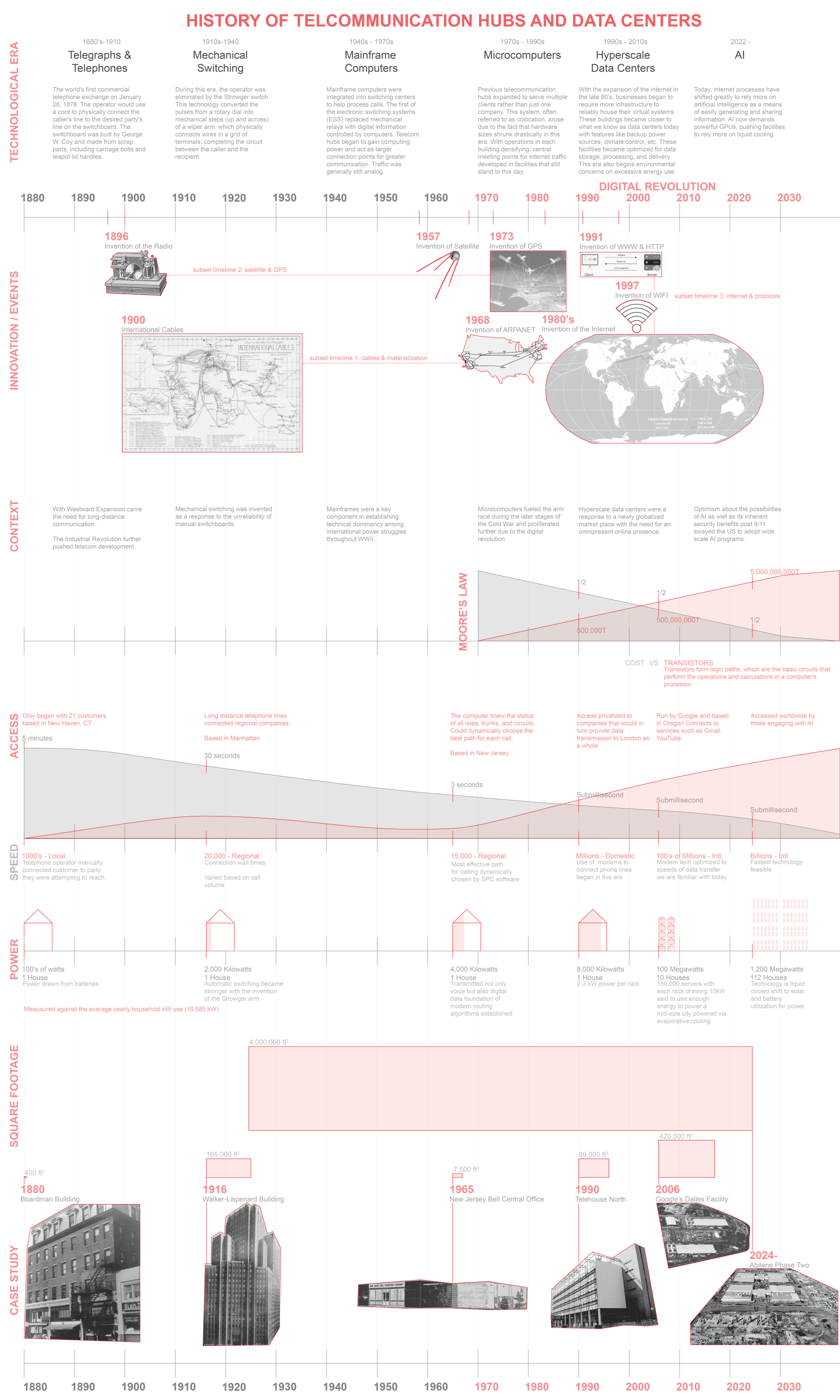
Eras of Innovation & Historical Context
Dates | Era | Inventions | Historical Context | Image |
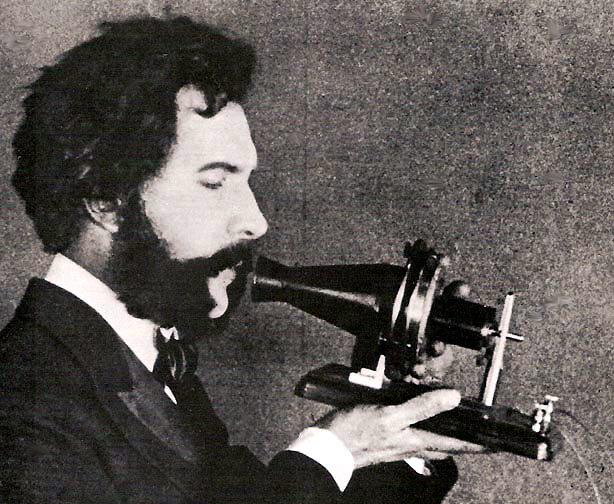
1880's - 1910 | Telegraphs & Telephones | The world's first commercial telephone exchange on January 28, 1878. The operator would use a cord to physically connect the caller's line to the desired party's line on the switchboard. The switchboard was built by George W. Coy and made from scrap parts, including carriage bolts and teapot lid handles | With Westward Expansion came the need for long-distance communication. The Industrial Revolution further pushed telecom development. |
|
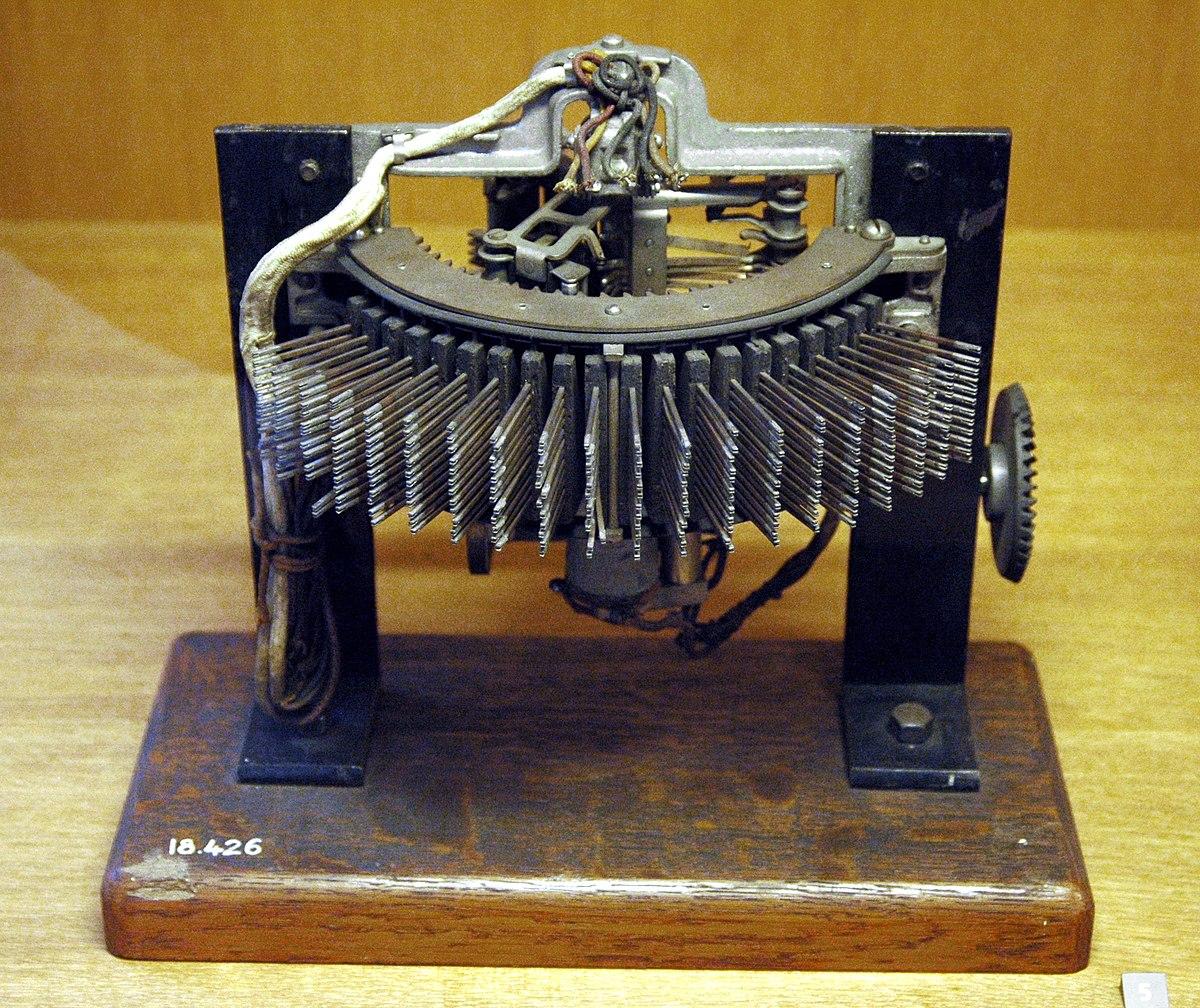
1910's - 1940 | Mechanical Switching | During this era, the operator was eliminated by the Strowger switch. This technology converted the pulses from a rotary dial into mechanical steps (up and across) of a wiper arm, which physically connects wires in a grid of terminals, completing the circuit between the caller and the recipient. | Invented as a response to the unreliability of manual switchboards |
|
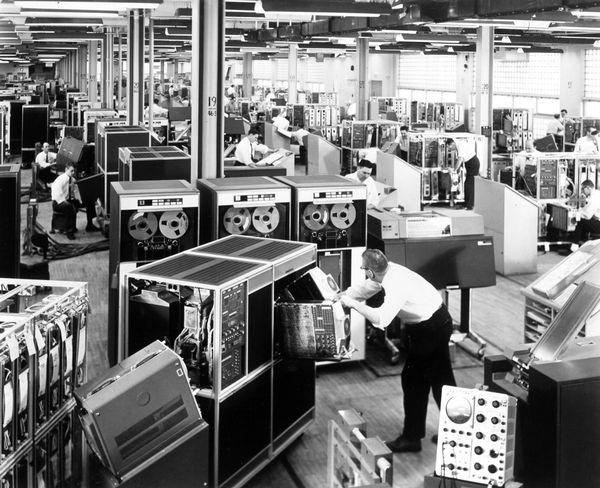
1940's - 1970 | Mainframe Computers | Mainframe computers were integrated into switching centers to help process calls. The first of the electronic switching systems (ESS) replaced mechanical relays with digital information controlled by computers. Telecom hubs began to gain computing power and act as larger connection points for greater communication. Traffic was generally still analog. | Key component in establishing technical dominancy among international power struggles throughout WWII. |
|
1970's - 1990 | Microcomputers | Previous telecommunication hubs expanded to serve multiple clients rather than just one company. This system, often referred to as colocation, arose due to the fact that hardware sizes shrunk drastically in this era. With operations in each building densifying, central meeting points for internet traffic developed in facilities that still stand to this day. | Fueled the arm race during the later stages of the Cold War and proliferated further due to the digital revolution |
|
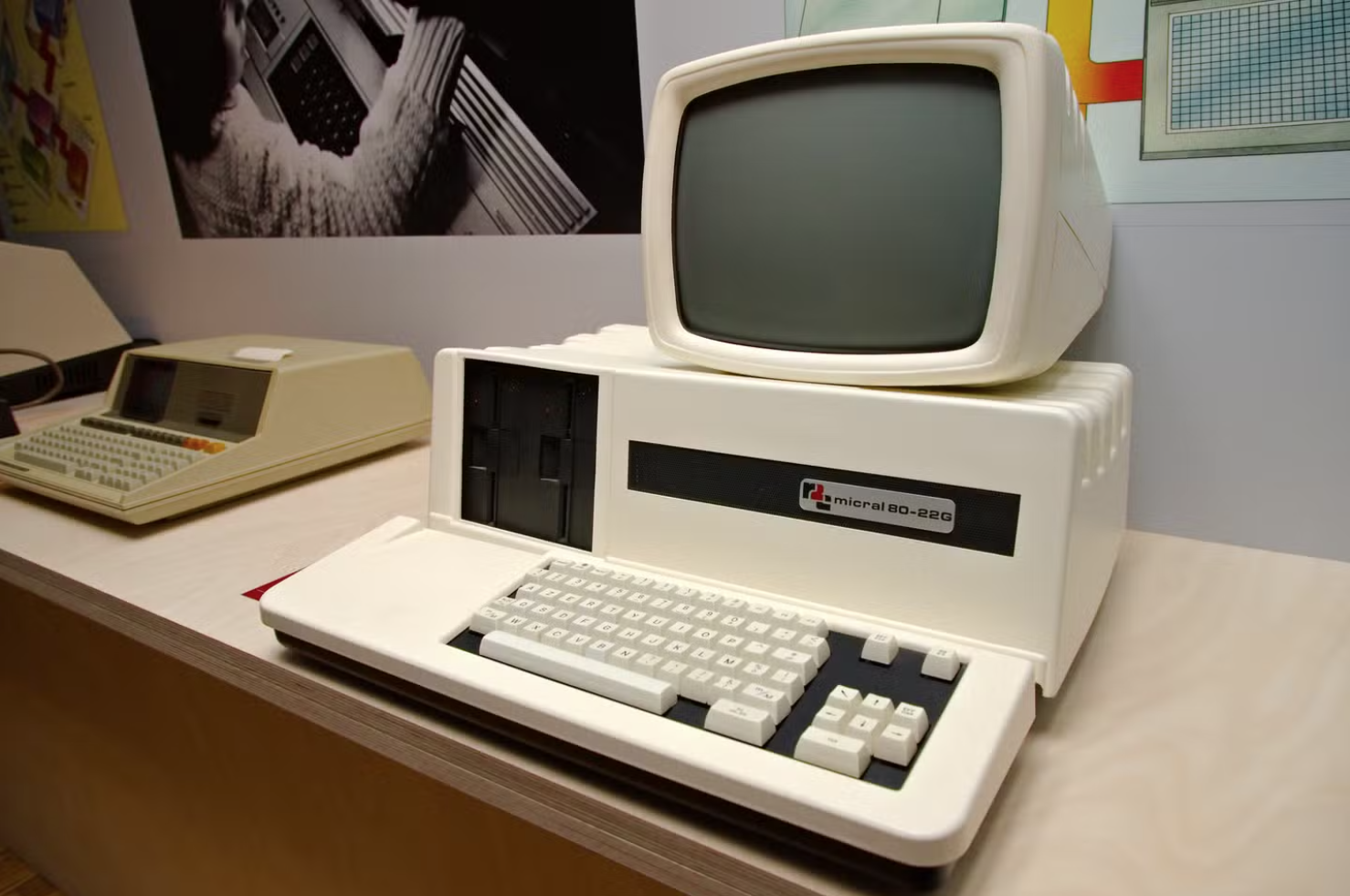
1990's - 2010 | Hyperscale Data Centers | With the expansion of the internet in the late 90’s, businesses began to require more infrastructure to reliably house their virtual systems. These buildings became closer to what we know as data centers today with features like backup power sources, climate control, etc. These facilities became optimized for data storage, processing, and delivery. This era also begins environmental concerns on excessive energy use. | Response to a newly globalized market place with the need for an omnipresent online presence | |
2022 - | Artificial Intelligence | Today, internet processes have shifted greatly to rely more on artificial intelligence as a means of easily generating and sharing information. AI now demands powerful GPUs, pushing facilities to rely more on Liquid Cooling. | Optimism about the possibilities of artificial intelligence as well as its inherent security benefits post 9/11 swayed the US to adopt wide scale AI programs |
Moore's Law
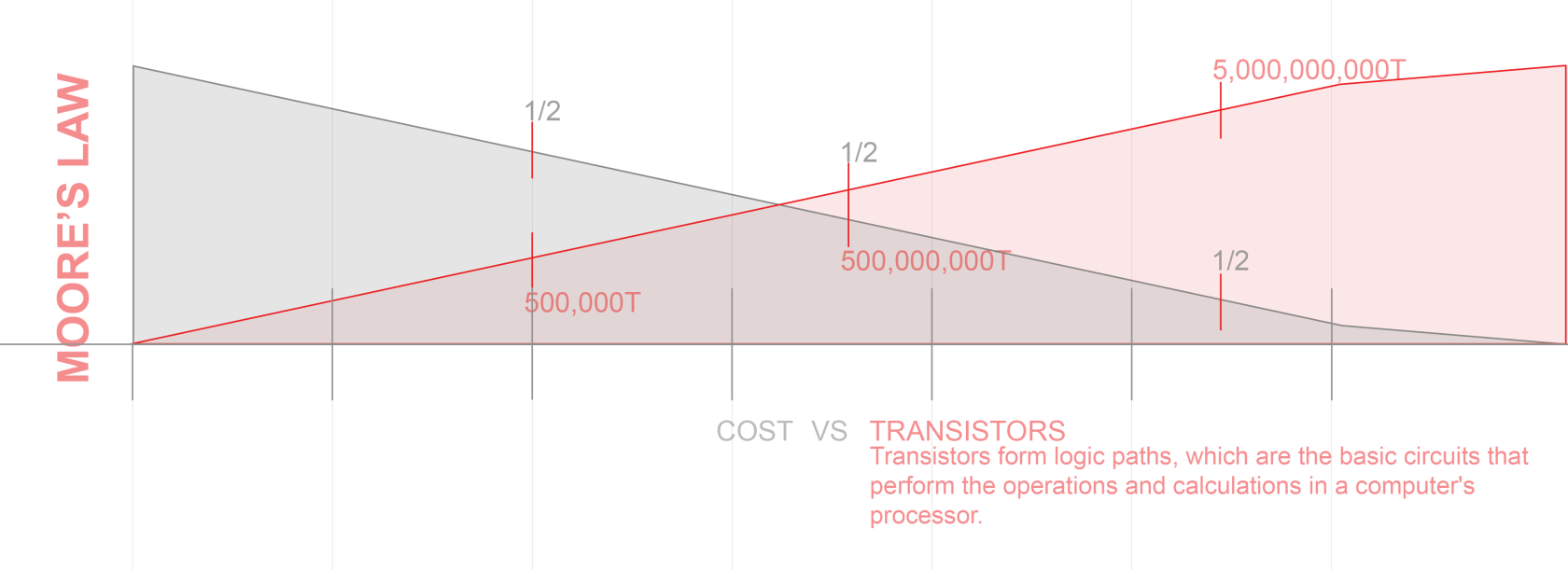
Moore's Law is the observation, first made by Gordon Moore in 1965, that the number of transistors on an integrated circuit doubles approximately every two years, leading to more powerful, smaller, and less expensive electronics. This techno-economic model has driven innovation and exponential growth in the information age but is currently facing limits due to molecular-scale physics and escalating fabrication costs, suggesting the classical form of the law is slowing down or ending.
Innovations
Overview of Innovations
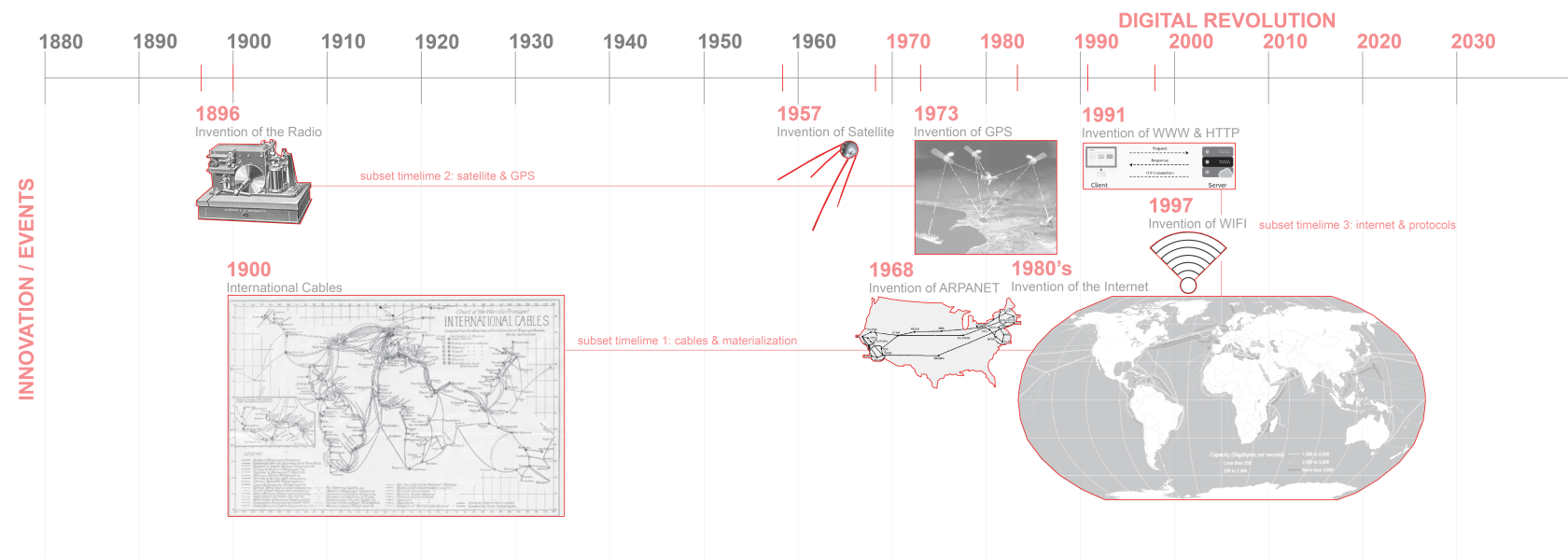
Within this larger timeline of innovations and events, there are 3 main stories of development.
- What materials connects us? Understanding cables and the physical networks these create within our landscape.
- What are the technologies that connected us globally? Understanding the development of satellites.
- What technologies connect us at a smaller scale? Understanding the standardization protocols of the internet.
Material of Data and Optimization of Cables

1816 - Copper wires were first used underground to relay a telegraph; copper is good electric conductor
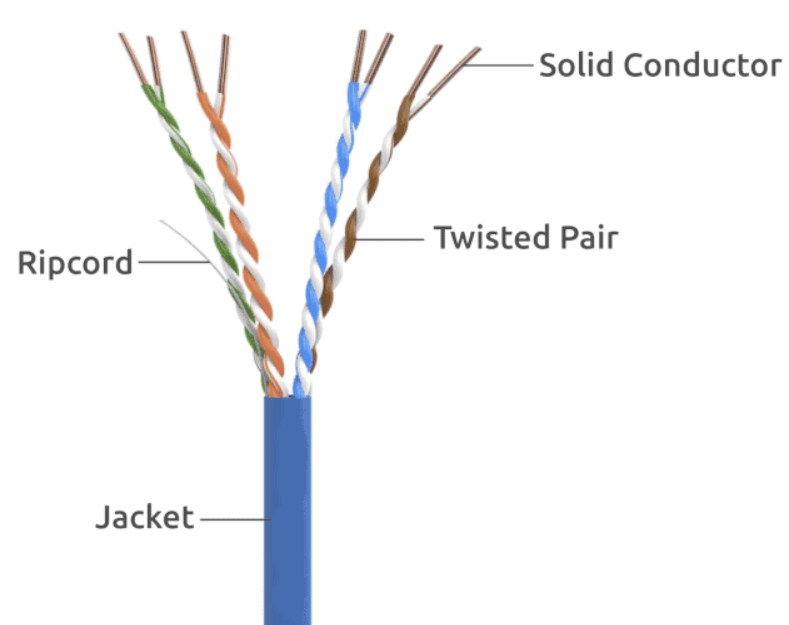
| 1881 - UTP (Unshielded Twisted Pair) is the most common & inexpensive cable used in LANs (local area networks); used in ethernet & telephone lines. |
1929 - Coaxial cables include a central wire that carries the signal. The wire is protected by braided metal guard, often made of copper. Made using twisted copper wires & plastic polymer (polyethylene) outer jacket.
| 1970 - Fiber optic cables began to have widespread usability in telecommunications. They were able to carry signals greater distance than copper & are now widely used in high-speed internet & telecom as well as data centers as we know them today. Revolutionized the use of purified glass to transmit light signals very fast. |
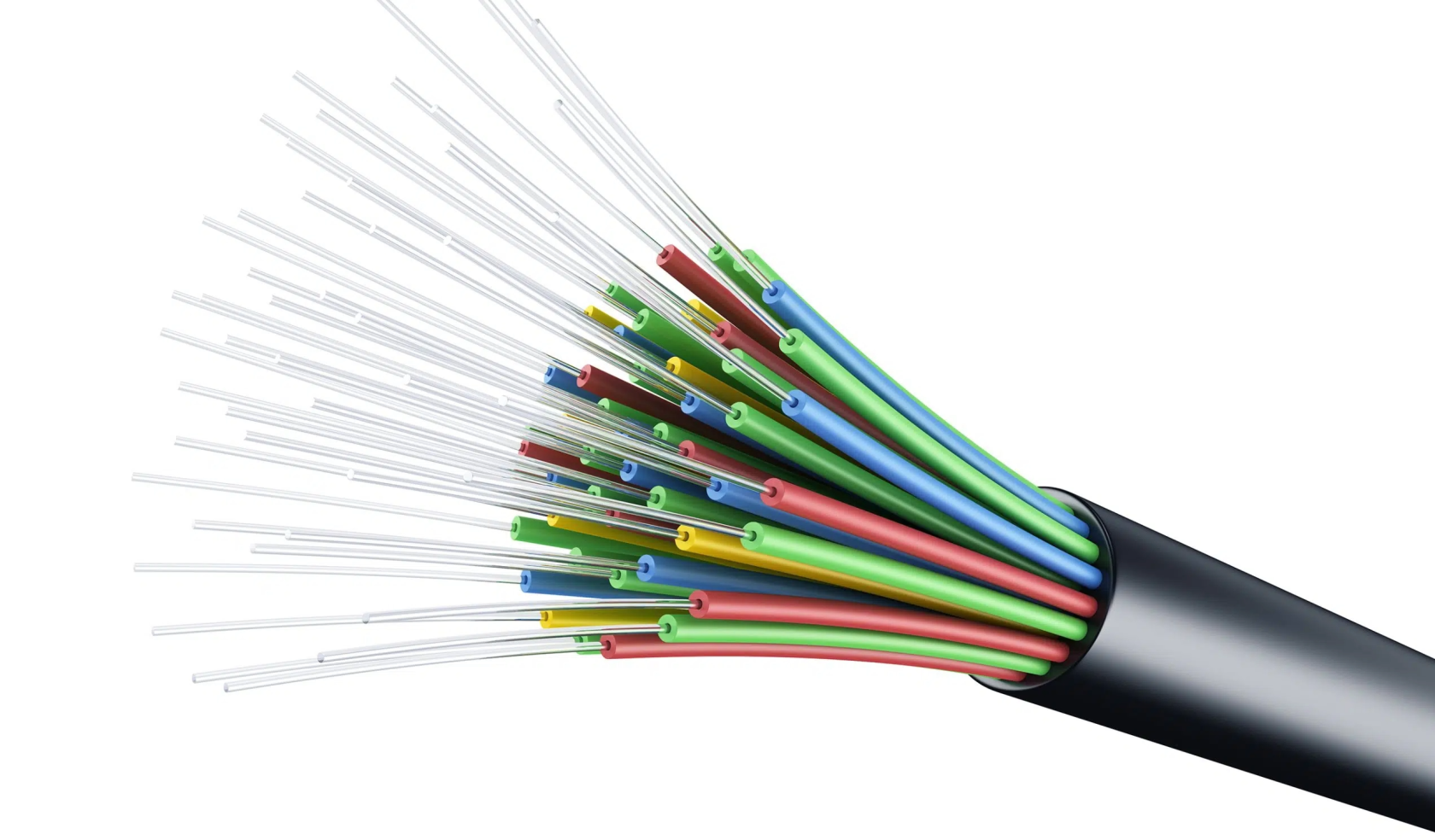
2002 - Cat 6 is a reliable, fast ethernet cable that has good resistance to cross talk (electromagnetic interference from another set of wires). It is made with 4 pairs of twisted copper wire & protective outer jacket made from materials such as PVC.
Conclusion: Conductive materials have been pushed to their physical limits to most effectively and quickly transfer data over a range of distances. The trend towards longer distances begins to signal the push towards globalization. |
|
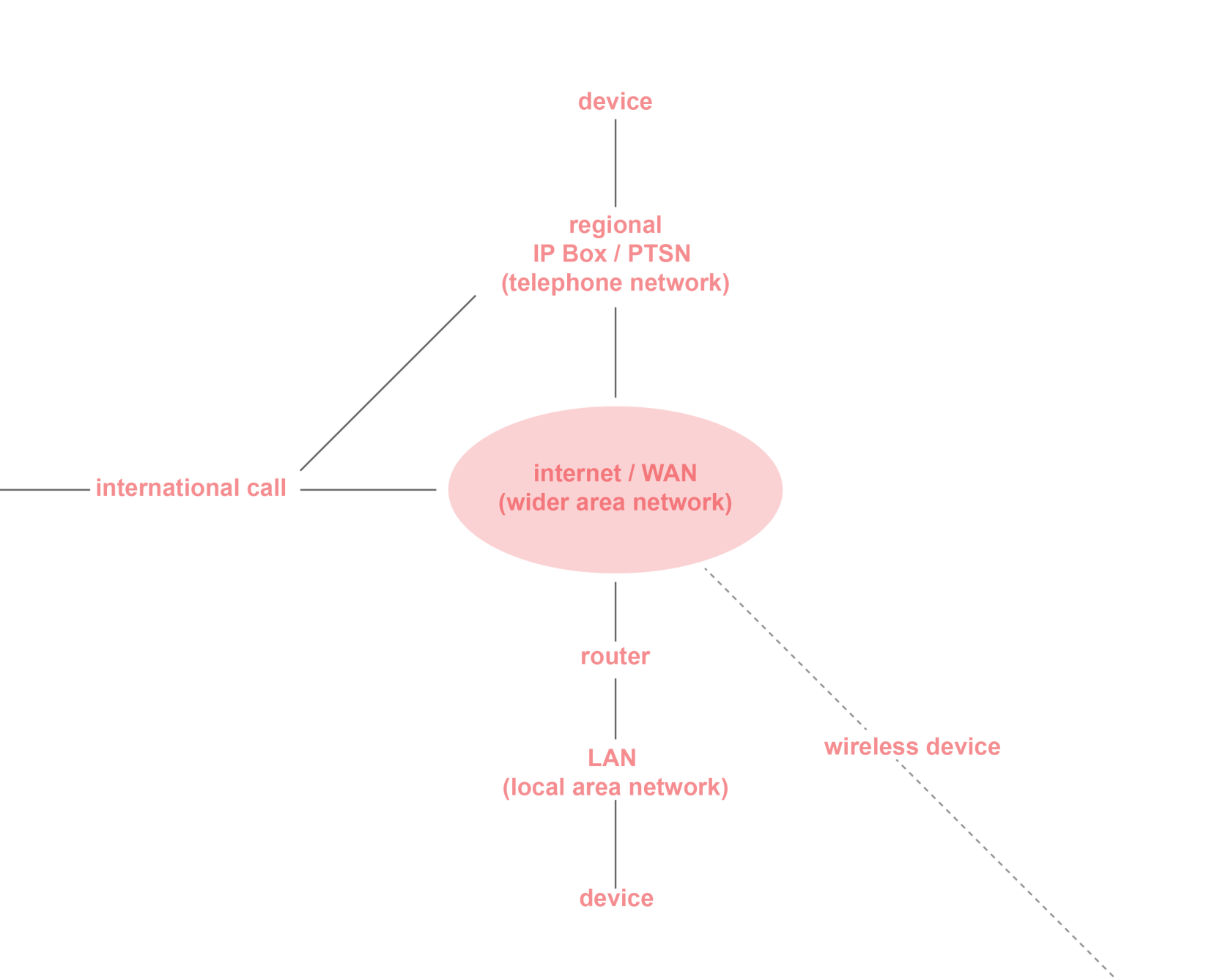
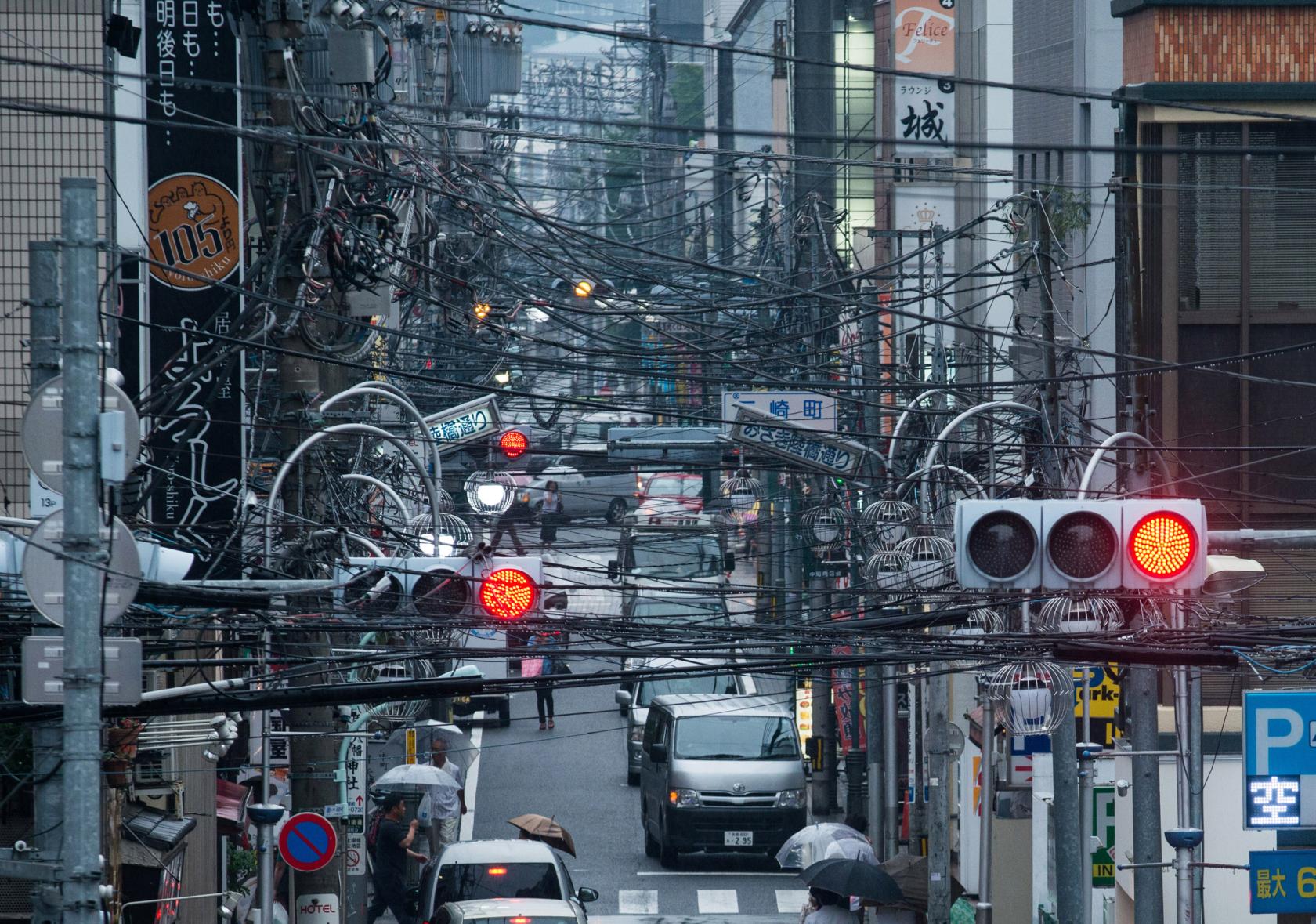
The physicality of these cables begin to have real-world implications on our landscapes as the overlap and connect. Typically fiber optic cables and copper wire-based cables such as Cat 6 form into webbed networks that connect people regionally, nationally, and internationally. This brings our city landscapes to accommodate to the sea of cables formed by these connections. |
Satellite & GPS
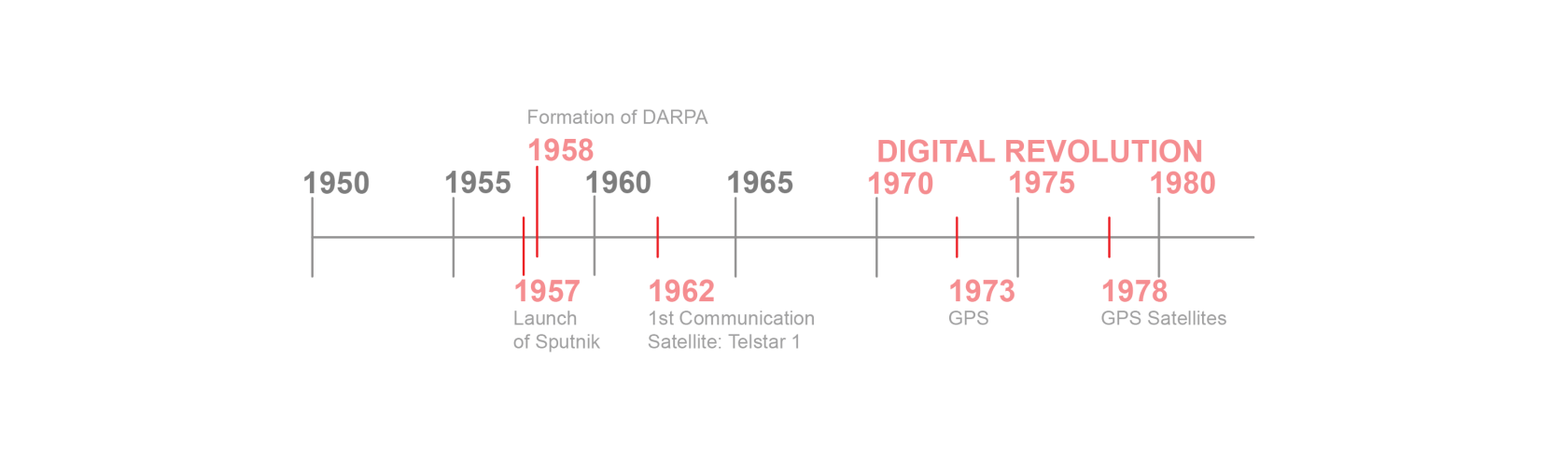
This timeline of events is prefaced by the 1896 invention of the Radio. It used electromagnetic waves to transmit signals without wires.
All wireless system we use — Wi-Fi, Bluetooth, satellite communication, GPS, and even your smartphone — is built on the principles of radio communication. However, the drawback with early radio was that it was messy, insecure, and limited in reach.
| 1957 - Sputnik was launched as the first satellite. The transmitted beeping radio signals that were heard worldwide accelerated the Space Race. It transmitted simple radio beeps (“beep-beep”) back to Earth. Satellites could send signals far beyond the limits of radio towers, enabling global broadcasts, telephone calls, and later internet backbones. |

1958 - DARPA (Defense Advanced Research Projects Agency) was founded in response to Russia's Sputnik. DARPA's mission is to "create technological surprise for US national security," leading to many risky yet rewarding projects that have revolutionized our world's technology.
| 1962 - Telstar 1 was the first communication satellite that relayed TV and telephone signals over the Atlantic. It directly led to the communications, weather, navigation, and scientific satellites we rely on today. 1973 - GPS was originally developed under DARPA. GPS was crucial in the Cold War as it allowed troops, ships, and aircraft to know their exact positions anywhere in the world, crucial for navigation and precise missile targeting. 1978 - First GPS satellite launched, eventually forming a global network that we use today for daily navigation. |
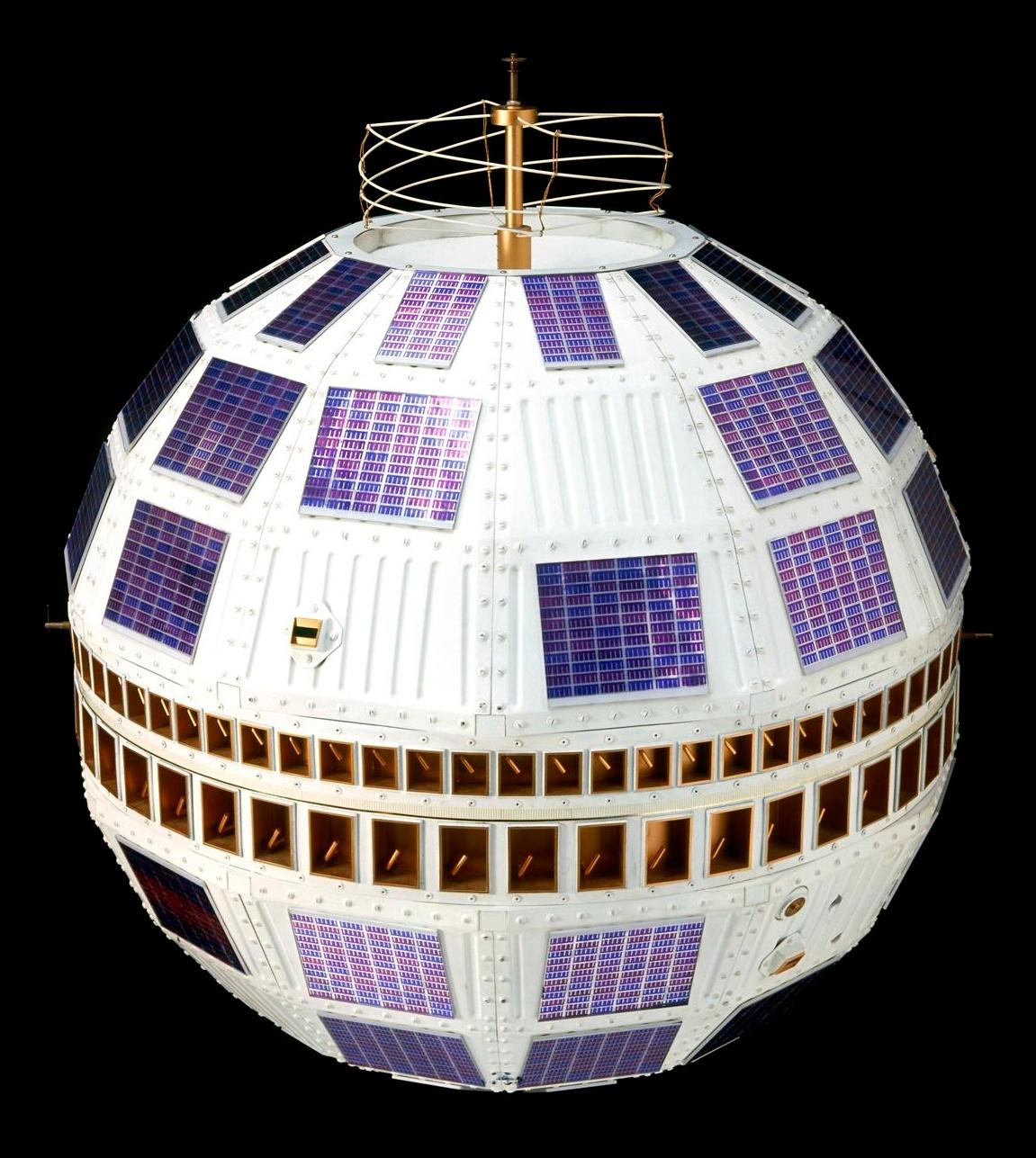
Conclusion: The Space Race and fast advancements in satellite technology suggest a global struggle for power post WW2. These fast pace developments in that connected the world globally serve as the backdrop for the invention of the Internet. |
Internet Technologies
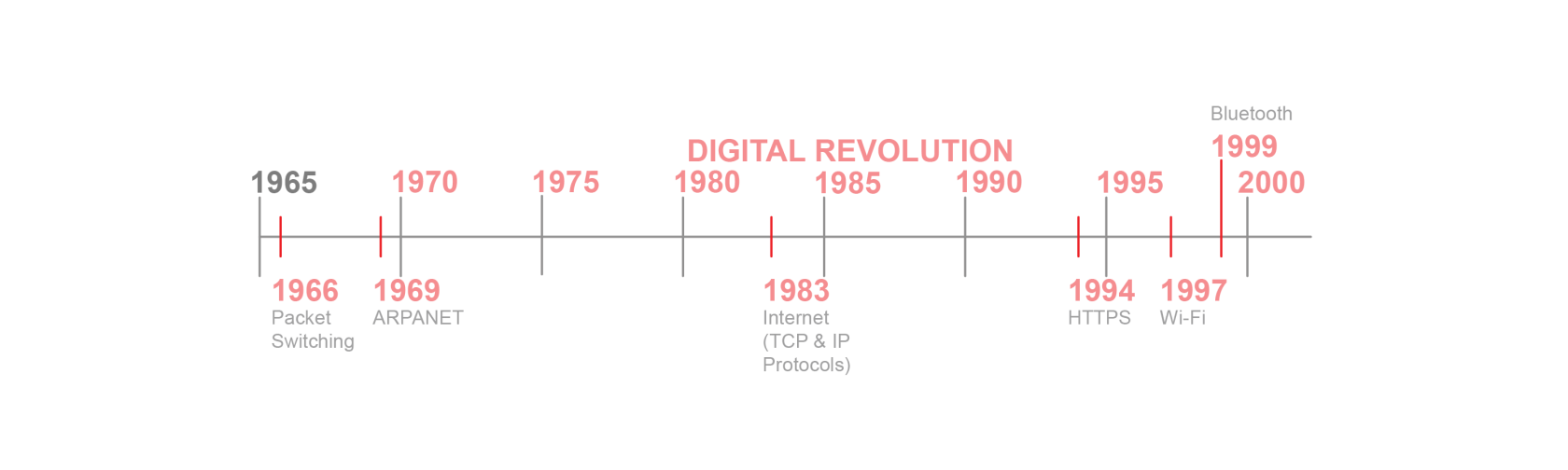
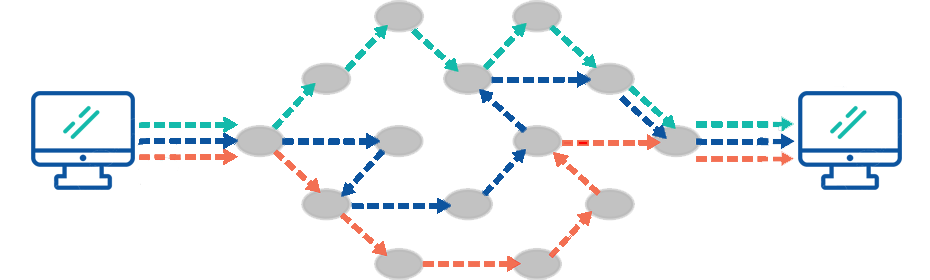
| 1966 - Packet Switching is the concept of breaking data into smaller parts that are then sent independently across a network. Once they arrive at the destination, the packets are reassembled. |
1969 - ARPANET is the first operational packet switching network, relying on IMPs (Interface Message Processors) as early routers. It is generally thought of to be the predecessor to the internet and built heavily on fundamental digital communication principles. It combines ideas from radio (wireless signals), satellites (long-distance communication), and cables (physical network infrastructure).
1983 - Invention of the Internet evolves from ARPANET and relies on satellites, undersea cables, and radio to transmit data globally. Turns communication from a point-to-point activity (like telegraph or telephone) into a mass, interconnected digital network.
The internet used TCP (Transmission Control Protocol) & IP (Internet Protocol).
TCP - Breaks data into packets at the source, numbers them, and ensures they arrive intact and in order at the destination. Think of it like certified mail: each packet must be signed off at delivery.
IP - Handles addressing and routing. It decides where each packet should go, using IP addresses. Think of it like writing an address on an envelope — it ensures the mail carrier knows the destination.

1994 - HTTPS served as a way to easily share and navigate information across the Internet. Made a a universal communication platform usable for everyone.
Consider this analogy: Internet = the global network infrastructure (roads).
HTTP = a protocol that let us build the Web on top of that network (cars that drive on the roads).
A program to view them → the first web browser/editor (called World Wide Web).
1997 - Wi-Fi is invented to convert digital data into radio waves, connecting devices to the internet without cables (wireless local area networking) It combines radio waves that transmit through the air, digital networking (ARPANET/internet), and protocol standardization (HTTP, TCP/IP) to make global internet access portable and wireless.
1999 - Bluetooth is a form of wireless communication to the personal level, extending the principles of radio and satellite to tiny devices like phones and headsets. The technology is short-range and wireless.
Conclusion: Wider, global connectivity flourished with the advent of satellites, but the internet brought virtual communication into homes and personal lives. Wireless technologies such as smartphones and Bluetooth devices were brought to the commercial market and filled the need for short-distance communication. |
Case Studies
Introduction of Facilities and Size Comparisons
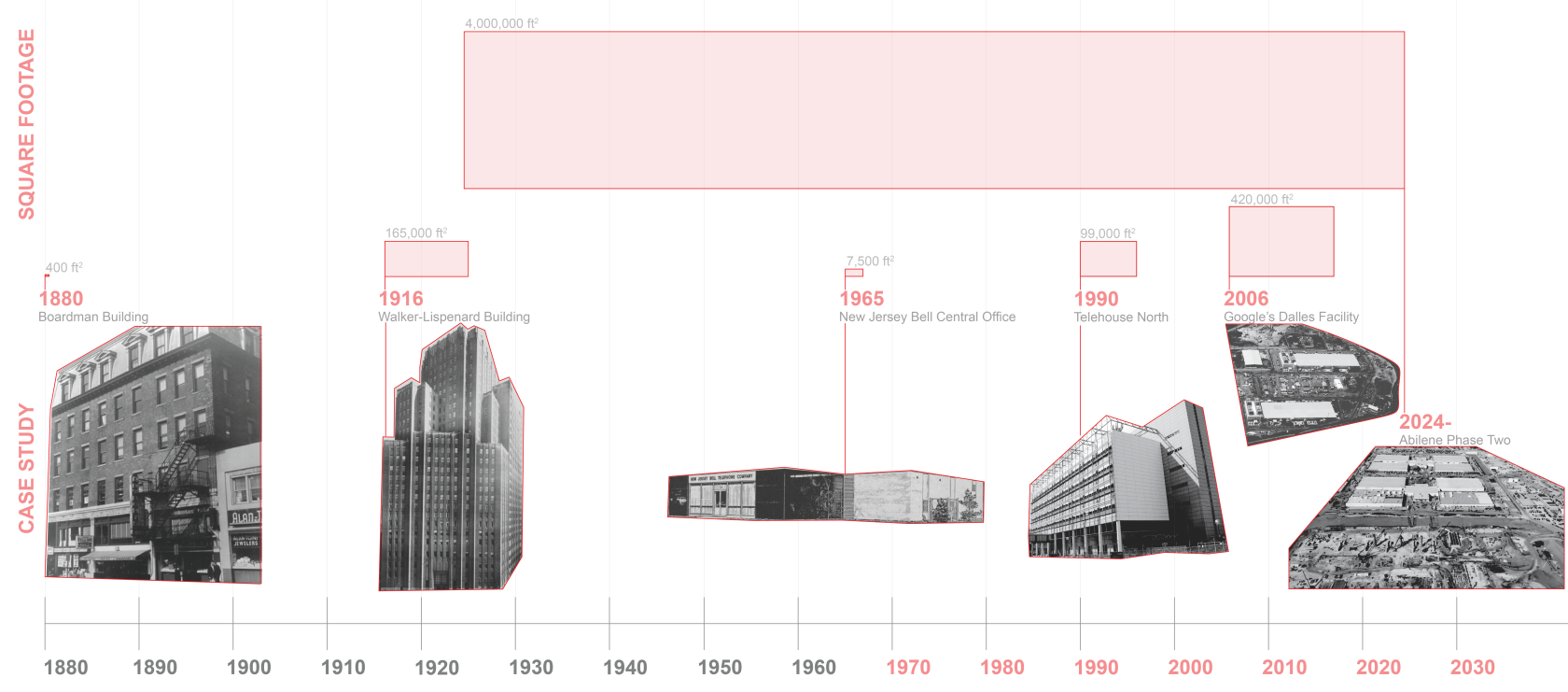
Conclusion: The drastic increase in square footage between the switch from Data Centers to Hyperscale AI Data Centers constitutes a worrying shift in scale. With later examples such as the Dalles Facility and the Abilene, TX facility operating more as campuses, these buildings are gain a larger and larger impact on city landscapes. |
Power Comparisons

We compared the amount of power that each facility outputs in a day against the amount a typical US household uses in a year. The power output started out miniscule, only providing enough power for one of today's smartphones, but gradually rose until the advent of hyperscale data centers. At this point, the scale jumps greatly from the ability to power one house to nearly ten. At the farthest end of the timeline, today's Data Centers that fuel AI are able to power 8 blocks (around 112 houses) for a full year.
Conclusion: The technological developments post the advent of the Internet allowed for massive jumps of scale in how much energy data centers are able to output daily. |
Speed & Access
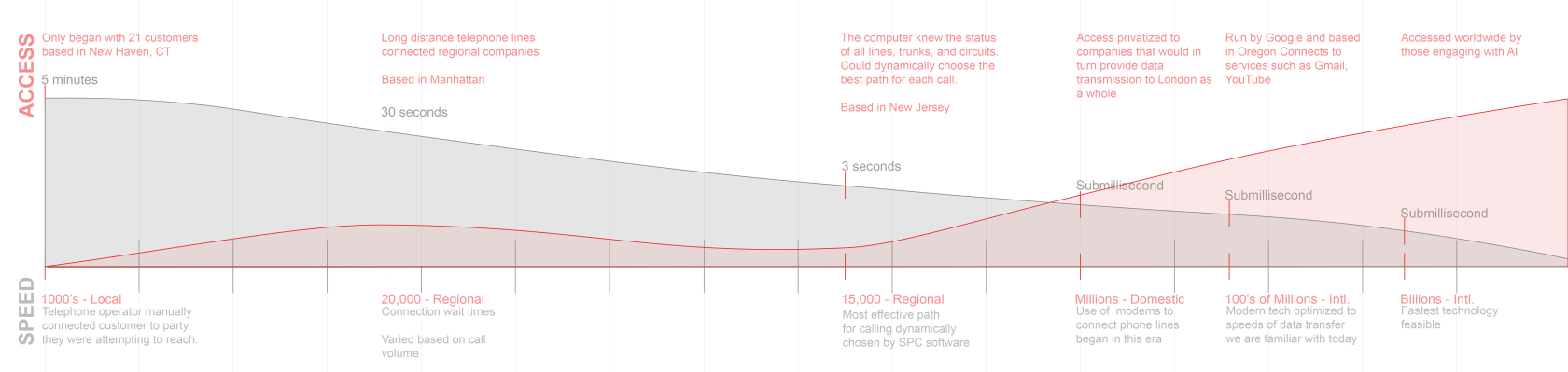
We plotted speed and access against each other as a means of showing the inverse relationship between the two concepts. As access to technology and internet traffic grows, the speed of software not only keeps up, but also continues decreasing. The speed of data transmission is now at a staggering sub millisecond pace. This relationship begins to speak to Moore's Law, a theory critical to understanding the pace of technological development.
Sources
Links
https://www.ibm.com/think/topics/data-centers
https://www.digitalrealty.com/resources/articles/a-brief-history-of-data-centers
https://www.nps.gov/subjects/nationalhistoriclandmarks/site-of-the-first-telephone-exchange.htm
chrome-extension://efaidnbmnnnibpcajpcglclefindmkaj/https://s-media.nyc.gov/agencies/lpc/lp/1747.pdf
https://en.wikipedia.org/wiki/Google_data_centers