Growth of Data Centers, 2000-Present
Current Stage of Data Centers in Texas |
|
Current Stage of Data Centers in Florida |
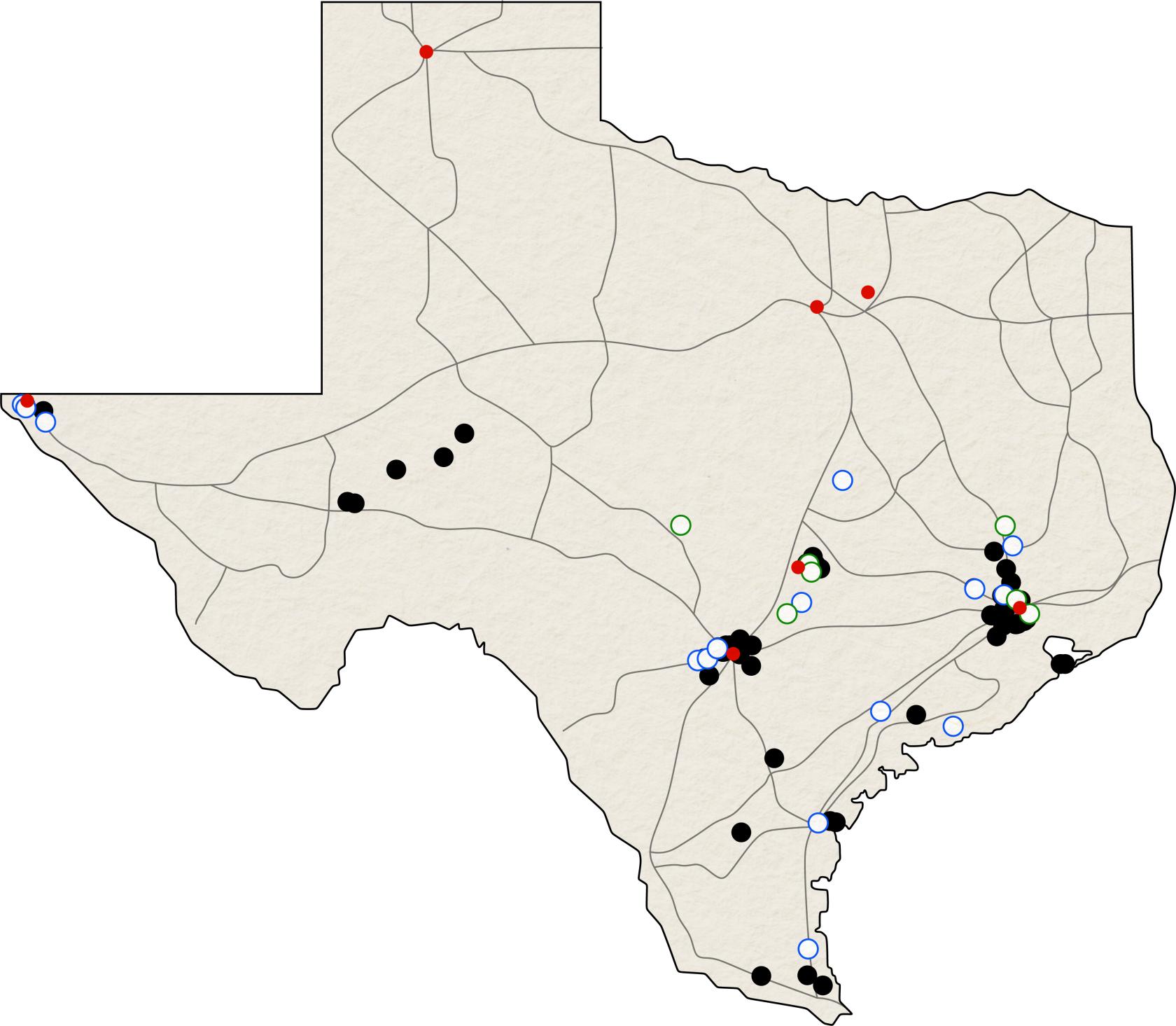
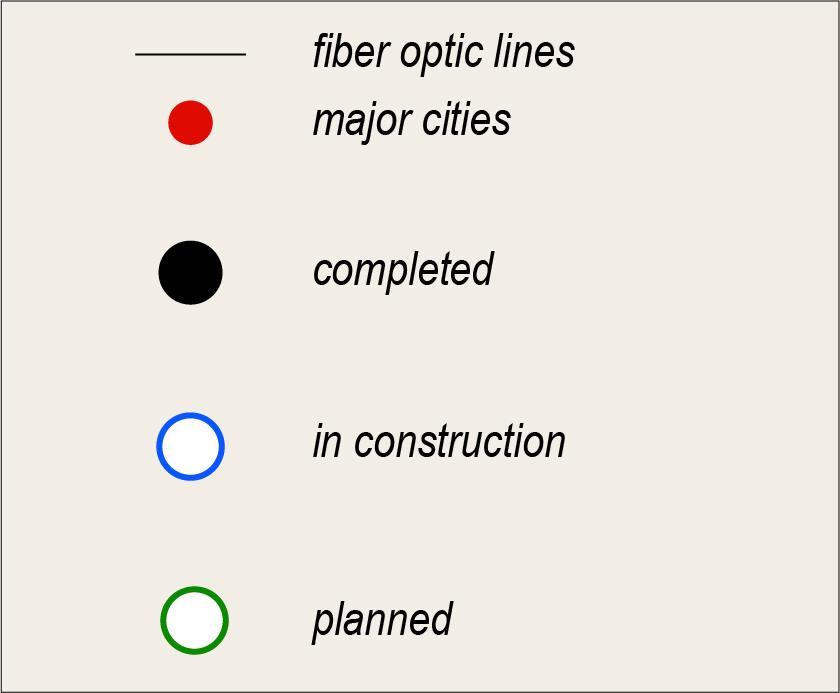
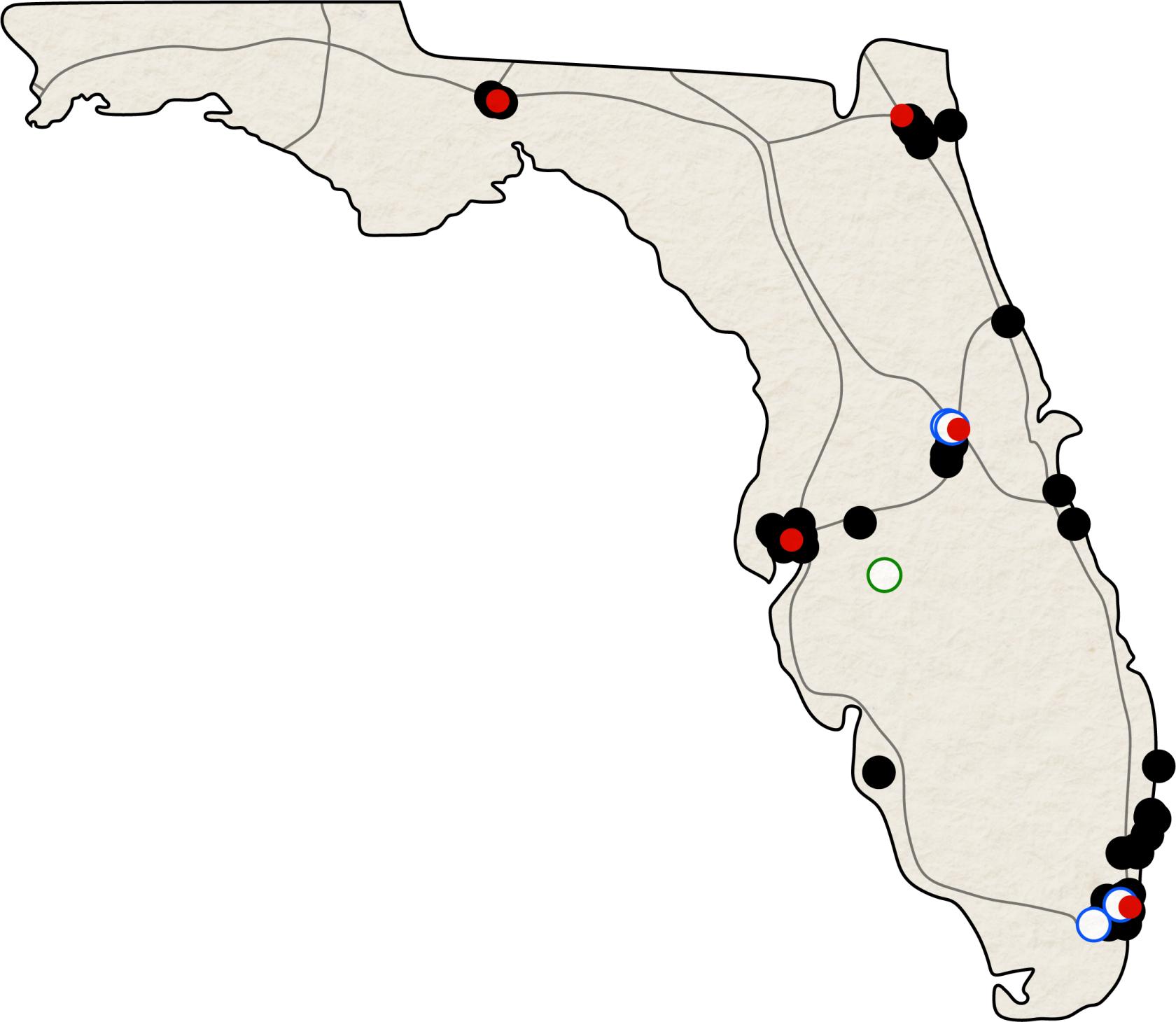
The development of data centers along the I-10 corridor, particularly in Texas and Florida, has increased significantly since the early 2000s. Initially, data centers were concentrated in major cities like Houston and Miami due to easy access to fiber optic infrastructure and proximity to large populations. While some early data centers appeared in the 1990s, significant growth along the I-10 corridor began around 2010, with a sharp rise after 2015 due to increasing demand from cloud computing, streaming services, and AI technologies.
Texas has become a national leader in data center construction, with a low-cost, deregulated energy market and an abundance of affordable land. In 2023 and 2024 alone, over 460 megawatts of capacity were under development in Central Texas, making it the second-largest data center market in the United States. Florida, while not matching Texas in scale, is rapidly expanding due to strong connectivity to Latin America through subsea cables, high population density, and high demand in cities like Miami, Orlando, and Tampa.
Both Texas and Florida offer strategic advantages, mostly for power infrastructure and international data flow. Louisiana, Mississippi, and Alabama have seen less drastic growth. Looking forward, 2025 through 2030 is expected to see continued expansion as AI workloads and tech developments spike the demand. Sustainability and green energy access will also shape site selection. Areas near the coast, particularly south and central Texas and southeast Florida, will remain hot spots.
No comments to display
No comments to display