AI Eletrical Infrastructure

Jensen Huang presenting Nivida GPUs

OpenAI, Oracle deepen AI data center push with 4.5 gigawatt Stargate expansion
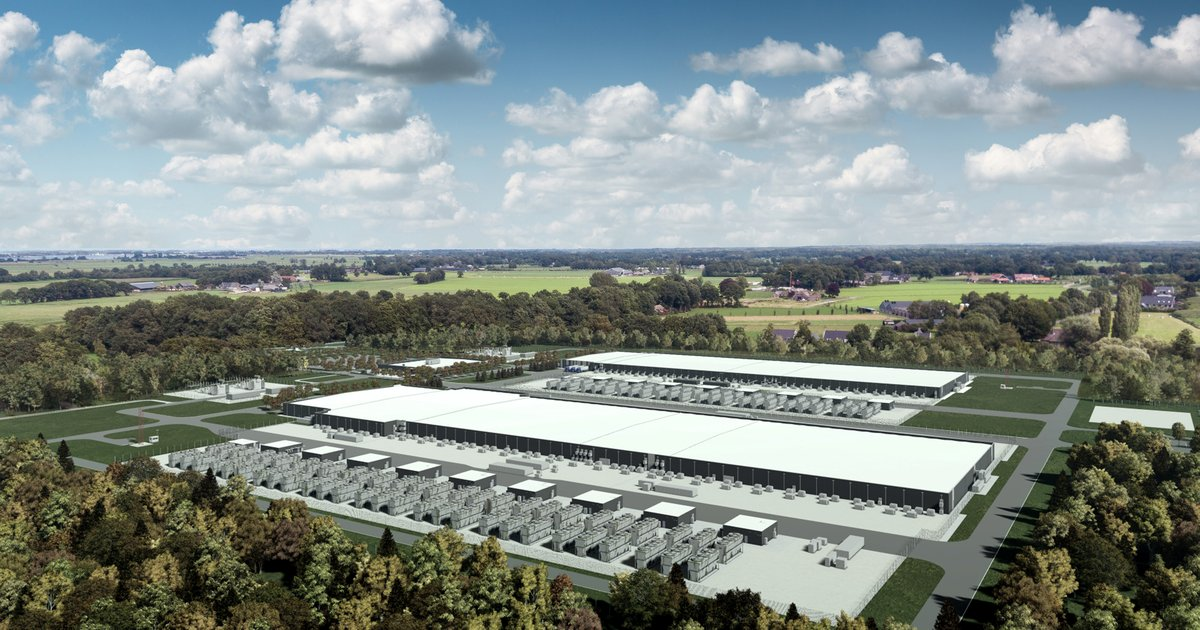
Meta Data Center
AI Data Center as a separate typology
The rise of artificial intelligence has given the data center a new architectural role, no longer a generalized container for computation but a specialized typology. Unlike traditional facilities that hosted mixed workloads, AI data centers are configured around dense racks of accelerators, specialized interconnects, and extensive cooling systems. Their layouts increasingly diverge from conventional office or cloud architectures, instead resembling industrial-scale plants built to sustain relentless parallel computation. In this sense, the AI data center emerges not merely as an evolution of the server farm, but as an entirely distinct species of infrastructure—one that reflects the demands of training models across billions of parameters.
AI Computing Chips
Just as the vacuum tube and transistor once marked decisive shifts in the trajectory of computing, the development of AI-specific chips signals a structural change in the electrical underpinnings of computation. Graphics Processing Units (GPUs), originally designed for rendering images, became the unexpected cornerstone of machine learning, later joined by Tensor Processing Units (TPUs) and other domain-specific accelerators. These chips are designed to maximize throughput in matrix multiplication and parallel operations, allowing AI models to scale where general-purpose CPUs cannot. Their power density and thermal output, however, reshape the very design of electrical distribution within computing facilities, tying the chip’s evolution inseparably to the infrastructures that sustain it.
Power Consumption
With AI workloads, electricity emerges as the defining constraint and measure of possibility. Training a frontier-scale model consumes megawatt-level power, placing data centers in direct competition with cities and heavy industries for electrical capacity. Whereas early computers of the 1950s demanded cooling rooms and dedicated lines, AI infrastructure requires regional-scale energy planning, pushing utilities and governments to reckon with demand spikes unseen in prior waves of digitalization. The electrical appetite of AI reframes computation not as an abstract process in silicon, but as a physical industry embedded in grids, power markets, and environmental limits.
https://www.nytimes.com/interactive/2025/03/16/technology/ai-data-centers.html
No comments to display
No comments to display