Electrical System History
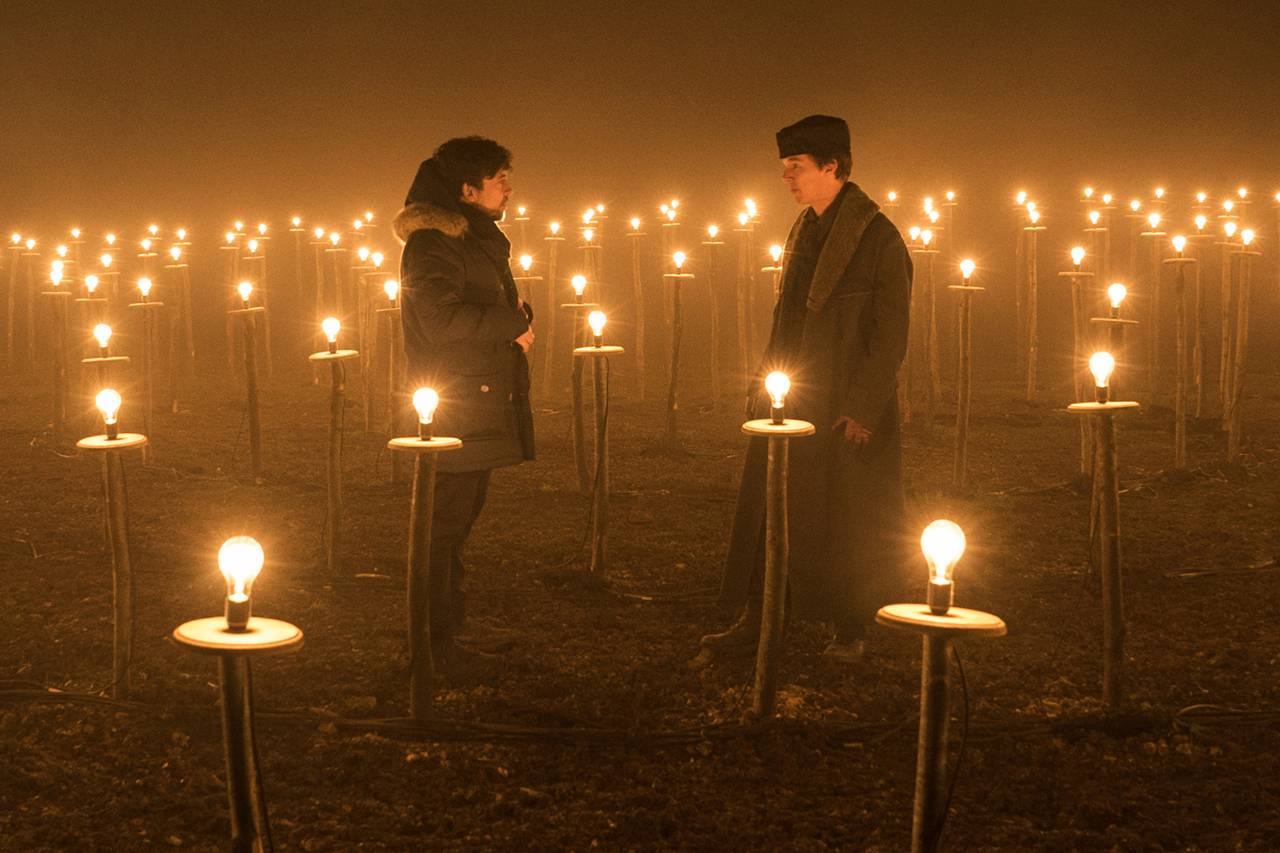
The Current War
2017
Director: Alfonso Gomez-Rejon
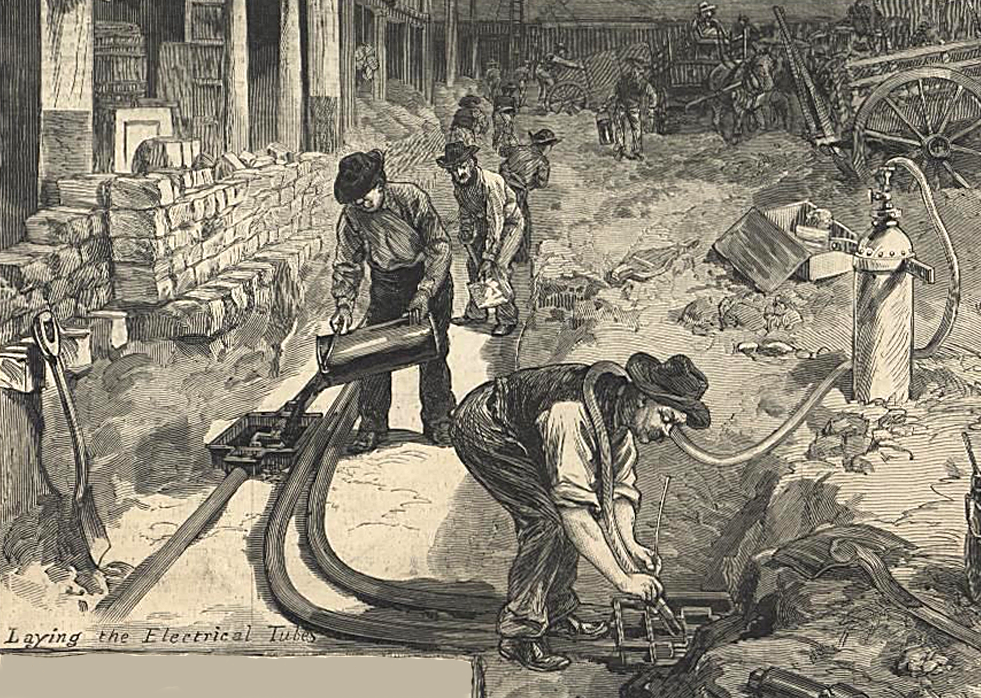
Workmen burying Edison DC power lines under the streets in New York City in 1882. This costly practice played to Edison's favor in public perceptions after several deaths were caused by overhead high-voltage AC lines.
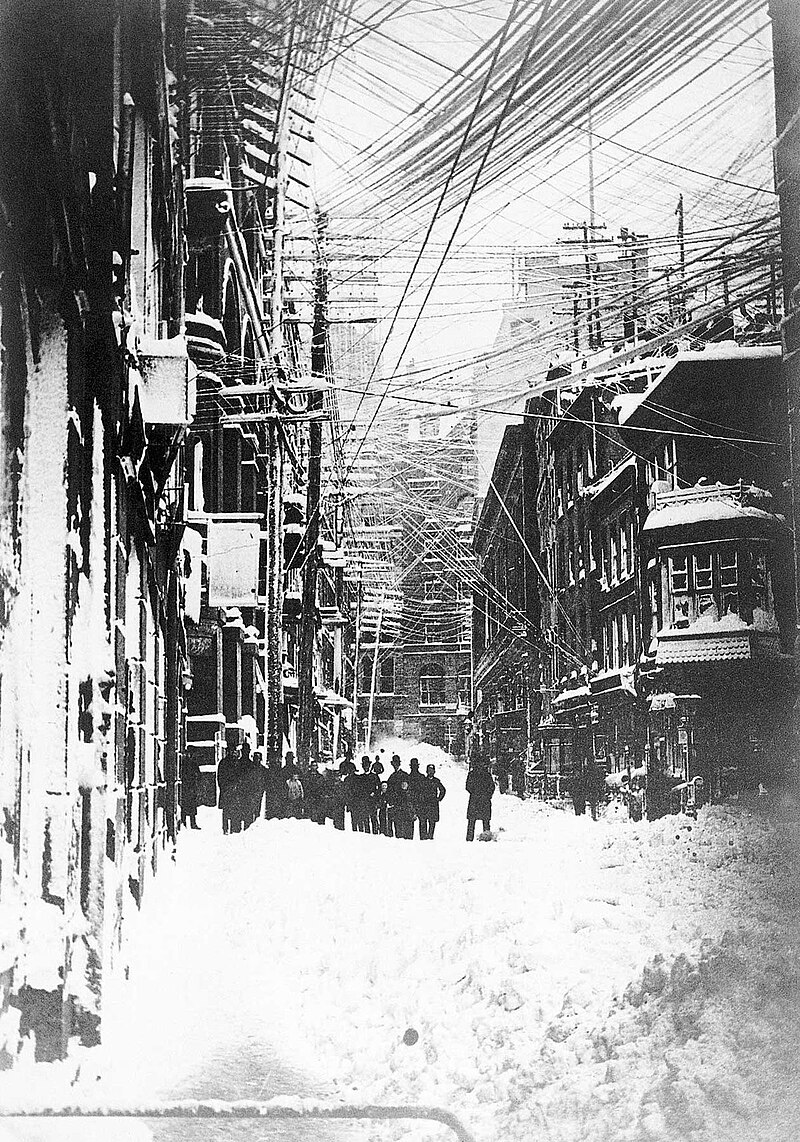
The myriad of telephone, telegraph, and power lines over the streets of New York City in a photo of the Great Blizzard of 1888. An AC line that fell during the storm led to the electrocution of a boy that spring.
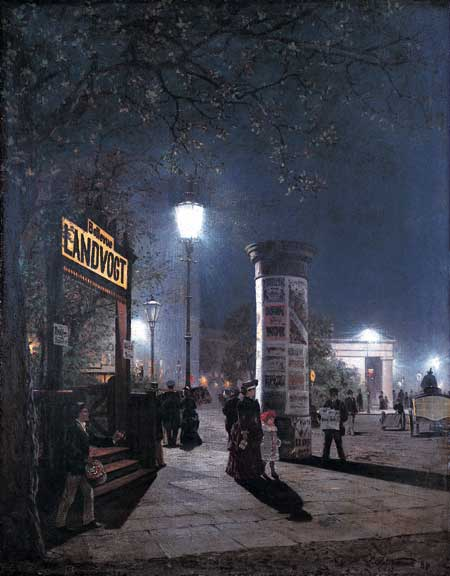
Berlin, 1884. With double the brilliance of gaslight, arc lamps were in high demand for stores and public areas. Arc lighting circuits used up to thousands of volts with arc lamps connected in series.
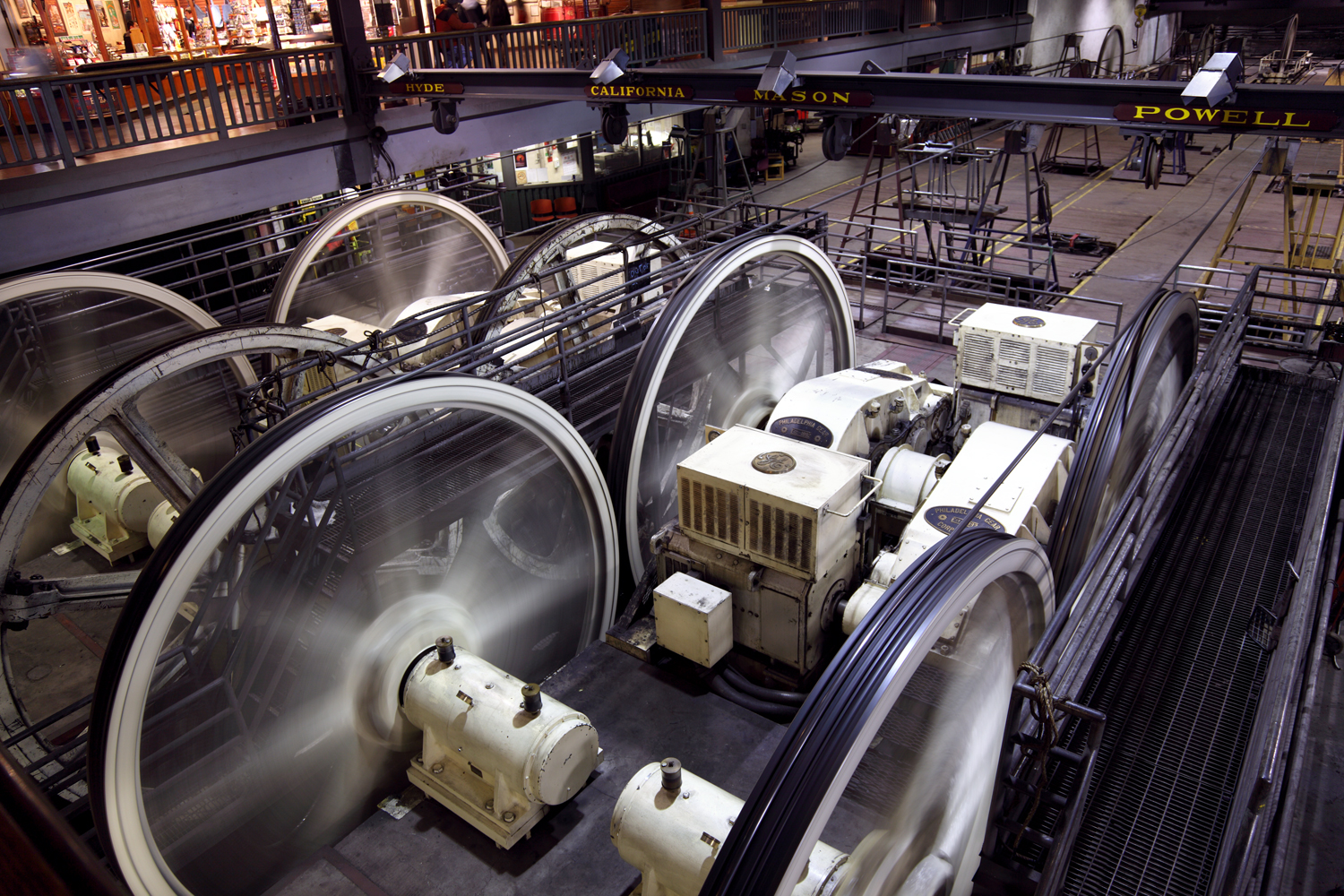
Machinery driving the San Francisco cable car system
late 1800s
Prior to electricity, there had already existed multiple forms of power transmission, though they remained largely inefficient and expensive. These transmission lines operated perhaps within more of the physical realm of movement and power, utilizing telodynamics, pneumatics, and hydraulics. Electricity emerged as a much more cost-effective alternative, though the new system still encountered technical difficulties. There existed a particular struggle between AC and DC methods of transmitting electricity. Proponents of DC argued for safety, while others argued for convenience. Although there are doubts and fears from the general public, AC ultimately defeated DC due to its ability to travel long distances. Early electricity primarily supported street lights, electric motors in factories, power for streetcars, and lights in homes. Transmission lines were primarily made of copper and rion. Generators first commonly emerged as dynamos, but then transitioned to alternators using hydroelectric and coal.
Potential Readings:
The Dark Side of the Light Bulb
Fearing electricity: overhead wire panic in New York City
The Rise of the Electrical Industry During the Nineteenth Century
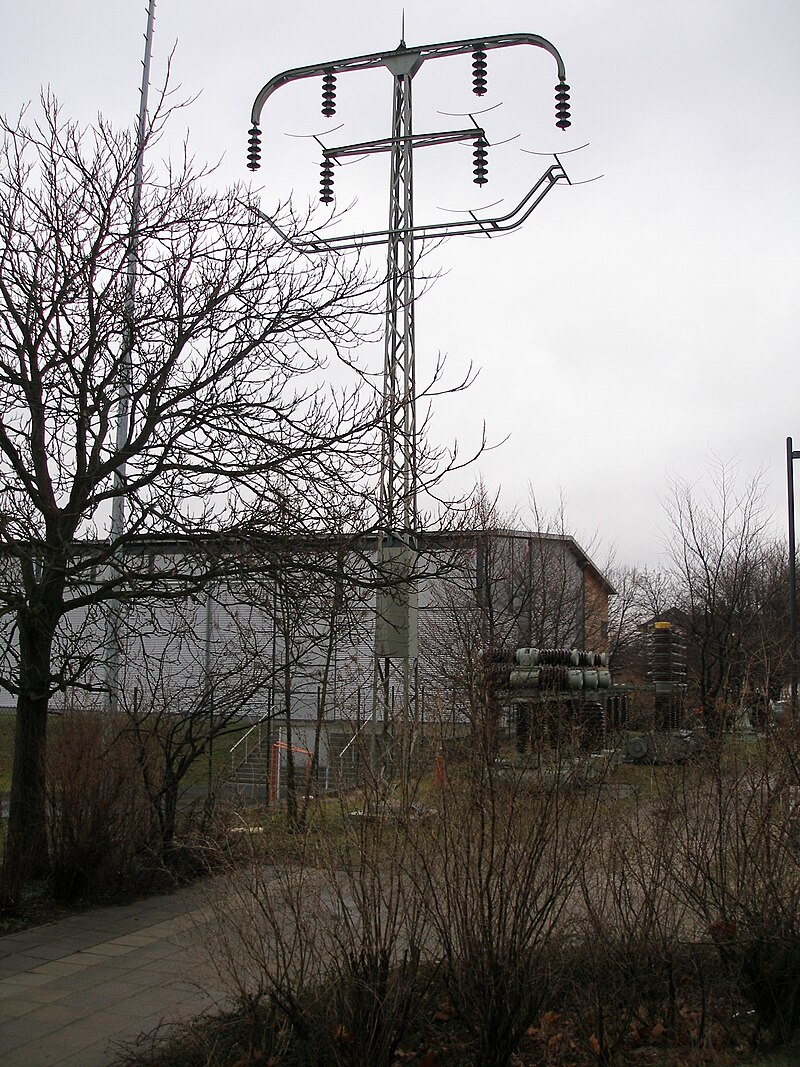
The first 110 kV transmission line in Europe was built around 1912 between Lauchhammer and Riesa, German Empire. Original pole.
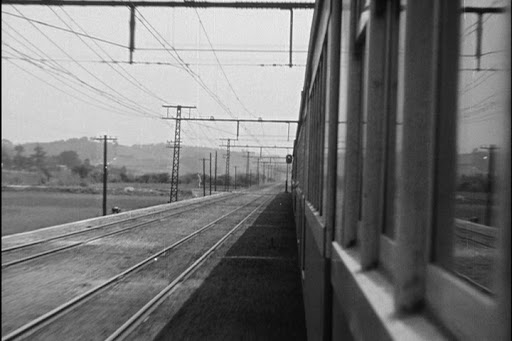
Early Summer
1951
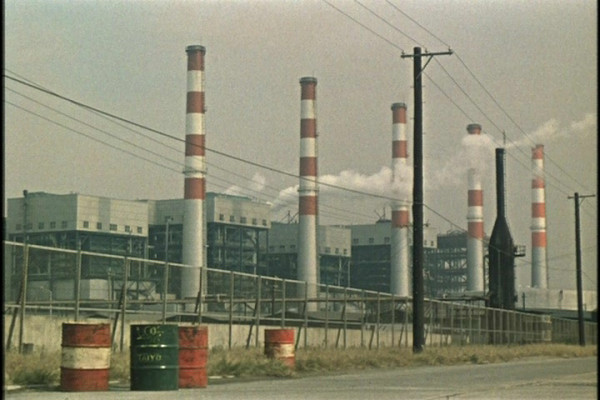
An Autumn Afternoon
1962
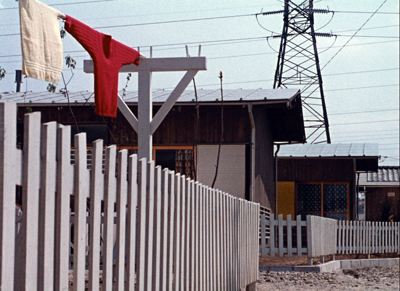
A Good Morning
1959
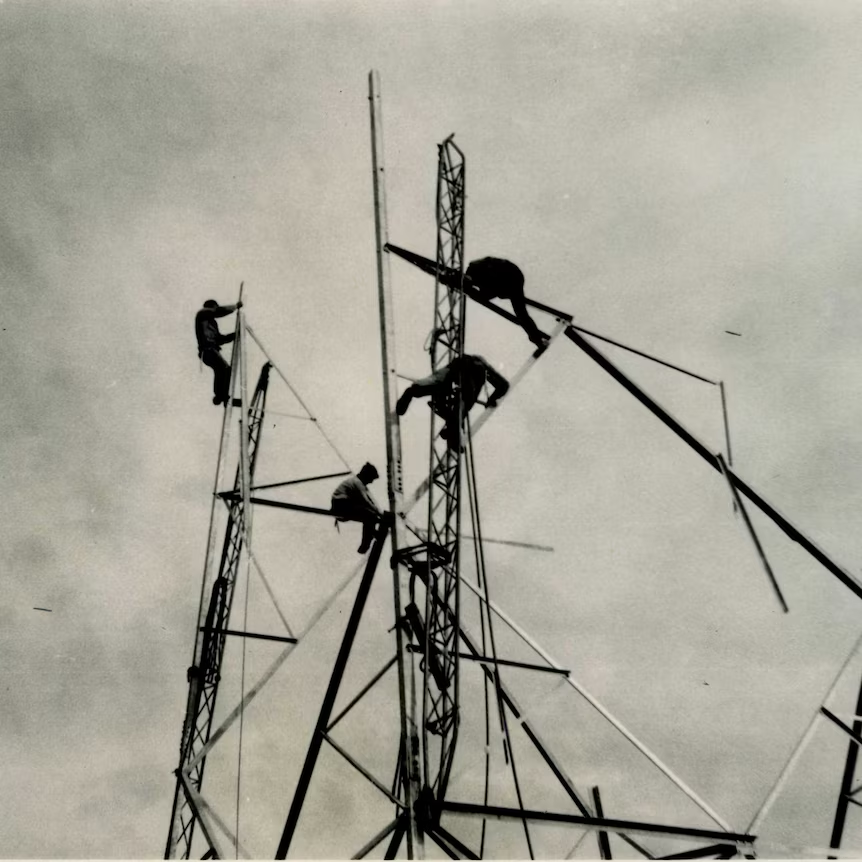
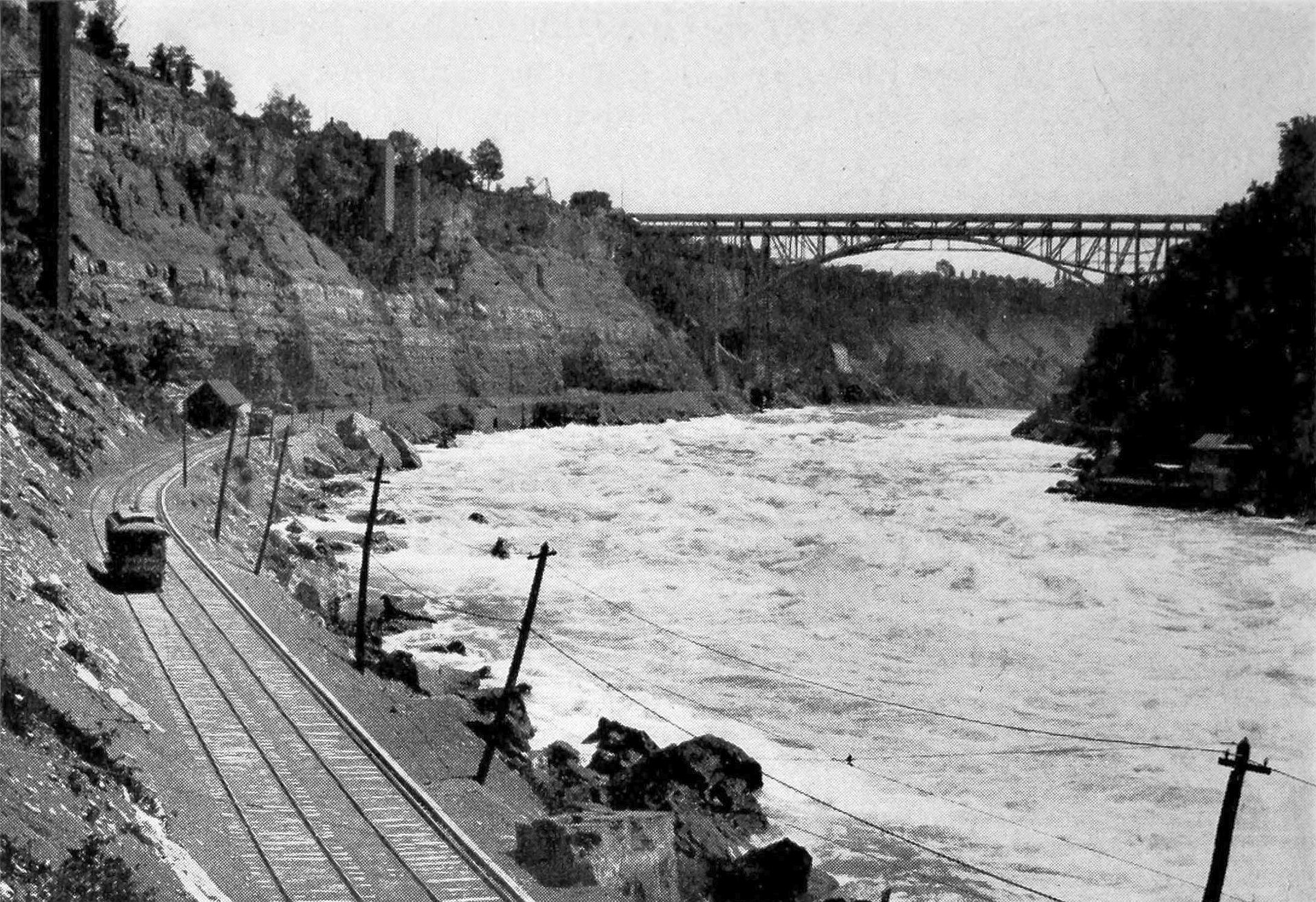
Niagara Gorge Railroad in 1913
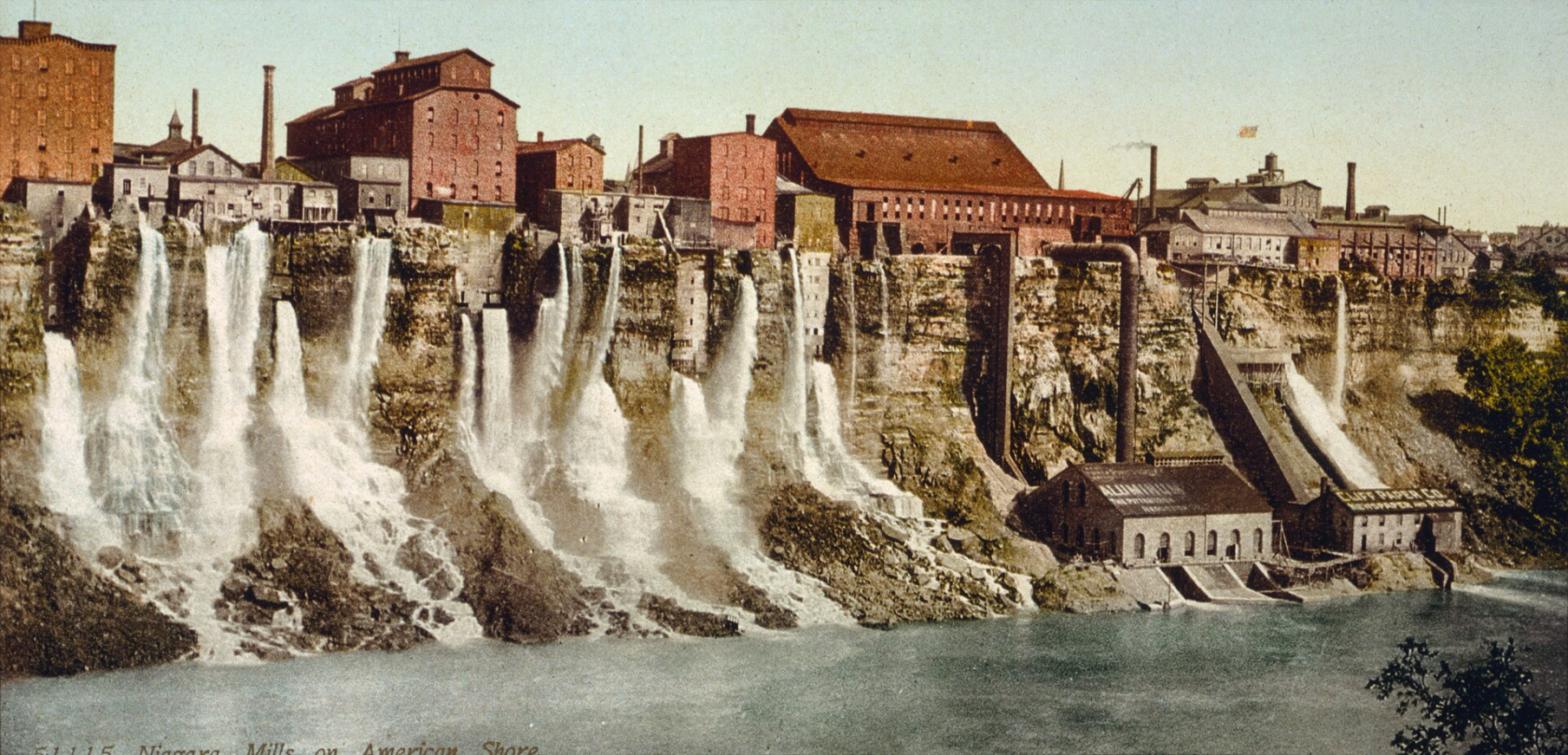
Schoellkopf mills along the canal in 1900
early 1900s
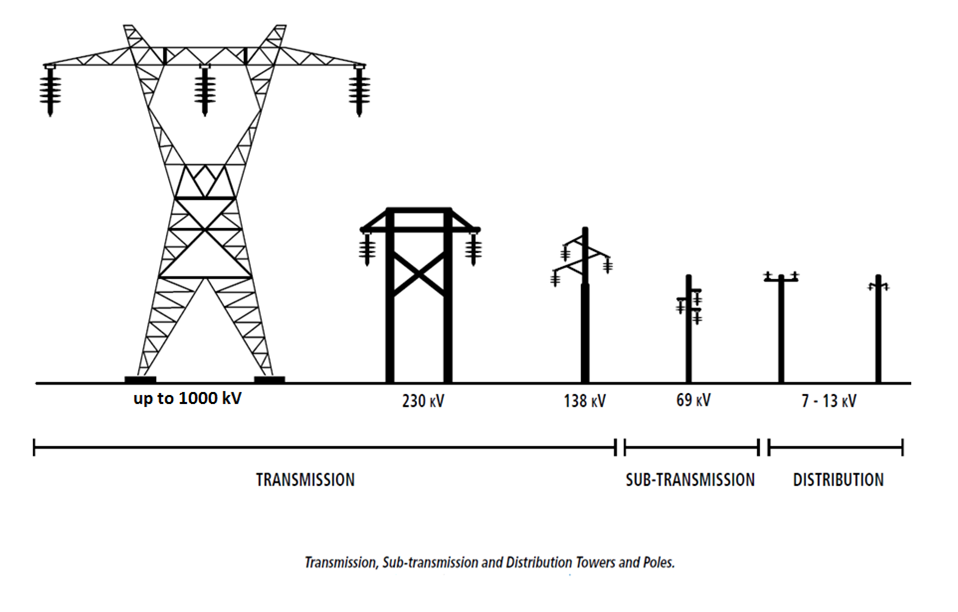
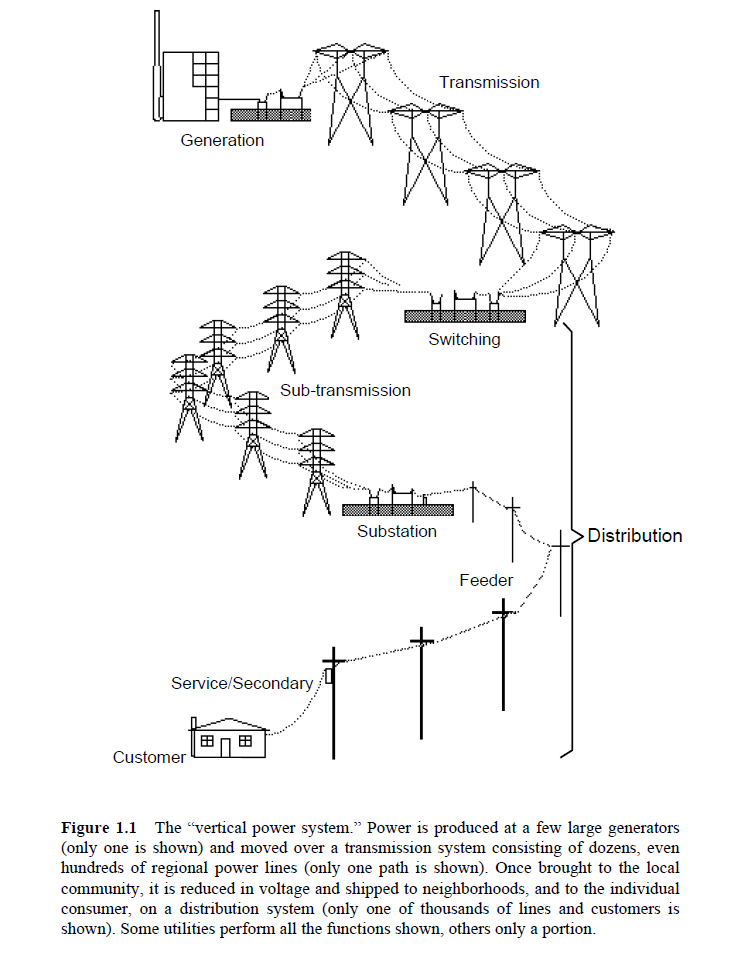
During the 1900s, the technology built from the previous century began to quickly develop across the country, with noticeable structures built on the West Coast. The Niagara Falls Hydraulic Power and Manufacturing Company's success served as a key symbol of such forms of development. Yet, one can see the noticeable increase in the pure scale of these infrastructures and their coexistence with other forms of infrastructures, such as railroads and canals. The development of electricity laid the grounds to intensify the process of industrial production. Starting from this period onward, electricity is no longer viewed as an intrusion on life but rather a guarantee of life. Higher and Higher voltage of power generation and transmission lines allowed power to cross the vast landscapes of America with ease. The convenience of electricity is not only permitted in its physical access but also economic access: the price of electricity dropped exponentially since its invention in the 1800s. With the efforts of development in this period, electricity connected the West Coast to the East Coast, generating more power than the rest of the world combined by 1929. Utility monopolies were accepted in exchange for price and service regulation (Public Utility Holding Company Act of 1935).
See additional information for more images.
References of Interest
A Field Guide To Transmission Lines
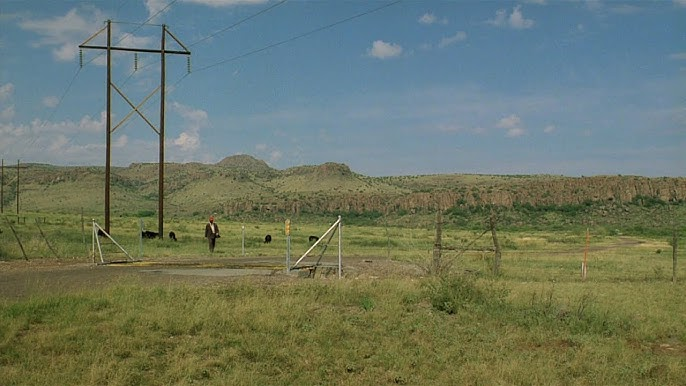
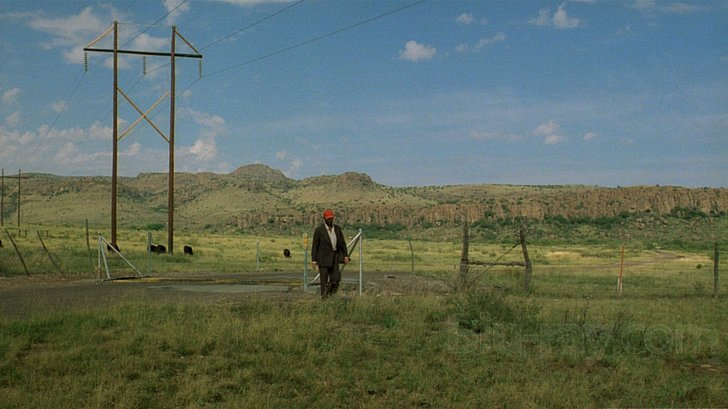
Paris, Texas
Wim Wenders
1984
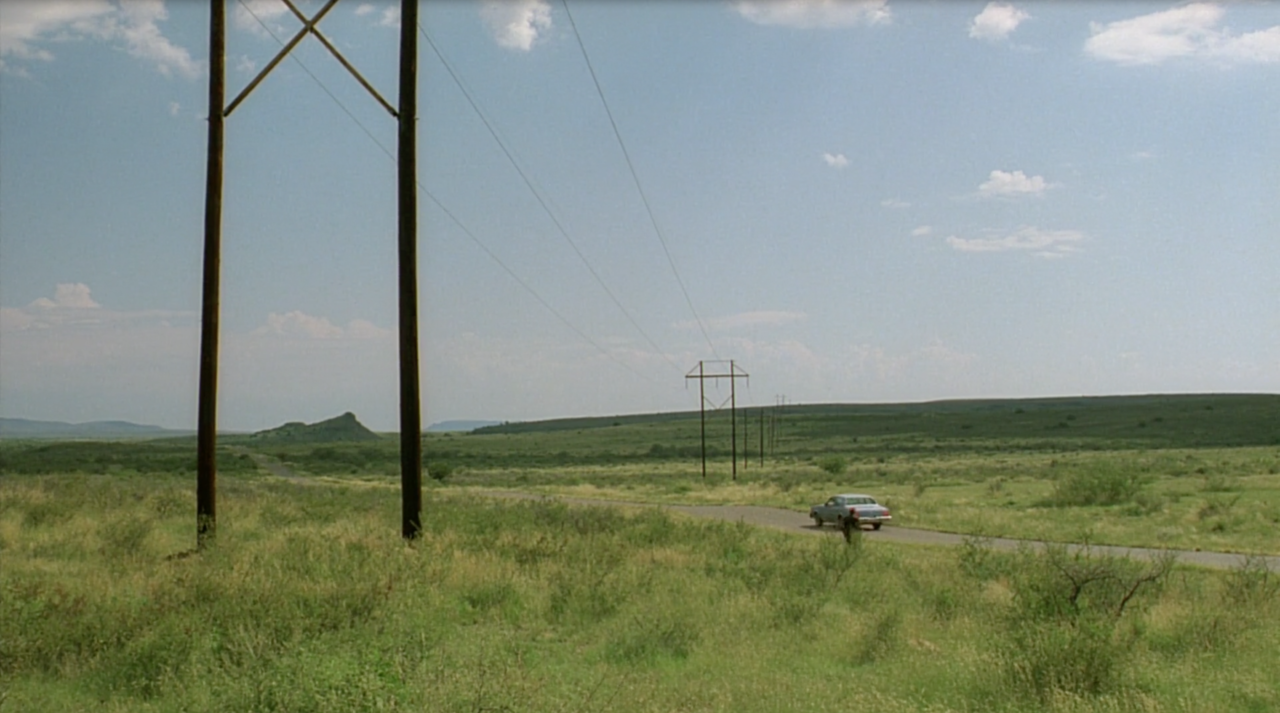
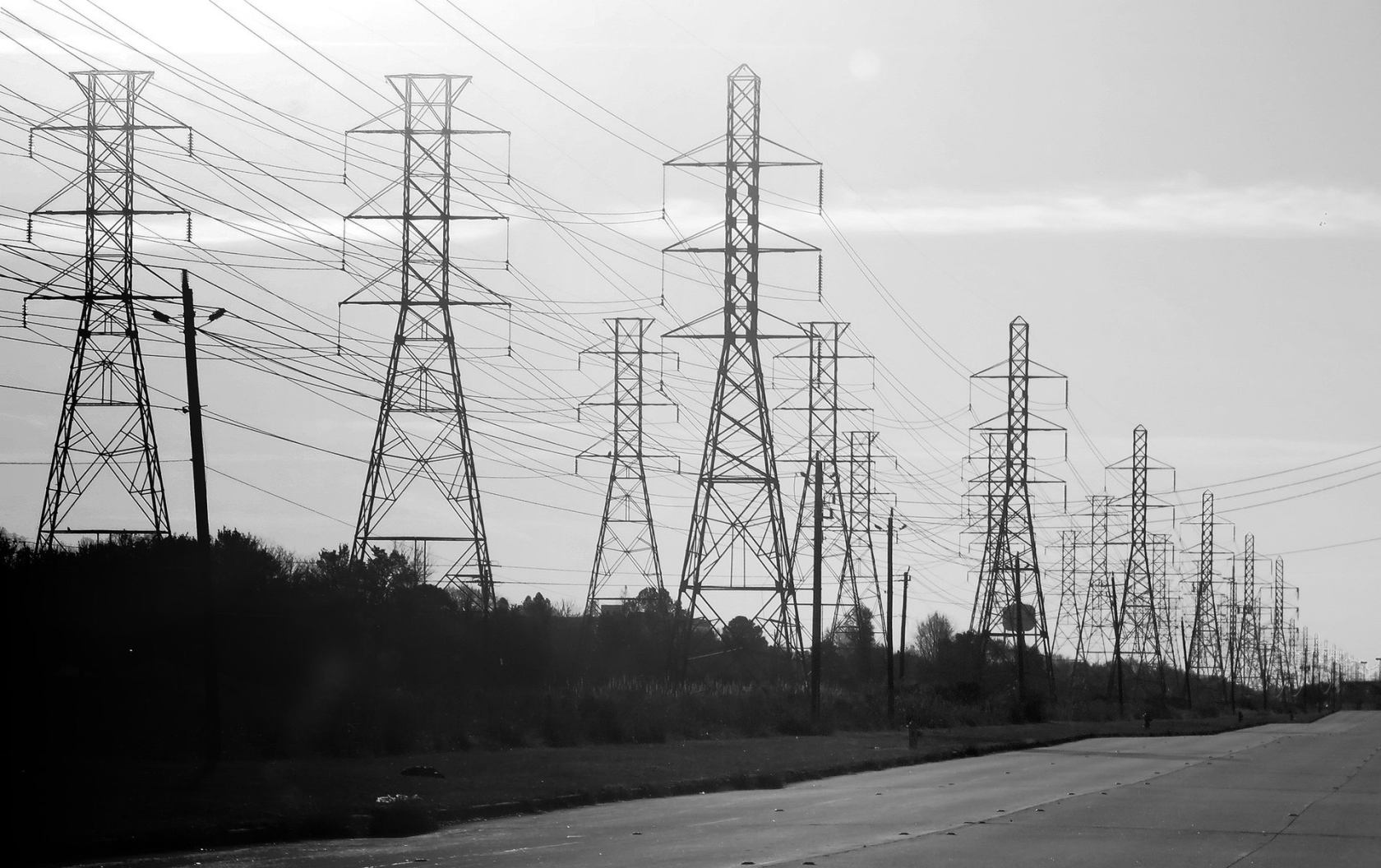
Three-abreast electrical pylons in Webster, Texas
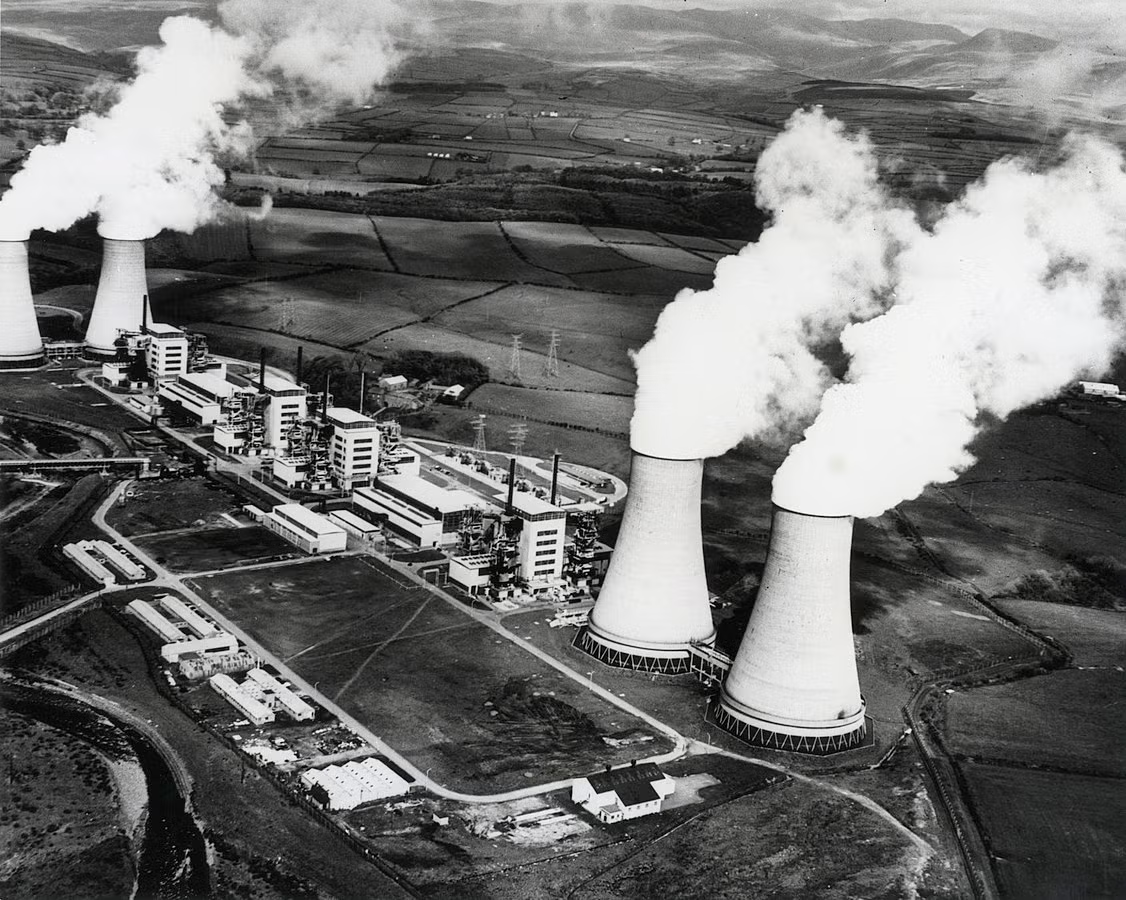
Calder Hall was the world’s first industrial-scale nuclear power. Located in Seascale, England, and Built in 1956. Decommissioned in 2003.
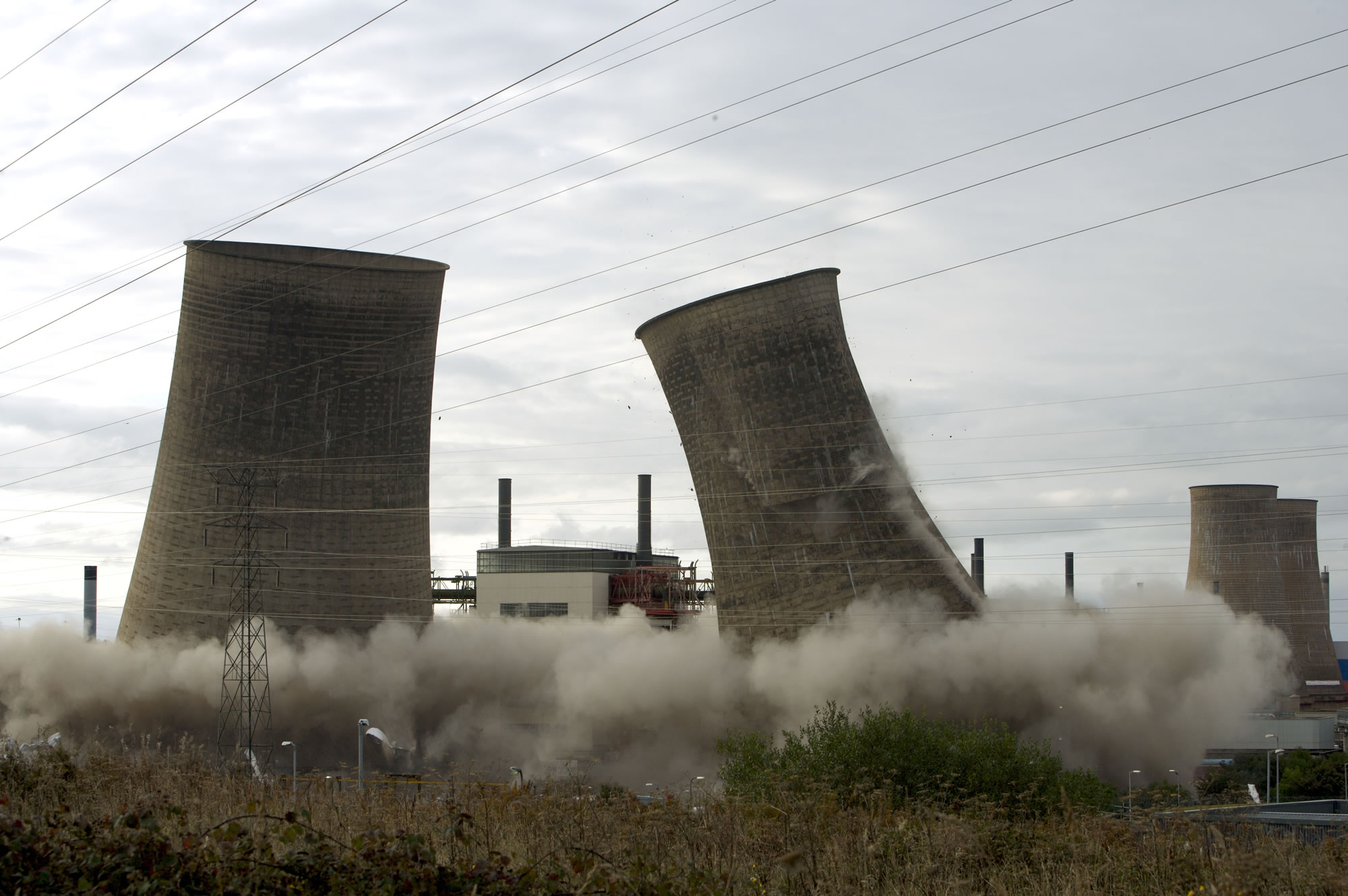
late 1900s
As the 1900s progressed, electricity became a household concept. Voltage continued to grow, and the development of Nuclear power provided another source of cheap energy in addition to coal, gas, and hydro. The electrical developments of this time formed the three electrical networks of the US: Eastern Interconnection, Western Interconnection, and Texas ERCOT. The government policy transitioned the generation monopoly to allow competition in generation, while transmission and distribution remained regulated monopolies. It seems that the technological capacities of existing infrastructure have reached their limit, and innovation has become focused on the management of electricity and mobility of electricity in the form of batteries.
Potential References
Power for progress: The impact of electricity on individual labor market outcomes
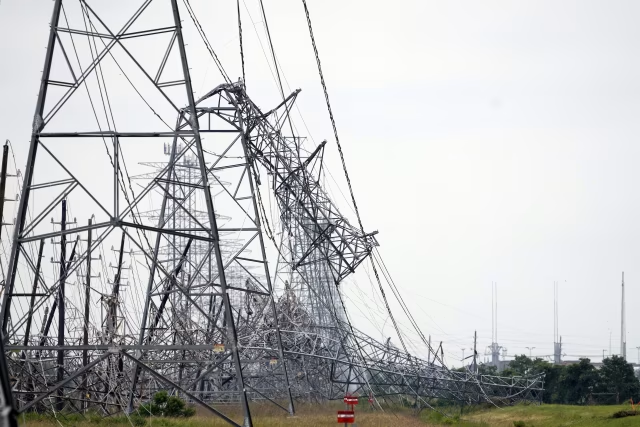
Houston Transmission Lines after Hurricane Beryl.
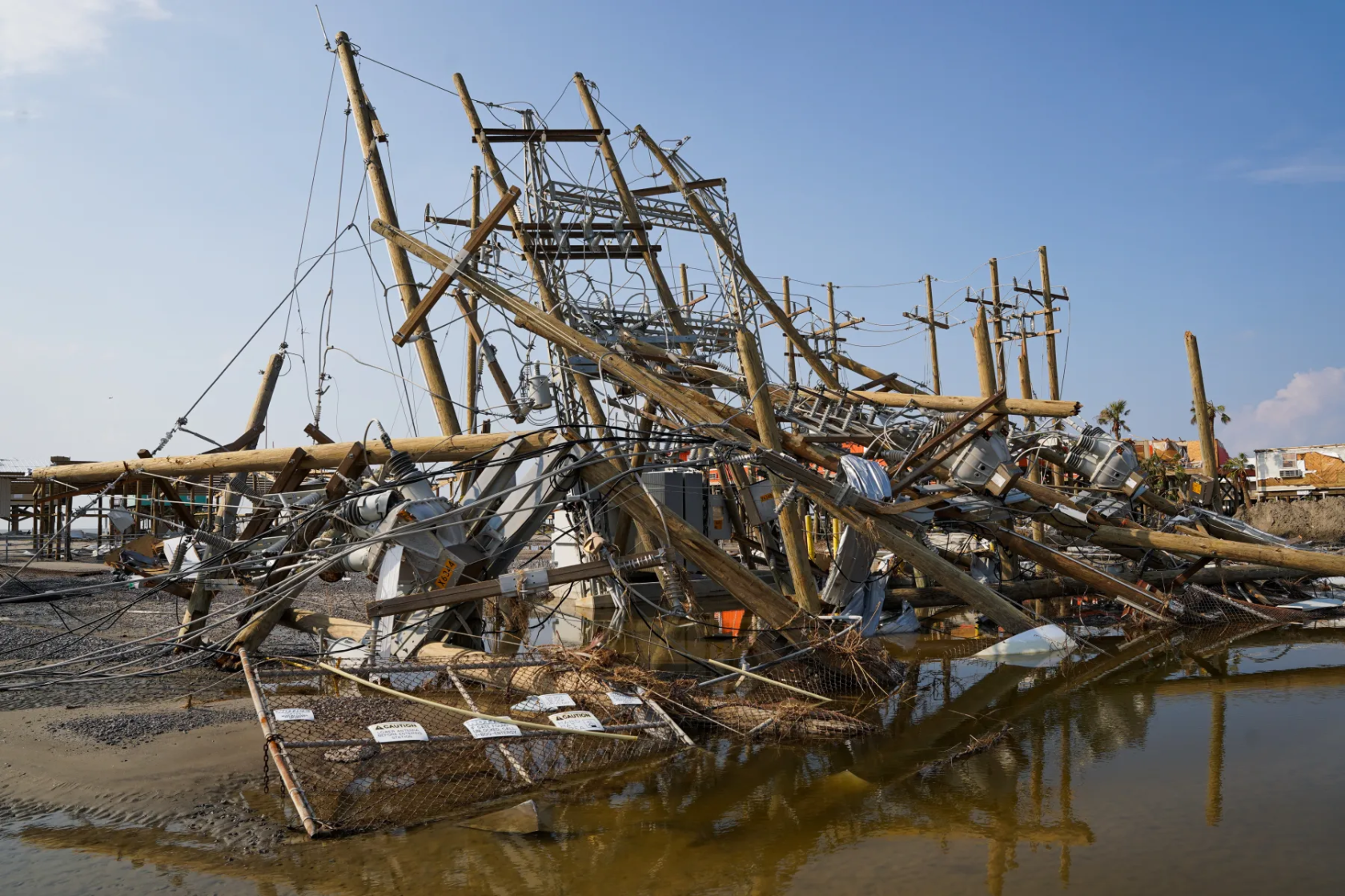
An electrical substation in Grand Isle, La., is left crumpled in the wake of Hurricane Ida on Sept. 4, 2021.
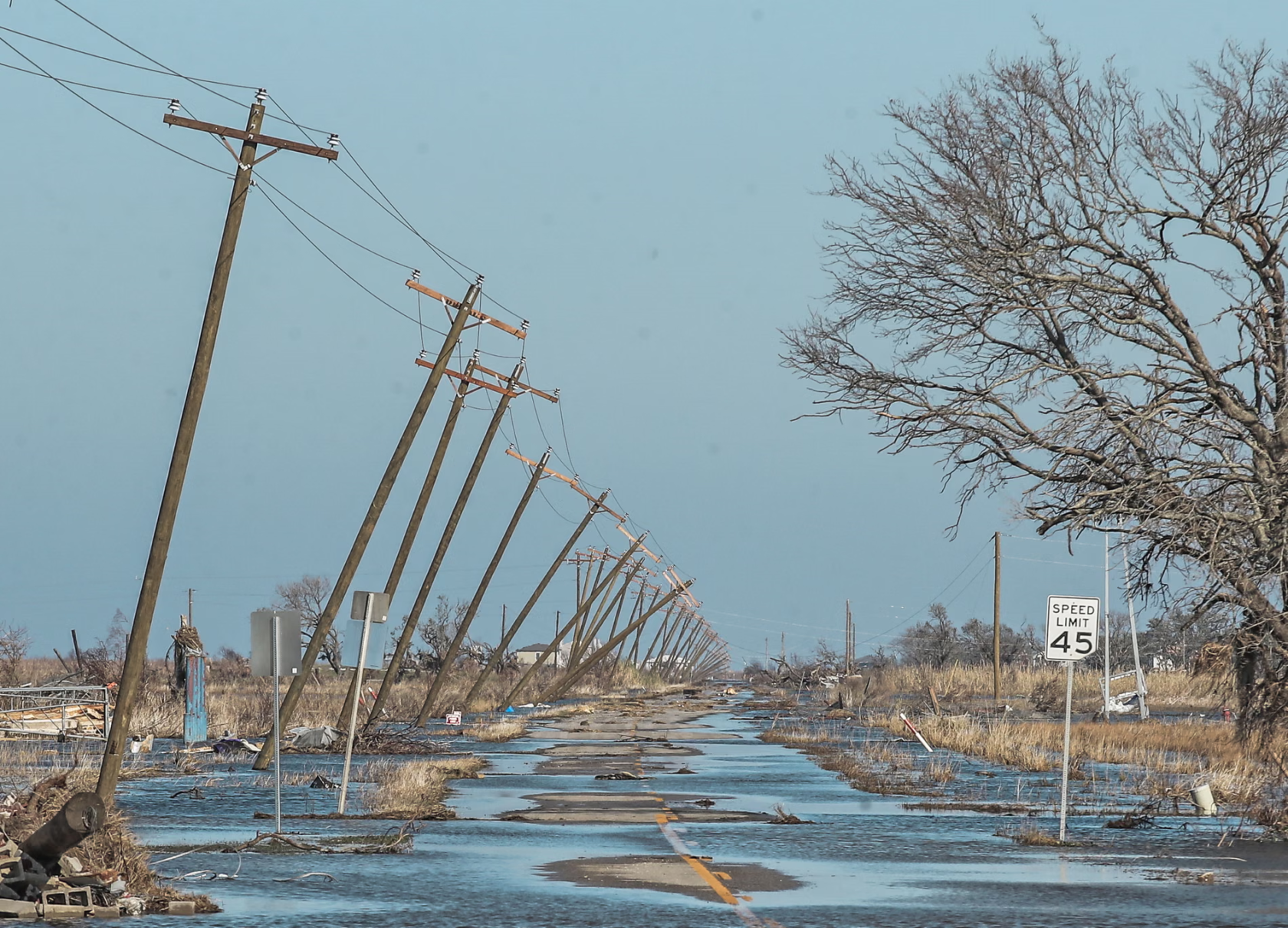
Utility poles lean along a flooded road in Cameron, Louisiana, in October 2020. Photograph: Tannen Maury/EPA
2000s
Despite all the development for the past century, electricity seems to have become a fragile entity again. Development in new forms of technology is rarely heard, but what is more often heard is the yearly outage, either in summer or winter. The very environment for these systems to exist has shifted dramatically, proposing questions not of infrastructural efficiency but infrastructure resilience. Though the demand continues to grow, through new data centers or just more and more power-demanding appliances. Cheaper electricity matched with equal consumption inflation, where the proportion between electricity's cost and a product's cost remained consistent. The realities of climate change demanded a policy to focus on advocating green energy, but the economic realities leaves questions on its scalability.
Potential References
The Effects of Rural Electrification on Employment: New Evidence from South Africa
No comments to display
No comments to display