Ashburn History Diagram
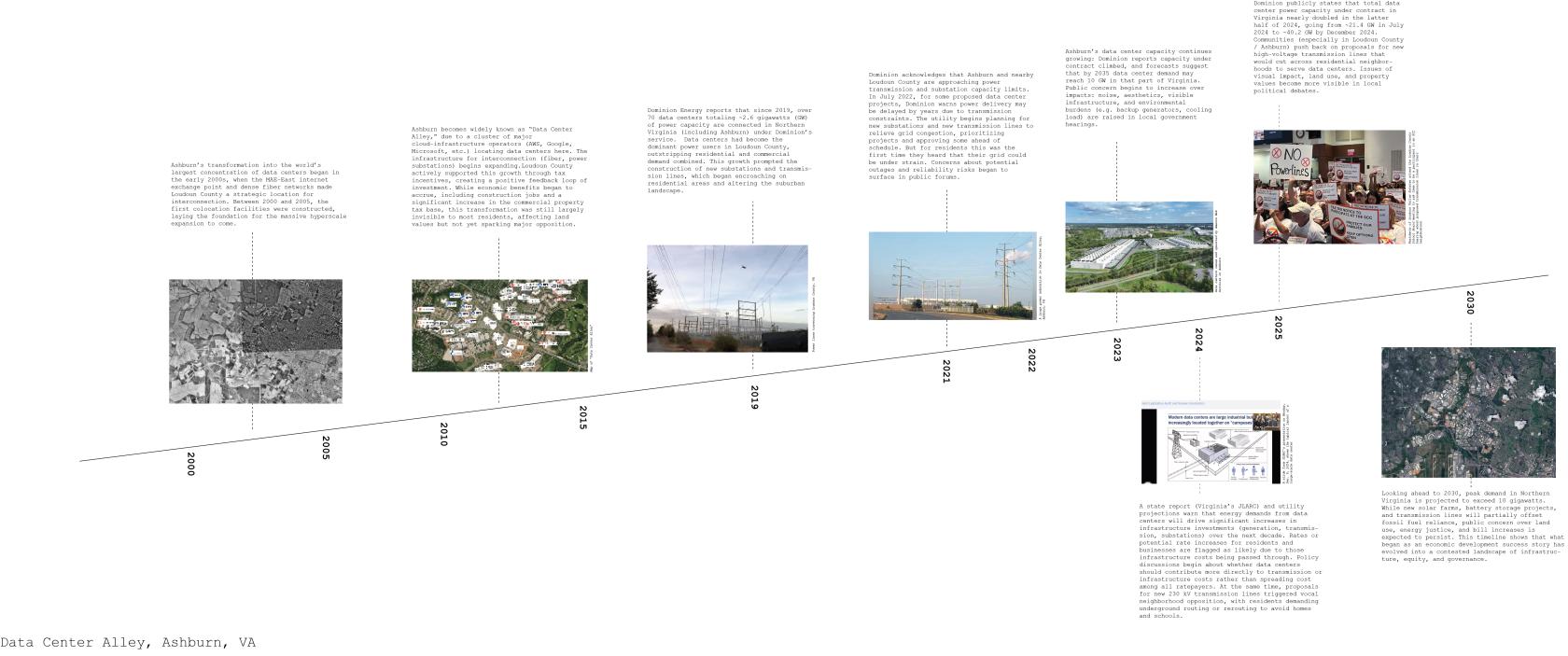
"Data Center Alley" Ashburn, VA: Data Center Growth & Power Impacts
2000
Ashburn’s transformation into the world’s largest concentration of data centers began in the early 2000s, when the MAE-East internet exchange point and dense fiber networks made Loudoun County a strategic location for interconnection. Between 2000 and 2005, the first colocation facilities were constructed, laying the foundation for the massive hyperscale expansion to come.

2002 - Ashburn, VA
2010-2015
Ashburn becomes widely known as “Data Center Alley,” due to a cluster of major cloud-infrastructure operators (AWS, Google, Microsoft, etc.) locating data centers here. The infrastructure for interconnection (fiber, power substations) begins expanding. Loudoun County actively supported this growth through tax incentives, creating a positive feedback loop of investment. While economic benefits began to accrue, including construction jobs and a significant increase in the commercial property tax base, this transformation was still largely invisible to most residents, affecting land values but not yet sparking major opposition.
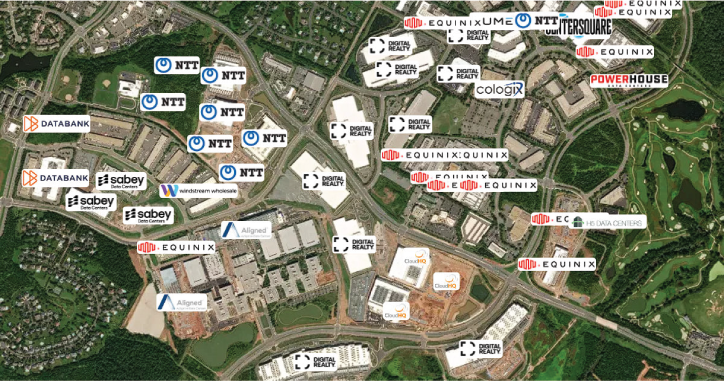
Map of Data Center Alley
2019
Dominion Energy reports that since 2019, over 70 data centers totaling ~2.6 gigawatts (GW) of power capacity are connected in Northern Virginia (including Ashburn) under Dominion’s service. Data centers had become the dominant power users in Loudoun County, outstripping residential and commercial demand combined. This growth prompted the construction of new substations and transmission lines, which began encroaching on residential areas and altering the suburban landscape.
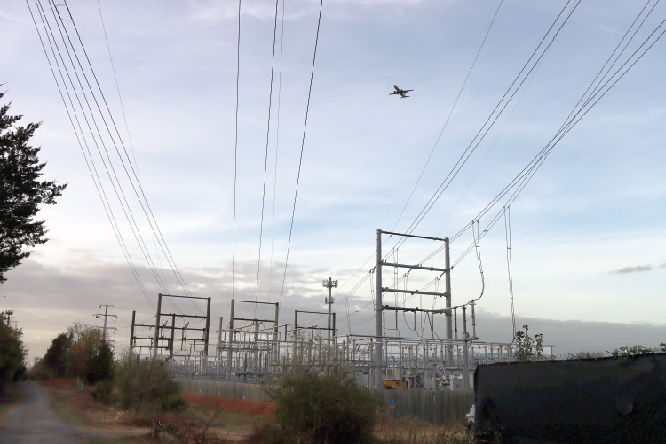
Power lines traversing Loudoun County, VA
2021-2022
Dominion acknowledges that Ashburn and nearby Loudoun County are approaching power transmission and substation capacity limits. In July 2022, for some proposed data center projects, Dominion warns power delivery may be delayed by years due to transmission constraints. The utility begins planning for new substations and new transmission lines to relieve grid congestion, prioritizing projects and approving some ahead of schedule. But for residents, this was the first time they heard that their grid could be under strain. Concerns about potential outages and reliability risks began to surface in public forums.
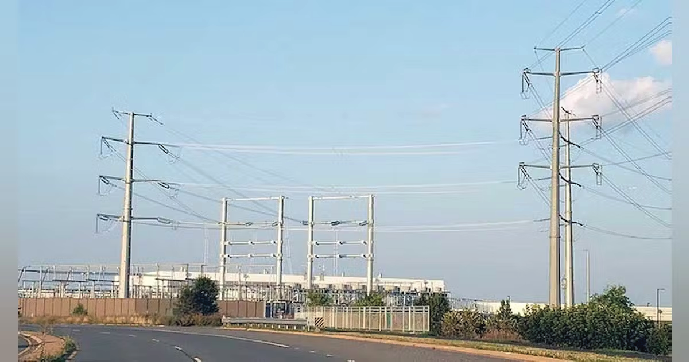
A large power substation in Data Center Alley, Ashburn, VA
2023
Ashburn’s data center capacity continues growing: Dominion reports capacity under contract climbed, and forecasts suggest that by 2035 data center demand may reach 10 GW in that part of Virginia. Public concern begins to increase over impacts: noise, aesthetics, visible infrastructure, and environmental burdens (e.g., backup generators, cooling load) are raised in local government hearings.
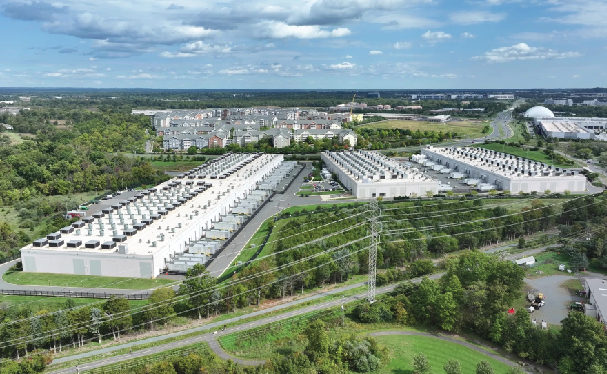
Data centers owned and operated by Amazon Web Services in Ashburn
2024
A state report (Virginia’s JLARC) and utility projections warn that energy demands from data centers will drive significant increases in infrastructure investments (generation, transmission, substations) over the next decade. Rates or potential rate increases for residents and businesses are flagged as likely due to those infrastructure costs being passed through. Policy discussions begin about whether data centers should contribute more directly to transmission or infrastructure costs rather than spreading cost among all ratepayers. At the same time, proposals for new 230 kV transmission lines triggered vocal neighborhood opposition, with residents demanding underground routing or rerouting to avoid homes and schools.
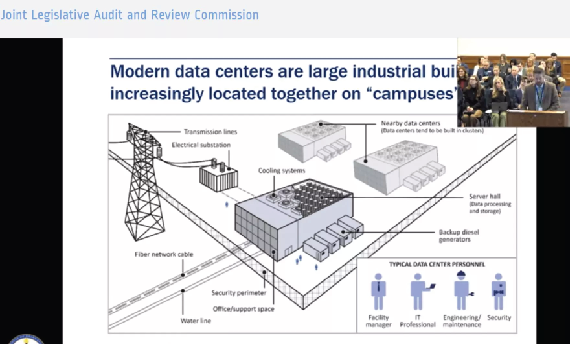
A slide from JLARC's presentation on Monday, Dec. 9, 2024, shows the typical layout of a large-scale data center
2025
Dominion publicly states that total data center power capacity under contract in Virginia nearly doubled in the latter half of 2024, going from ~21.4 GW in July 2024 to ~40.2 GW by December 2024. Communities (especially in Loudoun County / Ashburn) push back on proposals for new high-voltage transmission lines that would cut across residential neighborhoods to serve data centers. Issues of visual impact, land use, and property values become more visible in local political debates.
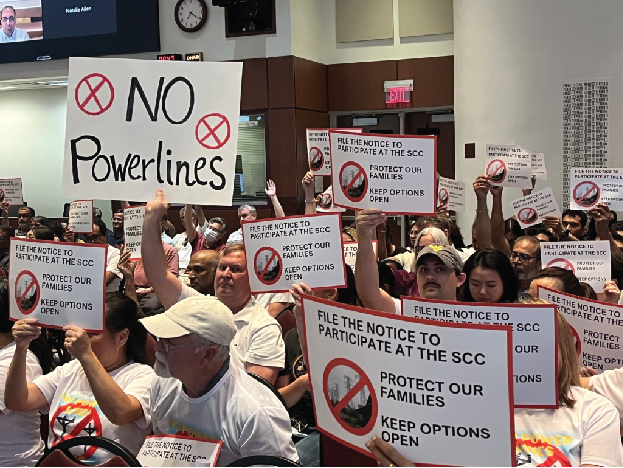
Residents of Loudoun Valley Estates attend the Loudoun County School Board meeting to ask them to be a participant in an SCC hearing about proposed transmission lines in their neighborhood.
2030
Looking ahead to 2030, peak demand in Northern Virginia is projected to exceed 10 gigawatts. While new solar farms, battery storage projects, and transmission lines will partially offset fossil fuel reliance, public concern over land use, energy justice, and bill increases is expected to persist. This timeline shows that what began as an economic development success story has evolved into a contested landscape of infrastructure, equity, and governance.
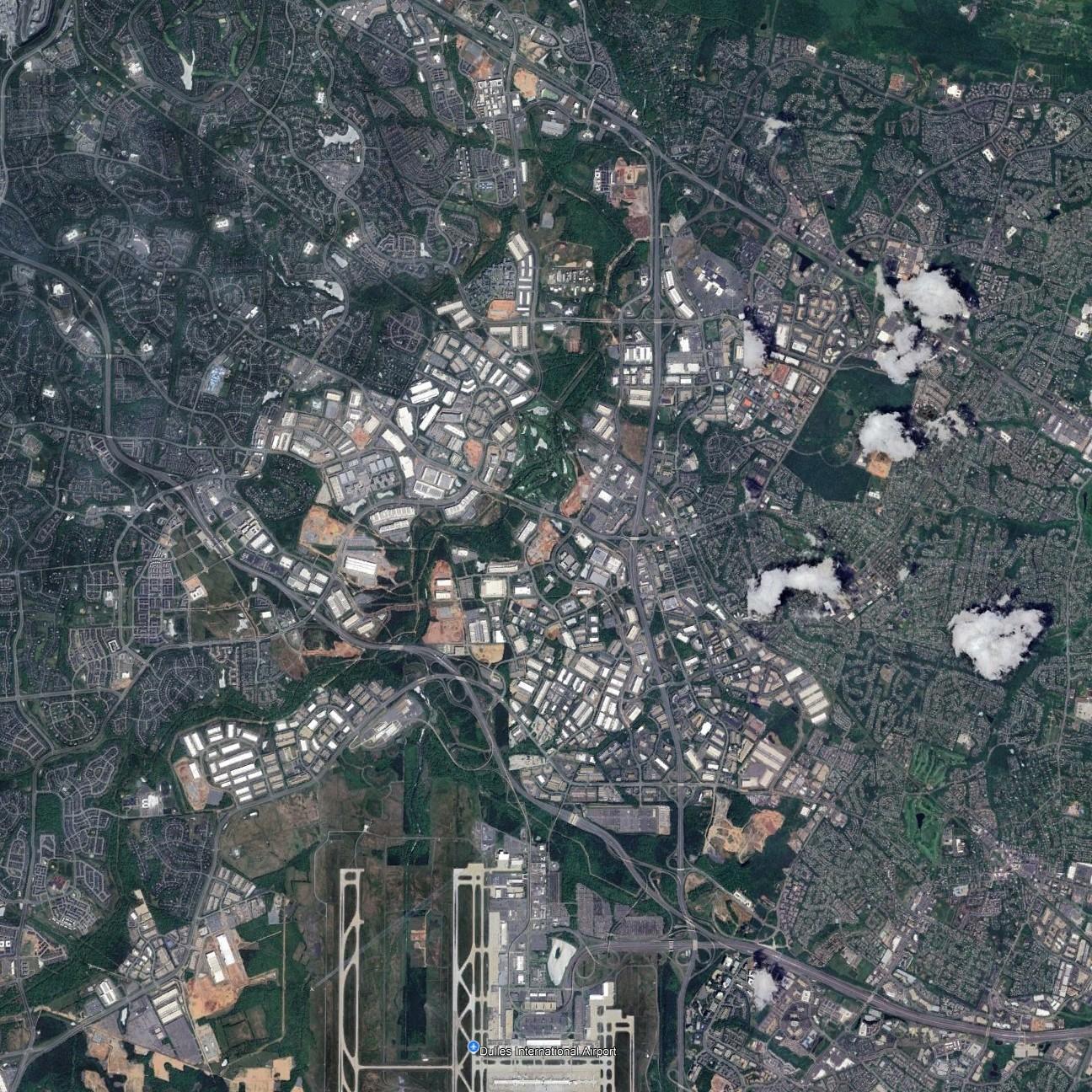
Present day - Ashburn, VA
No comments to display
No comments to display